Compare commits
2 commits
e08c28afbe
...
6619f49847
| Author | SHA256 | Date | |
|---|---|---|---|
6619f49847

|
|||
70ebe5e789

|
98 changed files with 3435 additions and 20210 deletions
|
|
@ -6,16 +6,18 @@
|
|||
sshCommand = ssh -F ~/.config/ssh/config -o UserKnownHostsFile='/home/moo/.config/ssh/known_hosts'
|
||||
quotePath = false
|
||||
commitGraph = true
|
||||
autocrlf = input
|
||||
[user]
|
||||
email = the7772howaboutyou@protonmail.com
|
||||
email = alister@kamikishi.net
|
||||
name = riomoo
|
||||
signingkey = /home/moo/.config/ssh/gpg/the7772/id_ed25519.pub
|
||||
#signingkey = FEC86E49B4437D4D
|
||||
signingkey = /home/moo/.config/ssh/gpg/alisteratkamikishi/id_ed25519.pub
|
||||
#signingkey = 554AF2CEAE26AC80
|
||||
#email = the7772howaboutyou@protonmail.com
|
||||
|
||||
[alias]
|
||||
resign = "!re() { git rebase --exec 'git commit --amend --no-edit -n -S' -i $1; }; re"
|
||||
gwtm = worktree add master
|
||||
gwtd = worktree add -b dev dev master
|
||||
gwtd = worktree add -b dev dev master
|
||||
gwtf = worktree add -b feat feat dev
|
||||
gwtrf = worktree remove feat
|
||||
gbrf = branch -D feat
|
||||
|
|
@ -30,6 +32,7 @@
|
|||
lg2-specific = log --graph --abbrev-commit --decorate --format=format:'%C(bold blue)%h%C(reset) - %C(bold cyan)%aD%C(reset) %C(bold green)(%ar)%C(reset)%C(auto)%d%C(reset)%n'' %C(white)%s%C(reset) %C(dim white)- %an%C(reset)'
|
||||
lg3-specific = log --graph --abbrev-commit --decorate --format=format:'%C(bold blue)%h%C(reset) - %C(bold cyan)%aD%C(reset) %C(bold green)(%ar)%C(reset) %C(bold cyan)(committed: %cD)%C(reset) %C(auto)%d%C(reset)%n'' %C(white)%s%C(reset)%n'' %C(dim white)- %an <%ae> %C(reset) %C(dim white)(committer: %cn <%ce>)%C(reset)'
|
||||
lg4-specific = log --graph --abbrev-commit --decorate --format=format:'%C(bold blue)%h%C(reset) - %C(bold cyan)%aD%C(reset) %C(bold green)(%ar)%C(reset) %C(bold cyan)(committed: %cD)%C(reset) %C(auto)%d%C(reset)%n'' %C(white)%s%C(reset)%n'' %C(dim white)- %an <%ae> %C(reset) %C(dim white)(committer: %cn <%ce>)%C(reset)'
|
||||
ll = log --graph --format=\"%C(yellow)%h%C(red)%d%C(reset) - %C(bold green)(%ar)%C(reset) %s %C(blue)<%an>%C(reset)\"
|
||||
|
||||
|
||||
[push]
|
||||
|
|
@ -61,5 +64,3 @@
|
|||
allowedSignersFile = /home/moo/.config/ssh/allowed_signers
|
||||
[commit]
|
||||
gpgsign = true
|
||||
[init]
|
||||
defaultBranch = main
|
||||
|
|
|
|||
1
ssh/.config/ssh/known_hosts
Normal file
1
ssh/.config/ssh/known_hosts
Normal file
|
|
@ -0,0 +1 @@
|
|||
192.168.0.100 ssh-ed25519 AAAAC3NzaC1lZDI1NTE5AAAAICNFyL6rb/ksObeVeDkUeh2e+g9eAYfD6SRT5hHMjNa8
|
||||
|
|
@ -1,67 +1,36 @@
|
|||
" vim-plug: Vim plugin manager
|
||||
" ============================
|
||||
"
|
||||
" Download plug.vim and put it in ~/.vim/autoload
|
||||
" 1. Download plug.vim and put it in 'autoload' directory
|
||||
"
|
||||
" # Vim
|
||||
" curl -fLo ~/.vim/autoload/plug.vim --create-dirs \
|
||||
" https://raw.githubusercontent.com/junegunn/vim-plug/master/plug.vim
|
||||
"
|
||||
" Edit your .vimrc
|
||||
" # Neovim
|
||||
" sh -c 'curl -fLo "${XDG_DATA_HOME:-$HOME/.local/share}"/nvim/site/autoload/plug.vim --create-dirs \
|
||||
" https://raw.githubusercontent.com/junegunn/vim-plug/master/plug.vim'
|
||||
"
|
||||
" call plug#begin('~/.vim/plugged')
|
||||
" 2. Add a vim-plug section to your ~/.vimrc (or ~/.config/nvim/init.vim for Neovim)
|
||||
"
|
||||
" " Make sure you use single quotes
|
||||
" call plug#begin()
|
||||
"
|
||||
" " Shorthand notation; fetches https://github.com/junegunn/vim-easy-align
|
||||
" Plug 'junegunn/vim-easy-align'
|
||||
" " List your plugins here
|
||||
" Plug 'tpope/vim-sensible'
|
||||
"
|
||||
" " Any valid git URL is allowed
|
||||
" Plug 'https://github.com/junegunn/vim-github-dashboard.git'
|
||||
"
|
||||
" " Multiple Plug commands can be written in a single line using | separators
|
||||
" Plug 'SirVer/ultisnips' | Plug 'honza/vim-snippets'
|
||||
"
|
||||
" " On-demand loading
|
||||
" Plug 'scrooloose/nerdtree', { 'on': 'NERDTreeToggle' }
|
||||
" Plug 'tpope/vim-fireplace', { 'for': 'clojure' }
|
||||
"
|
||||
" " Using a non-default branch
|
||||
" Plug 'rdnetto/YCM-Generator', { 'branch': 'stable' }
|
||||
"
|
||||
" " Using a tagged release; wildcard allowed (requires git 1.9.2 or above)
|
||||
" Plug 'fatih/vim-go', { 'tag': '*' }
|
||||
"
|
||||
" " Plugin options
|
||||
" Plug 'nsf/gocode', { 'tag': 'v.20150303', 'rtp': 'vim' }
|
||||
"
|
||||
" " Plugin outside ~/.vim/plugged with post-update hook
|
||||
" Plug 'junegunn/fzf', { 'dir': '~/.fzf', 'do': './install --all' }
|
||||
"
|
||||
" " Unmanaged plugin (manually installed and updated)
|
||||
" Plug '~/my-prototype-plugin'
|
||||
"
|
||||
" " Initialize plugin system
|
||||
" call plug#end()
|
||||
"
|
||||
" Then reload .vimrc and :PlugInstall to install plugins.
|
||||
" 3. Reload the file or restart Vim, then you can,
|
||||
"
|
||||
" Plug options:
|
||||
" :PlugInstall to install plugins
|
||||
" :PlugUpdate to update plugins
|
||||
" :PlugDiff to review the changes from the last update
|
||||
" :PlugClean to remove plugins no longer in the list
|
||||
"
|
||||
"| Option | Description |
|
||||
"| ----------------------- | ------------------------------------------------ |
|
||||
"| `branch`/`tag`/`commit` | Branch/tag/commit of the repository to use |
|
||||
"| `rtp` | Subdirectory that contains Vim plugin |
|
||||
"| `dir` | Custom directory for the plugin |
|
||||
"| `as` | Use different name for the plugin |
|
||||
"| `do` | Post-update hook (string or funcref) |
|
||||
"| `on` | On-demand loading: Commands or `<Plug>`-mappings |
|
||||
"| `for` | On-demand loading: File types |
|
||||
"| `frozen` | Do not update unless explicitly specified |
|
||||
"
|
||||
" More information: https://github.com/junegunn/vim-plug
|
||||
" For more information, see https://github.com/junegunn/vim-plug
|
||||
"
|
||||
"
|
||||
" Copyright (c) 2017 Junegunn Choi
|
||||
" Copyright (c) 2024 Junegunn Choi
|
||||
"
|
||||
" MIT License
|
||||
"
|
||||
|
|
@ -238,10 +207,11 @@ endfunction
|
|||
|
||||
function! plug#begin(...)
|
||||
if a:0 > 0
|
||||
let s:plug_home_org = a:1
|
||||
let home = s:path(s:plug_fnamemodify(s:plug_expand(a:1), ':p'))
|
||||
elseif exists('g:plug_home')
|
||||
let home = s:path(g:plug_home)
|
||||
elseif has('nvim')
|
||||
let home = stdpath('data') . '/plugged'
|
||||
elseif !empty(&rtp)
|
||||
let home = s:path(split(&rtp, ',')[0]) . '/plugged'
|
||||
else
|
||||
|
|
@ -350,7 +320,7 @@ function! plug#end()
|
|||
endif
|
||||
let lod = { 'ft': {}, 'map': {}, 'cmd': {} }
|
||||
|
||||
if exists('g:did_load_filetypes')
|
||||
if get(g:, 'did_load_filetypes', 0)
|
||||
filetype off
|
||||
endif
|
||||
for name in g:plugs_order
|
||||
|
|
@ -389,6 +359,9 @@ function! plug#end()
|
|||
if !empty(types)
|
||||
augroup filetypedetect
|
||||
call s:source(s:rtp(plug), 'ftdetect/**/*.vim', 'after/ftdetect/**/*.vim')
|
||||
if has('nvim-0.5.0')
|
||||
call s:source(s:rtp(plug), 'ftdetect/**/*.lua', 'after/ftdetect/**/*.lua')
|
||||
endif
|
||||
augroup END
|
||||
endif
|
||||
for type in types
|
||||
|
|
@ -399,13 +372,15 @@ function! plug#end()
|
|||
|
||||
for [cmd, names] in items(lod.cmd)
|
||||
execute printf(
|
||||
\ 'command! -nargs=* -range -bang -complete=file %s call s:lod_cmd(%s, "<bang>", <line1>, <line2>, <q-args>, %s)',
|
||||
\ cmd, string(cmd), string(names))
|
||||
\ has('patch-7.4.1898')
|
||||
\ ? 'command! -nargs=* -range -bang -complete=file %s call s:lod_cmd(%s, "<bang>", <line1>, <line2>, <q-args>, <q-mods> ,%s)'
|
||||
\ : 'command! -nargs=* -range -bang -complete=file %s call s:lod_cmd(%s, "<bang>", <line1>, <line2>, <q-args>, %s)'
|
||||
\ , cmd, string(cmd), string(names))
|
||||
endfor
|
||||
|
||||
for [map, names] in items(lod.map)
|
||||
for [mode, map_prefix, key_prefix] in
|
||||
\ [['i', '<C-O>', ''], ['n', '', ''], ['v', '', 'gv'], ['o', '', '']]
|
||||
\ [['i', '<C-\><C-O>', ''], ['n', '', ''], ['v', '', 'gv'], ['o', '', '']]
|
||||
execute printf(
|
||||
\ '%snoremap <silent> %s %s:<C-U>call <SID>lod_map(%s, %s, %s, "%s")<CR>',
|
||||
\ mode, map, map_prefix, string(map), string(names), mode != 'i', key_prefix)
|
||||
|
|
@ -436,6 +411,9 @@ endfunction
|
|||
|
||||
function! s:load_plugin(spec)
|
||||
call s:source(s:rtp(a:spec), 'plugin/**/*.vim', 'after/plugin/**/*.vim')
|
||||
if has('nvim-0.5.0')
|
||||
call s:source(s:rtp(a:spec), 'plugin/**/*.lua', 'after/plugin/**/*.lua')
|
||||
endif
|
||||
endfunction
|
||||
|
||||
function! s:reload_plugins()
|
||||
|
|
@ -653,6 +631,9 @@ function! s:lod(names, types, ...)
|
|||
let rtp = s:rtp(g:plugs[name])
|
||||
for dir in a:types
|
||||
call s:source(rtp, dir.'/**/*.vim')
|
||||
if has('nvim-0.5.0') " see neovim#14686
|
||||
call s:source(rtp, dir.'/**/*.lua')
|
||||
endif
|
||||
endfor
|
||||
if a:0
|
||||
if !s:source(rtp, a:1) && !empty(s:glob(rtp, a:2))
|
||||
|
|
@ -672,11 +653,19 @@ function! s:lod_ft(pat, names)
|
|||
call s:doautocmd('filetypeindent', 'FileType')
|
||||
endfunction
|
||||
|
||||
function! s:lod_cmd(cmd, bang, l1, l2, args, names)
|
||||
call s:lod(a:names, ['ftdetect', 'after/ftdetect', 'plugin', 'after/plugin'])
|
||||
call s:dobufread(a:names)
|
||||
execute printf('%s%s%s %s', (a:l1 == a:l2 ? '' : (a:l1.','.a:l2)), a:cmd, a:bang, a:args)
|
||||
endfunction
|
||||
if has('patch-7.4.1898')
|
||||
function! s:lod_cmd(cmd, bang, l1, l2, args, mods, names)
|
||||
call s:lod(a:names, ['ftdetect', 'after/ftdetect', 'plugin', 'after/plugin'])
|
||||
call s:dobufread(a:names)
|
||||
execute printf('%s %s%s%s %s', a:mods, (a:l1 == a:l2 ? '' : (a:l1.','.a:l2)), a:cmd, a:bang, a:args)
|
||||
endfunction
|
||||
else
|
||||
function! s:lod_cmd(cmd, bang, l1, l2, args, names)
|
||||
call s:lod(a:names, ['ftdetect', 'after/ftdetect', 'plugin', 'after/plugin'])
|
||||
call s:dobufread(a:names)
|
||||
execute printf('%s%s%s %s', (a:l1 == a:l2 ? '' : (a:l1.','.a:l2)), a:cmd, a:bang, a:args)
|
||||
endfunction
|
||||
endif
|
||||
|
||||
function! s:lod_map(map, names, with_prefix, prefix)
|
||||
call s:lod(a:names, ['ftdetect', 'after/ftdetect', 'plugin', 'after/plugin'])
|
||||
|
|
@ -804,10 +793,11 @@ endfunction
|
|||
function! s:syntax()
|
||||
syntax clear
|
||||
syntax region plug1 start=/\%1l/ end=/\%2l/ contains=plugNumber
|
||||
syntax region plug2 start=/\%2l/ end=/\%3l/ contains=plugBracket,plugX
|
||||
syntax region plug2 start=/\%2l/ end=/\%3l/ contains=plugBracket,plugX,plugAbort
|
||||
syn match plugNumber /[0-9]\+[0-9.]*/ contained
|
||||
syn match plugBracket /[[\]]/ contained
|
||||
syn match plugX /x/ contained
|
||||
syn match plugAbort /\~/ contained
|
||||
syn match plugDash /^-\{1}\ /
|
||||
syn match plugPlus /^+/
|
||||
syn match plugStar /^*/
|
||||
|
|
@ -832,6 +822,7 @@ function! s:syntax()
|
|||
hi def link plug2 Repeat
|
||||
hi def link plugH2 Type
|
||||
hi def link plugX Exception
|
||||
hi def link plugAbort Ignore
|
||||
hi def link plugBracket Structure
|
||||
hi def link plugNumber Number
|
||||
|
||||
|
|
@ -867,7 +858,7 @@ function! s:lastline(msg)
|
|||
endfunction
|
||||
|
||||
function! s:new_window()
|
||||
execute get(g:, 'plug_window', 'vertical topleft new')
|
||||
execute get(g:, 'plug_window', '-tabnew')
|
||||
endfunction
|
||||
|
||||
function! s:plug_window_exists()
|
||||
|
|
@ -929,7 +920,7 @@ function! s:prepare(...)
|
|||
endif
|
||||
endfor
|
||||
|
||||
call s:job_abort()
|
||||
call s:job_abort(0)
|
||||
if s:switch_in()
|
||||
if b:plug_preview == 1
|
||||
pc
|
||||
|
|
@ -965,6 +956,8 @@ function! s:close_pane()
|
|||
if b:plug_preview == 1
|
||||
pc
|
||||
let b:plug_preview = -1
|
||||
elseif exists('s:jobs') && !empty(s:jobs)
|
||||
call s:job_abort(1)
|
||||
else
|
||||
bd
|
||||
endif
|
||||
|
|
@ -1029,6 +1022,11 @@ function! s:is_updated(dir)
|
|||
endfunction
|
||||
|
||||
function! s:do(pull, force, todo)
|
||||
if has('nvim')
|
||||
" Reset &rtp to invalidate Neovim cache of loaded Lua modules
|
||||
" See https://github.com/junegunn/vim-plug/pull/1157#issuecomment-1809226110
|
||||
let &rtp = &rtp
|
||||
endif
|
||||
for [name, spec] in items(a:todo)
|
||||
if !isdirectory(spec.dir)
|
||||
continue
|
||||
|
|
@ -1087,15 +1085,21 @@ function! s:hash_match(a, b)
|
|||
return stridx(a:a, a:b) == 0 || stridx(a:b, a:a) == 0
|
||||
endfunction
|
||||
|
||||
function! s:disable_credential_helper()
|
||||
return s:git_version_requirement(2) && get(g:, 'plug_disable_credential_helper', 1)
|
||||
endfunction
|
||||
|
||||
function! s:checkout(spec)
|
||||
let sha = a:spec.commit
|
||||
let output = s:git_revision(a:spec.dir)
|
||||
let error = 0
|
||||
if !empty(output) && !s:hash_match(sha, s:lines(output)[0])
|
||||
let credential_helper = s:git_version_requirement(2) ? '-c credential.helper= ' : ''
|
||||
let credential_helper = s:disable_credential_helper() ? '-c credential.helper= ' : ''
|
||||
let output = s:system(
|
||||
\ 'git '.credential_helper.'fetch --depth 999999 && git checkout '.plug#shellescape(sha).' --', a:spec.dir)
|
||||
let error = v:shell_error
|
||||
endif
|
||||
return output
|
||||
return [output, error]
|
||||
endfunction
|
||||
|
||||
function! s:finish(pull)
|
||||
|
|
@ -1156,7 +1160,7 @@ function! s:update_impl(pull, force, args) abort
|
|||
let threads = (len(args) > 0 && args[-1] =~ '^[1-9][0-9]*$') ?
|
||||
\ remove(args, -1) : get(g:, 'plug_threads', 16)
|
||||
|
||||
let managed = filter(copy(g:plugs), 's:is_managed(v:key)')
|
||||
let managed = filter(deepcopy(g:plugs), 's:is_managed(v:key)')
|
||||
let todo = empty(args) ? filter(managed, '!v:val.frozen || !isdirectory(v:val.dir)') :
|
||||
\ filter(managed, 'index(args, v:key) >= 0')
|
||||
|
||||
|
|
@ -1290,9 +1294,11 @@ function! s:update_finish()
|
|||
if !pos
|
||||
continue
|
||||
endif
|
||||
let out = ''
|
||||
let error = 0
|
||||
if has_key(spec, 'commit')
|
||||
call s:log4(name, 'Checking out '.spec.commit)
|
||||
let out = s:checkout(spec)
|
||||
let [out, error] = s:checkout(spec)
|
||||
elseif has_key(spec, 'tag')
|
||||
let tag = spec.tag
|
||||
if tag =~ '\*'
|
||||
|
|
@ -1305,19 +1311,16 @@ function! s:update_finish()
|
|||
endif
|
||||
call s:log4(name, 'Checking out '.tag)
|
||||
let out = s:system('git checkout -q '.plug#shellescape(tag).' -- 2>&1', spec.dir)
|
||||
else
|
||||
let branch = s:git_origin_branch(spec)
|
||||
call s:log4(name, 'Merging origin/'.s:esc(branch))
|
||||
let out = s:system('git checkout -q '.plug#shellescape(branch).' -- 2>&1'
|
||||
\. (has_key(s:update.new, name) ? '' : ('&& git merge --ff-only '.plug#shellescape('origin/'.branch).' 2>&1')), spec.dir)
|
||||
let error = v:shell_error
|
||||
endif
|
||||
if !v:shell_error && filereadable(spec.dir.'/.gitmodules') &&
|
||||
if !error && filereadable(spec.dir.'/.gitmodules') &&
|
||||
\ (s:update.force || has_key(s:update.new, name) || s:is_updated(spec.dir))
|
||||
call s:log4(name, 'Updating submodules. This may take a while.')
|
||||
let out .= s:bang('git submodule update --init --recursive'.s:submodule_opt.' 2>&1', spec.dir)
|
||||
let error = v:shell_error
|
||||
endif
|
||||
let msg = s:format_message(v:shell_error ? 'x': '-', name, out)
|
||||
if v:shell_error
|
||||
if error
|
||||
call add(s:update.errors, name)
|
||||
call s:regress_bar()
|
||||
silent execute pos 'd _'
|
||||
|
|
@ -1341,7 +1344,12 @@ function! s:update_finish()
|
|||
endif
|
||||
endfunction
|
||||
|
||||
function! s:job_abort()
|
||||
function! s:mark_aborted(name, message)
|
||||
let attrs = { 'running': 0, 'error': 1, 'abort': 1, 'lines': [a:message] }
|
||||
let s:jobs[a:name] = extend(get(s:jobs, a:name, {}), attrs)
|
||||
endfunction
|
||||
|
||||
function! s:job_abort(cancel)
|
||||
if (!s:nvim && !s:vim8) || !exists('s:jobs')
|
||||
return
|
||||
endif
|
||||
|
|
@ -1355,8 +1363,18 @@ function! s:job_abort()
|
|||
if j.new
|
||||
call s:rm_rf(g:plugs[name].dir)
|
||||
endif
|
||||
if a:cancel
|
||||
call s:mark_aborted(name, 'Aborted')
|
||||
endif
|
||||
endfor
|
||||
let s:jobs = {}
|
||||
|
||||
if a:cancel
|
||||
for todo in values(s:update.todo)
|
||||
let todo.abort = 1
|
||||
endfor
|
||||
else
|
||||
let s:jobs = {}
|
||||
endif
|
||||
endfunction
|
||||
|
||||
function! s:last_non_empty_line(lines)
|
||||
|
|
@ -1370,6 +1388,16 @@ function! s:last_non_empty_line(lines)
|
|||
return ''
|
||||
endfunction
|
||||
|
||||
function! s:bullet_for(job, ...)
|
||||
if a:job.running
|
||||
return a:job.new ? '+' : '*'
|
||||
endif
|
||||
if get(a:job, 'abort', 0)
|
||||
return '~'
|
||||
endif
|
||||
return a:job.error ? 'x' : get(a:000, 0, '-')
|
||||
endfunction
|
||||
|
||||
function! s:job_out_cb(self, data) abort
|
||||
let self = a:self
|
||||
let data = remove(self.lines, -1) . a:data
|
||||
|
|
@ -1378,9 +1406,10 @@ function! s:job_out_cb(self, data) abort
|
|||
" To reduce the number of buffer updates
|
||||
let self.tick = get(self, 'tick', -1) + 1
|
||||
if !self.running || self.tick % len(s:jobs) == 0
|
||||
let bullet = self.running ? (self.new ? '+' : '*') : (self.error ? 'x' : '-')
|
||||
let result = self.error ? join(self.lines, "\n") : s:last_non_empty_line(self.lines)
|
||||
call s:log(bullet, self.name, result)
|
||||
if len(result)
|
||||
call s:log(s:bullet_for(self), self.name, result)
|
||||
endif
|
||||
endif
|
||||
endfunction
|
||||
|
||||
|
|
@ -1393,7 +1422,7 @@ endfunction
|
|||
|
||||
function! s:job_cb(fn, job, ch, data)
|
||||
if !s:plug_window_exists() " plug window closed
|
||||
return s:job_abort()
|
||||
return s:job_abort(0)
|
||||
endif
|
||||
call call(a:fn, [a:job, a:data])
|
||||
endfunction
|
||||
|
|
@ -1404,16 +1433,17 @@ function! s:nvim_cb(job_id, data, event) dict abort
|
|||
\ s:job_cb('s:job_exit_cb', self, 0, a:data)
|
||||
endfunction
|
||||
|
||||
function! s:spawn(name, cmd, opts)
|
||||
let job = { 'name': a:name, 'running': 1, 'error': 0, 'lines': [''],
|
||||
\ 'new': get(a:opts, 'new', 0) }
|
||||
function! s:spawn(name, spec, queue, opts)
|
||||
let job = { 'name': a:name, 'spec': a:spec, 'running': 1, 'error': 0, 'lines': [''],
|
||||
\ 'new': get(a:opts, 'new', 0), 'queue': copy(a:queue) }
|
||||
let Item = remove(job.queue, 0)
|
||||
let argv = type(Item) == s:TYPE.funcref ? call(Item, [a:spec]) : Item
|
||||
let s:jobs[a:name] = job
|
||||
|
||||
if s:nvim
|
||||
if has_key(a:opts, 'dir')
|
||||
let job.cwd = a:opts.dir
|
||||
endif
|
||||
let argv = a:cmd
|
||||
call extend(job, {
|
||||
\ 'on_stdout': function('s:nvim_cb'),
|
||||
\ 'on_stderr': function('s:nvim_cb'),
|
||||
|
|
@ -1429,7 +1459,7 @@ function! s:spawn(name, cmd, opts)
|
|||
\ 'Invalid arguments (or job table is full)']
|
||||
endif
|
||||
elseif s:vim8
|
||||
let cmd = join(map(copy(a:cmd), 'plug#shellescape(v:val, {"script": 0})'))
|
||||
let cmd = join(map(copy(argv), 'plug#shellescape(v:val, {"script": 0})'))
|
||||
if has_key(a:opts, 'dir')
|
||||
let cmd = s:with_cd(cmd, a:opts.dir, 0)
|
||||
endif
|
||||
|
|
@ -1449,27 +1479,33 @@ function! s:spawn(name, cmd, opts)
|
|||
let job.lines = ['Failed to start job']
|
||||
endif
|
||||
else
|
||||
let job.lines = s:lines(call('s:system', has_key(a:opts, 'dir') ? [a:cmd, a:opts.dir] : [a:cmd]))
|
||||
let job.lines = s:lines(call('s:system', has_key(a:opts, 'dir') ? [argv, a:opts.dir] : [argv]))
|
||||
let job.error = v:shell_error != 0
|
||||
let job.running = 0
|
||||
endif
|
||||
endfunction
|
||||
|
||||
function! s:reap(name)
|
||||
let job = s:jobs[a:name]
|
||||
let job = remove(s:jobs, a:name)
|
||||
if job.error
|
||||
call add(s:update.errors, a:name)
|
||||
elseif get(job, 'new', 0)
|
||||
let s:update.new[a:name] = 1
|
||||
endif
|
||||
let s:update.bar .= job.error ? 'x' : '='
|
||||
|
||||
let bullet = job.error ? 'x' : '-'
|
||||
let more = len(get(job, 'queue', []))
|
||||
let result = job.error ? join(job.lines, "\n") : s:last_non_empty_line(job.lines)
|
||||
call s:log(bullet, a:name, empty(result) ? 'OK' : result)
|
||||
call s:bar()
|
||||
if len(result)
|
||||
call s:log(s:bullet_for(job), a:name, result)
|
||||
endif
|
||||
|
||||
call remove(s:jobs, a:name)
|
||||
if !job.error && more
|
||||
let job.spec.queue = job.queue
|
||||
let s:update.todo[a:name] = job.spec
|
||||
else
|
||||
let s:update.bar .= s:bullet_for(job, '=')
|
||||
call s:bar()
|
||||
endif
|
||||
endfunction
|
||||
|
||||
function! s:bar()
|
||||
|
|
@ -1522,6 +1558,16 @@ function! s:update_vim()
|
|||
call s:tick()
|
||||
endfunction
|
||||
|
||||
function! s:checkout_command(spec)
|
||||
let a:spec.branch = s:git_origin_branch(a:spec)
|
||||
return ['git', 'checkout', '-q', a:spec.branch, '--']
|
||||
endfunction
|
||||
|
||||
function! s:merge_command(spec)
|
||||
let a:spec.branch = s:git_origin_branch(a:spec)
|
||||
return ['git', 'merge', '--ff-only', 'origin/'.a:spec.branch]
|
||||
endfunction
|
||||
|
||||
function! s:tick()
|
||||
let pull = s:update.pull
|
||||
let prog = s:progress_opt(s:nvim || s:vim8)
|
||||
|
|
@ -1536,24 +1582,39 @@ while 1 " Without TCO, Vim stack is bound to explode
|
|||
|
||||
let name = keys(s:update.todo)[0]
|
||||
let spec = remove(s:update.todo, name)
|
||||
let new = empty(globpath(spec.dir, '.git', 1))
|
||||
if get(spec, 'abort', 0)
|
||||
call s:mark_aborted(name, 'Skipped')
|
||||
call s:reap(name)
|
||||
continue
|
||||
endif
|
||||
|
||||
call s:log(new ? '+' : '*', name, pull ? 'Updating ...' : 'Installing ...')
|
||||
redraw
|
||||
let queue = get(spec, 'queue', [])
|
||||
let new = empty(globpath(spec.dir, '.git', 1))
|
||||
|
||||
if empty(queue)
|
||||
call s:log(new ? '+' : '*', name, pull ? 'Updating ...' : 'Installing ...')
|
||||
redraw
|
||||
endif
|
||||
|
||||
let has_tag = has_key(spec, 'tag')
|
||||
if !new
|
||||
if len(queue)
|
||||
call s:spawn(name, spec, queue, { 'dir': spec.dir })
|
||||
elseif !new
|
||||
let [error, _] = s:git_validate(spec, 0)
|
||||
if empty(error)
|
||||
if pull
|
||||
let cmd = s:git_version_requirement(2) ? ['git', '-c', 'credential.helper=', 'fetch'] : ['git', 'fetch']
|
||||
let cmd = s:disable_credential_helper() ? ['git', '-c', 'credential.helper=', 'fetch'] : ['git', 'fetch']
|
||||
if has_tag && !empty(globpath(spec.dir, '.git/shallow'))
|
||||
call extend(cmd, ['--depth', '99999999'])
|
||||
endif
|
||||
if !empty(prog)
|
||||
call add(cmd, prog)
|
||||
endif
|
||||
call s:spawn(name, cmd, { 'dir': spec.dir })
|
||||
let queue = [cmd, split('git remote set-head origin -a')]
|
||||
if !has_tag && !has_key(spec, 'commit')
|
||||
call extend(queue, [function('s:checkout_command'), function('s:merge_command')])
|
||||
endif
|
||||
call s:spawn(name, spec, queue, { 'dir': spec.dir })
|
||||
else
|
||||
let s:jobs[name] = { 'running': 0, 'lines': ['Already installed'], 'error': 0 }
|
||||
endif
|
||||
|
|
@ -1568,7 +1629,7 @@ while 1 " Without TCO, Vim stack is bound to explode
|
|||
if !empty(prog)
|
||||
call add(cmd, prog)
|
||||
endif
|
||||
call s:spawn(name, extend(cmd, [spec.uri, s:trim(spec.dir)]), { 'new': 1 })
|
||||
call s:spawn(name, spec, [extend(cmd, [spec.uri, s:trim(spec.dir)]), function('s:checkout_command'), function('s:merge_command')], { 'new': 1 })
|
||||
endif
|
||||
|
||||
if !s:jobs[name].running
|
||||
|
|
@ -2267,7 +2328,10 @@ endfunction
|
|||
|
||||
function! s:with_cd(cmd, dir, ...)
|
||||
let script = a:0 > 0 ? a:1 : 1
|
||||
return printf('cd%s %s && %s', s:is_win ? ' /d' : '', plug#shellescape(a:dir, {'script': script}), a:cmd)
|
||||
let pwsh = s:is_powershell(&shell)
|
||||
let cd = s:is_win && !pwsh ? 'cd /d' : 'cd'
|
||||
let sep = pwsh ? ';' : '&&'
|
||||
return printf('%s %s %s %s', cd, plug#shellescape(a:dir, {'script': script, 'shell': &shell}), sep, a:cmd)
|
||||
endfunction
|
||||
|
||||
function! s:system(cmd, ...)
|
||||
|
|
@ -2344,18 +2408,21 @@ function! s:git_validate(spec, check_branch)
|
|||
\ current_branch, origin_branch)
|
||||
endif
|
||||
if empty(err)
|
||||
let [ahead, behind] = split(s:lastline(s:system([
|
||||
\ 'git', 'rev-list', '--count', '--left-right',
|
||||
\ printf('HEAD...origin/%s', origin_branch)
|
||||
\ ], a:spec.dir)), '\t')
|
||||
if !v:shell_error && ahead
|
||||
if behind
|
||||
let ahead_behind = split(s:lastline(s:system([
|
||||
\ 'git', 'rev-list', '--count', '--left-right',
|
||||
\ printf('HEAD...origin/%s', origin_branch)
|
||||
\ ], a:spec.dir)), '\t')
|
||||
if v:shell_error || len(ahead_behind) != 2
|
||||
let err = "Failed to compare with the origin. The default branch might have changed.\nPlugClean required."
|
||||
else
|
||||
let [ahead, behind] = ahead_behind
|
||||
if ahead && behind
|
||||
" Only mention PlugClean if diverged, otherwise it's likely to be
|
||||
" pushable (and probably not that messed up).
|
||||
let err = printf(
|
||||
\ "Diverged from origin/%s (%d commit(s) ahead and %d commit(s) behind!\n"
|
||||
\ .'Backup local changes and run PlugClean and PlugUpdate to reinstall it.', origin_branch, ahead, behind)
|
||||
else
|
||||
elseif ahead
|
||||
let err = printf("Ahead of origin/%s by %d commit(s).\n"
|
||||
\ .'Cannot update until local changes are pushed.',
|
||||
\ origin_branch, ahead)
|
||||
|
|
@ -2387,7 +2454,7 @@ function! s:clean(force)
|
|||
let errs = {}
|
||||
let [cnt, total] = [0, len(g:plugs)]
|
||||
for [name, spec] in items(g:plugs)
|
||||
if !s:is_managed(name)
|
||||
if !s:is_managed(name) || get(spec, 'frozen', 0)
|
||||
call add(dirs, spec.dir)
|
||||
else
|
||||
let [err, clean] = s:git_validate(spec, 1)
|
||||
|
|
@ -2619,26 +2686,34 @@ function! s:preview_commit()
|
|||
|
||||
let sha = matchstr(getline('.'), '^ \X*\zs[0-9a-f]\{7,9}')
|
||||
if empty(sha)
|
||||
return
|
||||
let name = matchstr(getline('.'), '^- \zs[^:]*\ze:$')
|
||||
if empty(name)
|
||||
return
|
||||
endif
|
||||
let title = 'HEAD@{1}..'
|
||||
let command = 'git diff --no-color HEAD@{1}'
|
||||
else
|
||||
let title = sha
|
||||
let command = 'git show --no-color --pretty=medium '.sha
|
||||
let name = s:find_name(line('.'))
|
||||
endif
|
||||
|
||||
let name = s:find_name(line('.'))
|
||||
if empty(name) || !has_key(g:plugs, name) || !isdirectory(g:plugs[name].dir)
|
||||
return
|
||||
endif
|
||||
|
||||
if exists('g:plug_pwindow') && !s:is_preview_window_open()
|
||||
execute g:plug_pwindow
|
||||
execute 'e' sha
|
||||
if !s:is_preview_window_open()
|
||||
execute get(g:, 'plug_pwindow', 'vertical rightbelow new')
|
||||
execute 'e' title
|
||||
else
|
||||
execute 'pedit' sha
|
||||
execute 'pedit' title
|
||||
wincmd P
|
||||
endif
|
||||
setlocal previewwindow filetype=git buftype=nofile nobuflisted modifiable
|
||||
setlocal previewwindow filetype=git buftype=nofile bufhidden=wipe nobuflisted modifiable
|
||||
let batchfile = ''
|
||||
try
|
||||
let [sh, shellcmdflag, shrd] = s:chsh(1)
|
||||
let cmd = 'cd '.plug#shellescape(g:plugs[name].dir).' && git show --no-color --pretty=medium '.sha
|
||||
let cmd = 'cd '.plug#shellescape(g:plugs[name].dir).' && '.command
|
||||
if s:is_win
|
||||
let [batchfile, cmd] = s:batchfile(cmd)
|
||||
endif
|
||||
|
|
@ -2764,9 +2839,9 @@ function! s:snapshot(force, ...) abort
|
|||
1
|
||||
let anchor = line('$') - 3
|
||||
let names = sort(keys(filter(copy(g:plugs),
|
||||
\'has_key(v:val, "uri") && !has_key(v:val, "commit") && isdirectory(v:val.dir)')))
|
||||
\'has_key(v:val, "uri") && isdirectory(v:val.dir)')))
|
||||
for name in reverse(names)
|
||||
let sha = s:git_revision(g:plugs[name].dir)
|
||||
let sha = has_key(g:plugs[name], 'commit') ? g:plugs[name].commit : s:git_revision(g:plugs[name].dir)
|
||||
if !empty(sha)
|
||||
call append(anchor, printf("silent! let g:plugs['%s'].commit = '%s'", name, sha))
|
||||
redraw
|
||||
|
|
|
|||
2802
vim/.config/vim/autoload/plug.vim.old
Normal file
2802
vim/.config/vim/autoload/plug.vim.old
Normal file
File diff suppressed because it is too large
Load diff
54
vim/.config/vim/plugged/YCM-Generator/.gitignore
vendored
54
vim/.config/vim/plugged/YCM-Generator/.gitignore
vendored
|
|
@ -1,54 +0,0 @@
|
|||
# Byte-compiled / optimized / DLL files
|
||||
__pycache__/
|
||||
*.py[cod]
|
||||
|
||||
# C extensions
|
||||
*.so
|
||||
|
||||
# Distribution / packaging
|
||||
.Python
|
||||
env/
|
||||
build/
|
||||
develop-eggs/
|
||||
dist/
|
||||
downloads/
|
||||
eggs/
|
||||
lib/
|
||||
lib64/
|
||||
parts/
|
||||
sdist/
|
||||
var/
|
||||
*.egg-info/
|
||||
.installed.cfg
|
||||
*.egg
|
||||
|
||||
# PyInstaller
|
||||
# Usually these files are written by a python script from a template
|
||||
# before PyInstaller builds the exe, so as to inject date/other infos into it.
|
||||
*.manifest
|
||||
*.spec
|
||||
|
||||
# Installer logs
|
||||
pip-log.txt
|
||||
pip-delete-this-directory.txt
|
||||
|
||||
# Unit test / coverage reports
|
||||
htmlcov/
|
||||
.tox/
|
||||
.coverage
|
||||
.cache
|
||||
nosetests.xml
|
||||
coverage.xml
|
||||
|
||||
# Translations
|
||||
*.mo
|
||||
*.pot
|
||||
|
||||
# Django stuff:
|
||||
*.log
|
||||
|
||||
# Sphinx documentation
|
||||
docs/_build/
|
||||
|
||||
# PyBuilder
|
||||
target/
|
||||
|
|
@ -1,675 +0,0 @@
|
|||
GNU GENERAL PUBLIC LICENSE
|
||||
Version 3, 29 June 2007
|
||||
|
||||
Copyright (C) 2007 Free Software Foundation, Inc. <http://fsf.org/>
|
||||
Everyone is permitted to copy and distribute verbatim copies
|
||||
of this license document, but changing it is not allowed.
|
||||
|
||||
Preamble
|
||||
|
||||
The GNU General Public License is a free, copyleft license for
|
||||
software and other kinds of works.
|
||||
|
||||
The licenses for most software and other practical works are designed
|
||||
to take away your freedom to share and change the works. By contrast,
|
||||
the GNU General Public License is intended to guarantee your freedom to
|
||||
share and change all versions of a program--to make sure it remains free
|
||||
software for all its users. We, the Free Software Foundation, use the
|
||||
GNU General Public License for most of our software; it applies also to
|
||||
any other work released this way by its authors. You can apply it to
|
||||
your programs, too.
|
||||
|
||||
When we speak of free software, we are referring to freedom, not
|
||||
price. Our General Public Licenses are designed to make sure that you
|
||||
have the freedom to distribute copies of free software (and charge for
|
||||
them if you wish), that you receive source code or can get it if you
|
||||
want it, that you can change the software or use pieces of it in new
|
||||
free programs, and that you know you can do these things.
|
||||
|
||||
To protect your rights, we need to prevent others from denying you
|
||||
these rights or asking you to surrender the rights. Therefore, you have
|
||||
certain responsibilities if you distribute copies of the software, or if
|
||||
you modify it: responsibilities to respect the freedom of others.
|
||||
|
||||
For example, if you distribute copies of such a program, whether
|
||||
gratis or for a fee, you must pass on to the recipients the same
|
||||
freedoms that you received. You must make sure that they, too, receive
|
||||
or can get the source code. And you must show them these terms so they
|
||||
know their rights.
|
||||
|
||||
Developers that use the GNU GPL protect your rights with two steps:
|
||||
(1) assert copyright on the software, and (2) offer you this License
|
||||
giving you legal permission to copy, distribute and/or modify it.
|
||||
|
||||
For the developers' and authors' protection, the GPL clearly explains
|
||||
that there is no warranty for this free software. For both users' and
|
||||
authors' sake, the GPL requires that modified versions be marked as
|
||||
changed, so that their problems will not be attributed erroneously to
|
||||
authors of previous versions.
|
||||
|
||||
Some devices are designed to deny users access to install or run
|
||||
modified versions of the software inside them, although the manufacturer
|
||||
can do so. This is fundamentally incompatible with the aim of
|
||||
protecting users' freedom to change the software. The systematic
|
||||
pattern of such abuse occurs in the area of products for individuals to
|
||||
use, which is precisely where it is most unacceptable. Therefore, we
|
||||
have designed this version of the GPL to prohibit the practice for those
|
||||
products. If such problems arise substantially in other domains, we
|
||||
stand ready to extend this provision to those domains in future versions
|
||||
of the GPL, as needed to protect the freedom of users.
|
||||
|
||||
Finally, every program is threatened constantly by software patents.
|
||||
States should not allow patents to restrict development and use of
|
||||
software on general-purpose computers, but in those that do, we wish to
|
||||
avoid the special danger that patents applied to a free program could
|
||||
make it effectively proprietary. To prevent this, the GPL assures that
|
||||
patents cannot be used to render the program non-free.
|
||||
|
||||
The precise terms and conditions for copying, distribution and
|
||||
modification follow.
|
||||
|
||||
TERMS AND CONDITIONS
|
||||
|
||||
0. Definitions.
|
||||
|
||||
"This License" refers to version 3 of the GNU General Public License.
|
||||
|
||||
"Copyright" also means copyright-like laws that apply to other kinds of
|
||||
works, such as semiconductor masks.
|
||||
|
||||
"The Program" refers to any copyrightable work licensed under this
|
||||
License. Each licensee is addressed as "you". "Licensees" and
|
||||
"recipients" may be individuals or organizations.
|
||||
|
||||
To "modify" a work means to copy from or adapt all or part of the work
|
||||
in a fashion requiring copyright permission, other than the making of an
|
||||
exact copy. The resulting work is called a "modified version" of the
|
||||
earlier work or a work "based on" the earlier work.
|
||||
|
||||
A "covered work" means either the unmodified Program or a work based
|
||||
on the Program.
|
||||
|
||||
To "propagate" a work means to do anything with it that, without
|
||||
permission, would make you directly or secondarily liable for
|
||||
infringement under applicable copyright law, except executing it on a
|
||||
computer or modifying a private copy. Propagation includes copying,
|
||||
distribution (with or without modification), making available to the
|
||||
public, and in some countries other activities as well.
|
||||
|
||||
To "convey" a work means any kind of propagation that enables other
|
||||
parties to make or receive copies. Mere interaction with a user through
|
||||
a computer network, with no transfer of a copy, is not conveying.
|
||||
|
||||
An interactive user interface displays "Appropriate Legal Notices"
|
||||
to the extent that it includes a convenient and prominently visible
|
||||
feature that (1) displays an appropriate copyright notice, and (2)
|
||||
tells the user that there is no warranty for the work (except to the
|
||||
extent that warranties are provided), that licensees may convey the
|
||||
work under this License, and how to view a copy of this License. If
|
||||
the interface presents a list of user commands or options, such as a
|
||||
menu, a prominent item in the list meets this criterion.
|
||||
|
||||
1. Source Code.
|
||||
|
||||
The "source code" for a work means the preferred form of the work
|
||||
for making modifications to it. "Object code" means any non-source
|
||||
form of a work.
|
||||
|
||||
A "Standard Interface" means an interface that either is an official
|
||||
standard defined by a recognized standards body, or, in the case of
|
||||
interfaces specified for a particular programming language, one that
|
||||
is widely used among developers working in that language.
|
||||
|
||||
The "System Libraries" of an executable work include anything, other
|
||||
than the work as a whole, that (a) is included in the normal form of
|
||||
packaging a Major Component, but which is not part of that Major
|
||||
Component, and (b) serves only to enable use of the work with that
|
||||
Major Component, or to implement a Standard Interface for which an
|
||||
implementation is available to the public in source code form. A
|
||||
"Major Component", in this context, means a major essential component
|
||||
(kernel, window system, and so on) of the specific operating system
|
||||
(if any) on which the executable work runs, or a compiler used to
|
||||
produce the work, or an object code interpreter used to run it.
|
||||
|
||||
The "Corresponding Source" for a work in object code form means all
|
||||
the source code needed to generate, install, and (for an executable
|
||||
work) run the object code and to modify the work, including scripts to
|
||||
control those activities. However, it does not include the work's
|
||||
System Libraries, or general-purpose tools or generally available free
|
||||
programs which are used unmodified in performing those activities but
|
||||
which are not part of the work. For example, Corresponding Source
|
||||
includes interface definition files associated with source files for
|
||||
the work, and the source code for shared libraries and dynamically
|
||||
linked subprograms that the work is specifically designed to require,
|
||||
such as by intimate data communication or control flow between those
|
||||
subprograms and other parts of the work.
|
||||
|
||||
The Corresponding Source need not include anything that users
|
||||
can regenerate automatically from other parts of the Corresponding
|
||||
Source.
|
||||
|
||||
The Corresponding Source for a work in source code form is that
|
||||
same work.
|
||||
|
||||
2. Basic Permissions.
|
||||
|
||||
All rights granted under this License are granted for the term of
|
||||
copyright on the Program, and are irrevocable provided the stated
|
||||
conditions are met. This License explicitly affirms your unlimited
|
||||
permission to run the unmodified Program. The output from running a
|
||||
covered work is covered by this License only if the output, given its
|
||||
content, constitutes a covered work. This License acknowledges your
|
||||
rights of fair use or other equivalent, as provided by copyright law.
|
||||
|
||||
You may make, run and propagate covered works that you do not
|
||||
convey, without conditions so long as your license otherwise remains
|
||||
in force. You may convey covered works to others for the sole purpose
|
||||
of having them make modifications exclusively for you, or provide you
|
||||
with facilities for running those works, provided that you comply with
|
||||
the terms of this License in conveying all material for which you do
|
||||
not control copyright. Those thus making or running the covered works
|
||||
for you must do so exclusively on your behalf, under your direction
|
||||
and control, on terms that prohibit them from making any copies of
|
||||
your copyrighted material outside their relationship with you.
|
||||
|
||||
Conveying under any other circumstances is permitted solely under
|
||||
the conditions stated below. Sublicensing is not allowed; section 10
|
||||
makes it unnecessary.
|
||||
|
||||
3. Protecting Users' Legal Rights From Anti-Circumvention Law.
|
||||
|
||||
No covered work shall be deemed part of an effective technological
|
||||
measure under any applicable law fulfilling obligations under article
|
||||
11 of the WIPO copyright treaty adopted on 20 December 1996, or
|
||||
similar laws prohibiting or restricting circumvention of such
|
||||
measures.
|
||||
|
||||
When you convey a covered work, you waive any legal power to forbid
|
||||
circumvention of technological measures to the extent such circumvention
|
||||
is effected by exercising rights under this License with respect to
|
||||
the covered work, and you disclaim any intention to limit operation or
|
||||
modification of the work as a means of enforcing, against the work's
|
||||
users, your or third parties' legal rights to forbid circumvention of
|
||||
technological measures.
|
||||
|
||||
4. Conveying Verbatim Copies.
|
||||
|
||||
You may convey verbatim copies of the Program's source code as you
|
||||
receive it, in any medium, provided that you conspicuously and
|
||||
appropriately publish on each copy an appropriate copyright notice;
|
||||
keep intact all notices stating that this License and any
|
||||
non-permissive terms added in accord with section 7 apply to the code;
|
||||
keep intact all notices of the absence of any warranty; and give all
|
||||
recipients a copy of this License along with the Program.
|
||||
|
||||
You may charge any price or no price for each copy that you convey,
|
||||
and you may offer support or warranty protection for a fee.
|
||||
|
||||
5. Conveying Modified Source Versions.
|
||||
|
||||
You may convey a work based on the Program, or the modifications to
|
||||
produce it from the Program, in the form of source code under the
|
||||
terms of section 4, provided that you also meet all of these conditions:
|
||||
|
||||
a) The work must carry prominent notices stating that you modified
|
||||
it, and giving a relevant date.
|
||||
|
||||
b) The work must carry prominent notices stating that it is
|
||||
released under this License and any conditions added under section
|
||||
7. This requirement modifies the requirement in section 4 to
|
||||
"keep intact all notices".
|
||||
|
||||
c) You must license the entire work, as a whole, under this
|
||||
License to anyone who comes into possession of a copy. This
|
||||
License will therefore apply, along with any applicable section 7
|
||||
additional terms, to the whole of the work, and all its parts,
|
||||
regardless of how they are packaged. This License gives no
|
||||
permission to license the work in any other way, but it does not
|
||||
invalidate such permission if you have separately received it.
|
||||
|
||||
d) If the work has interactive user interfaces, each must display
|
||||
Appropriate Legal Notices; however, if the Program has interactive
|
||||
interfaces that do not display Appropriate Legal Notices, your
|
||||
work need not make them do so.
|
||||
|
||||
A compilation of a covered work with other separate and independent
|
||||
works, which are not by their nature extensions of the covered work,
|
||||
and which are not combined with it such as to form a larger program,
|
||||
in or on a volume of a storage or distribution medium, is called an
|
||||
"aggregate" if the compilation and its resulting copyright are not
|
||||
used to limit the access or legal rights of the compilation's users
|
||||
beyond what the individual works permit. Inclusion of a covered work
|
||||
in an aggregate does not cause this License to apply to the other
|
||||
parts of the aggregate.
|
||||
|
||||
6. Conveying Non-Source Forms.
|
||||
|
||||
You may convey a covered work in object code form under the terms
|
||||
of sections 4 and 5, provided that you also convey the
|
||||
machine-readable Corresponding Source under the terms of this License,
|
||||
in one of these ways:
|
||||
|
||||
a) Convey the object code in, or embodied in, a physical product
|
||||
(including a physical distribution medium), accompanied by the
|
||||
Corresponding Source fixed on a durable physical medium
|
||||
customarily used for software interchange.
|
||||
|
||||
b) Convey the object code in, or embodied in, a physical product
|
||||
(including a physical distribution medium), accompanied by a
|
||||
written offer, valid for at least three years and valid for as
|
||||
long as you offer spare parts or customer support for that product
|
||||
model, to give anyone who possesses the object code either (1) a
|
||||
copy of the Corresponding Source for all the software in the
|
||||
product that is covered by this License, on a durable physical
|
||||
medium customarily used for software interchange, for a price no
|
||||
more than your reasonable cost of physically performing this
|
||||
conveying of source, or (2) access to copy the
|
||||
Corresponding Source from a network server at no charge.
|
||||
|
||||
c) Convey individual copies of the object code with a copy of the
|
||||
written offer to provide the Corresponding Source. This
|
||||
alternative is allowed only occasionally and noncommercially, and
|
||||
only if you received the object code with such an offer, in accord
|
||||
with subsection 6b.
|
||||
|
||||
d) Convey the object code by offering access from a designated
|
||||
place (gratis or for a charge), and offer equivalent access to the
|
||||
Corresponding Source in the same way through the same place at no
|
||||
further charge. You need not require recipients to copy the
|
||||
Corresponding Source along with the object code. If the place to
|
||||
copy the object code is a network server, the Corresponding Source
|
||||
may be on a different server (operated by you or a third party)
|
||||
that supports equivalent copying facilities, provided you maintain
|
||||
clear directions next to the object code saying where to find the
|
||||
Corresponding Source. Regardless of what server hosts the
|
||||
Corresponding Source, you remain obligated to ensure that it is
|
||||
available for as long as needed to satisfy these requirements.
|
||||
|
||||
e) Convey the object code using peer-to-peer transmission, provided
|
||||
you inform other peers where the object code and Corresponding
|
||||
Source of the work are being offered to the general public at no
|
||||
charge under subsection 6d.
|
||||
|
||||
A separable portion of the object code, whose source code is excluded
|
||||
from the Corresponding Source as a System Library, need not be
|
||||
included in conveying the object code work.
|
||||
|
||||
A "User Product" is either (1) a "consumer product", which means any
|
||||
tangible personal property which is normally used for personal, family,
|
||||
or household purposes, or (2) anything designed or sold for incorporation
|
||||
into a dwelling. In determining whether a product is a consumer product,
|
||||
doubtful cases shall be resolved in favor of coverage. For a particular
|
||||
product received by a particular user, "normally used" refers to a
|
||||
typical or common use of that class of product, regardless of the status
|
||||
of the particular user or of the way in which the particular user
|
||||
actually uses, or expects or is expected to use, the product. A product
|
||||
is a consumer product regardless of whether the product has substantial
|
||||
commercial, industrial or non-consumer uses, unless such uses represent
|
||||
the only significant mode of use of the product.
|
||||
|
||||
"Installation Information" for a User Product means any methods,
|
||||
procedures, authorization keys, or other information required to install
|
||||
and execute modified versions of a covered work in that User Product from
|
||||
a modified version of its Corresponding Source. The information must
|
||||
suffice to ensure that the continued functioning of the modified object
|
||||
code is in no case prevented or interfered with solely because
|
||||
modification has been made.
|
||||
|
||||
If you convey an object code work under this section in, or with, or
|
||||
specifically for use in, a User Product, and the conveying occurs as
|
||||
part of a transaction in which the right of possession and use of the
|
||||
User Product is transferred to the recipient in perpetuity or for a
|
||||
fixed term (regardless of how the transaction is characterized), the
|
||||
Corresponding Source conveyed under this section must be accompanied
|
||||
by the Installation Information. But this requirement does not apply
|
||||
if neither you nor any third party retains the ability to install
|
||||
modified object code on the User Product (for example, the work has
|
||||
been installed in ROM).
|
||||
|
||||
The requirement to provide Installation Information does not include a
|
||||
requirement to continue to provide support service, warranty, or updates
|
||||
for a work that has been modified or installed by the recipient, or for
|
||||
the User Product in which it has been modified or installed. Access to a
|
||||
network may be denied when the modification itself materially and
|
||||
adversely affects the operation of the network or violates the rules and
|
||||
protocols for communication across the network.
|
||||
|
||||
Corresponding Source conveyed, and Installation Information provided,
|
||||
in accord with this section must be in a format that is publicly
|
||||
documented (and with an implementation available to the public in
|
||||
source code form), and must require no special password or key for
|
||||
unpacking, reading or copying.
|
||||
|
||||
7. Additional Terms.
|
||||
|
||||
"Additional permissions" are terms that supplement the terms of this
|
||||
License by making exceptions from one or more of its conditions.
|
||||
Additional permissions that are applicable to the entire Program shall
|
||||
be treated as though they were included in this License, to the extent
|
||||
that they are valid under applicable law. If additional permissions
|
||||
apply only to part of the Program, that part may be used separately
|
||||
under those permissions, but the entire Program remains governed by
|
||||
this License without regard to the additional permissions.
|
||||
|
||||
When you convey a copy of a covered work, you may at your option
|
||||
remove any additional permissions from that copy, or from any part of
|
||||
it. (Additional permissions may be written to require their own
|
||||
removal in certain cases when you modify the work.) You may place
|
||||
additional permissions on material, added by you to a covered work,
|
||||
for which you have or can give appropriate copyright permission.
|
||||
|
||||
Notwithstanding any other provision of this License, for material you
|
||||
add to a covered work, you may (if authorized by the copyright holders of
|
||||
that material) supplement the terms of this License with terms:
|
||||
|
||||
a) Disclaiming warranty or limiting liability differently from the
|
||||
terms of sections 15 and 16 of this License; or
|
||||
|
||||
b) Requiring preservation of specified reasonable legal notices or
|
||||
author attributions in that material or in the Appropriate Legal
|
||||
Notices displayed by works containing it; or
|
||||
|
||||
c) Prohibiting misrepresentation of the origin of that material, or
|
||||
requiring that modified versions of such material be marked in
|
||||
reasonable ways as different from the original version; or
|
||||
|
||||
d) Limiting the use for publicity purposes of names of licensors or
|
||||
authors of the material; or
|
||||
|
||||
e) Declining to grant rights under trademark law for use of some
|
||||
trade names, trademarks, or service marks; or
|
||||
|
||||
f) Requiring indemnification of licensors and authors of that
|
||||
material by anyone who conveys the material (or modified versions of
|
||||
it) with contractual assumptions of liability to the recipient, for
|
||||
any liability that these contractual assumptions directly impose on
|
||||
those licensors and authors.
|
||||
|
||||
All other non-permissive additional terms are considered "further
|
||||
restrictions" within the meaning of section 10. If the Program as you
|
||||
received it, or any part of it, contains a notice stating that it is
|
||||
governed by this License along with a term that is a further
|
||||
restriction, you may remove that term. If a license document contains
|
||||
a further restriction but permits relicensing or conveying under this
|
||||
License, you may add to a covered work material governed by the terms
|
||||
of that license document, provided that the further restriction does
|
||||
not survive such relicensing or conveying.
|
||||
|
||||
If you add terms to a covered work in accord with this section, you
|
||||
must place, in the relevant source files, a statement of the
|
||||
additional terms that apply to those files, or a notice indicating
|
||||
where to find the applicable terms.
|
||||
|
||||
Additional terms, permissive or non-permissive, may be stated in the
|
||||
form of a separately written license, or stated as exceptions;
|
||||
the above requirements apply either way.
|
||||
|
||||
8. Termination.
|
||||
|
||||
You may not propagate or modify a covered work except as expressly
|
||||
provided under this License. Any attempt otherwise to propagate or
|
||||
modify it is void, and will automatically terminate your rights under
|
||||
this License (including any patent licenses granted under the third
|
||||
paragraph of section 11).
|
||||
|
||||
However, if you cease all violation of this License, then your
|
||||
license from a particular copyright holder is reinstated (a)
|
||||
provisionally, unless and until the copyright holder explicitly and
|
||||
finally terminates your license, and (b) permanently, if the copyright
|
||||
holder fails to notify you of the violation by some reasonable means
|
||||
prior to 60 days after the cessation.
|
||||
|
||||
Moreover, your license from a particular copyright holder is
|
||||
reinstated permanently if the copyright holder notifies you of the
|
||||
violation by some reasonable means, this is the first time you have
|
||||
received notice of violation of this License (for any work) from that
|
||||
copyright holder, and you cure the violation prior to 30 days after
|
||||
your receipt of the notice.
|
||||
|
||||
Termination of your rights under this section does not terminate the
|
||||
licenses of parties who have received copies or rights from you under
|
||||
this License. If your rights have been terminated and not permanently
|
||||
reinstated, you do not qualify to receive new licenses for the same
|
||||
material under section 10.
|
||||
|
||||
9. Acceptance Not Required for Having Copies.
|
||||
|
||||
You are not required to accept this License in order to receive or
|
||||
run a copy of the Program. Ancillary propagation of a covered work
|
||||
occurring solely as a consequence of using peer-to-peer transmission
|
||||
to receive a copy likewise does not require acceptance. However,
|
||||
nothing other than this License grants you permission to propagate or
|
||||
modify any covered work. These actions infringe copyright if you do
|
||||
not accept this License. Therefore, by modifying or propagating a
|
||||
covered work, you indicate your acceptance of this License to do so.
|
||||
|
||||
10. Automatic Licensing of Downstream Recipients.
|
||||
|
||||
Each time you convey a covered work, the recipient automatically
|
||||
receives a license from the original licensors, to run, modify and
|
||||
propagate that work, subject to this License. You are not responsible
|
||||
for enforcing compliance by third parties with this License.
|
||||
|
||||
An "entity transaction" is a transaction transferring control of an
|
||||
organization, or substantially all assets of one, or subdividing an
|
||||
organization, or merging organizations. If propagation of a covered
|
||||
work results from an entity transaction, each party to that
|
||||
transaction who receives a copy of the work also receives whatever
|
||||
licenses to the work the party's predecessor in interest had or could
|
||||
give under the previous paragraph, plus a right to possession of the
|
||||
Corresponding Source of the work from the predecessor in interest, if
|
||||
the predecessor has it or can get it with reasonable efforts.
|
||||
|
||||
You may not impose any further restrictions on the exercise of the
|
||||
rights granted or affirmed under this License. For example, you may
|
||||
not impose a license fee, royalty, or other charge for exercise of
|
||||
rights granted under this License, and you may not initiate litigation
|
||||
(including a cross-claim or counterclaim in a lawsuit) alleging that
|
||||
any patent claim is infringed by making, using, selling, offering for
|
||||
sale, or importing the Program or any portion of it.
|
||||
|
||||
11. Patents.
|
||||
|
||||
A "contributor" is a copyright holder who authorizes use under this
|
||||
License of the Program or a work on which the Program is based. The
|
||||
work thus licensed is called the contributor's "contributor version".
|
||||
|
||||
A contributor's "essential patent claims" are all patent claims
|
||||
owned or controlled by the contributor, whether already acquired or
|
||||
hereafter acquired, that would be infringed by some manner, permitted
|
||||
by this License, of making, using, or selling its contributor version,
|
||||
but do not include claims that would be infringed only as a
|
||||
consequence of further modification of the contributor version. For
|
||||
purposes of this definition, "control" includes the right to grant
|
||||
patent sublicenses in a manner consistent with the requirements of
|
||||
this License.
|
||||
|
||||
Each contributor grants you a non-exclusive, worldwide, royalty-free
|
||||
patent license under the contributor's essential patent claims, to
|
||||
make, use, sell, offer for sale, import and otherwise run, modify and
|
||||
propagate the contents of its contributor version.
|
||||
|
||||
In the following three paragraphs, a "patent license" is any express
|
||||
agreement or commitment, however denominated, not to enforce a patent
|
||||
(such as an express permission to practice a patent or covenant not to
|
||||
sue for patent infringement). To "grant" such a patent license to a
|
||||
party means to make such an agreement or commitment not to enforce a
|
||||
patent against the party.
|
||||
|
||||
If you convey a covered work, knowingly relying on a patent license,
|
||||
and the Corresponding Source of the work is not available for anyone
|
||||
to copy, free of charge and under the terms of this License, through a
|
||||
publicly available network server or other readily accessible means,
|
||||
then you must either (1) cause the Corresponding Source to be so
|
||||
available, or (2) arrange to deprive yourself of the benefit of the
|
||||
patent license for this particular work, or (3) arrange, in a manner
|
||||
consistent with the requirements of this License, to extend the patent
|
||||
license to downstream recipients. "Knowingly relying" means you have
|
||||
actual knowledge that, but for the patent license, your conveying the
|
||||
covered work in a country, or your recipient's use of the covered work
|
||||
in a country, would infringe one or more identifiable patents in that
|
||||
country that you have reason to believe are valid.
|
||||
|
||||
If, pursuant to or in connection with a single transaction or
|
||||
arrangement, you convey, or propagate by procuring conveyance of, a
|
||||
covered work, and grant a patent license to some of the parties
|
||||
receiving the covered work authorizing them to use, propagate, modify
|
||||
or convey a specific copy of the covered work, then the patent license
|
||||
you grant is automatically extended to all recipients of the covered
|
||||
work and works based on it.
|
||||
|
||||
A patent license is "discriminatory" if it does not include within
|
||||
the scope of its coverage, prohibits the exercise of, or is
|
||||
conditioned on the non-exercise of one or more of the rights that are
|
||||
specifically granted under this License. You may not convey a covered
|
||||
work if you are a party to an arrangement with a third party that is
|
||||
in the business of distributing software, under which you make payment
|
||||
to the third party based on the extent of your activity of conveying
|
||||
the work, and under which the third party grants, to any of the
|
||||
parties who would receive the covered work from you, a discriminatory
|
||||
patent license (a) in connection with copies of the covered work
|
||||
conveyed by you (or copies made from those copies), or (b) primarily
|
||||
for and in connection with specific products or compilations that
|
||||
contain the covered work, unless you entered into that arrangement,
|
||||
or that patent license was granted, prior to 28 March 2007.
|
||||
|
||||
Nothing in this License shall be construed as excluding or limiting
|
||||
any implied license or other defenses to infringement that may
|
||||
otherwise be available to you under applicable patent law.
|
||||
|
||||
12. No Surrender of Others' Freedom.
|
||||
|
||||
If conditions are imposed on you (whether by court order, agreement or
|
||||
otherwise) that contradict the conditions of this License, they do not
|
||||
excuse you from the conditions of this License. If you cannot convey a
|
||||
covered work so as to satisfy simultaneously your obligations under this
|
||||
License and any other pertinent obligations, then as a consequence you may
|
||||
not convey it at all. For example, if you agree to terms that obligate you
|
||||
to collect a royalty for further conveying from those to whom you convey
|
||||
the Program, the only way you could satisfy both those terms and this
|
||||
License would be to refrain entirely from conveying the Program.
|
||||
|
||||
13. Use with the GNU Affero General Public License.
|
||||
|
||||
Notwithstanding any other provision of this License, you have
|
||||
permission to link or combine any covered work with a work licensed
|
||||
under version 3 of the GNU Affero General Public License into a single
|
||||
combined work, and to convey the resulting work. The terms of this
|
||||
License will continue to apply to the part which is the covered work,
|
||||
but the special requirements of the GNU Affero General Public License,
|
||||
section 13, concerning interaction through a network will apply to the
|
||||
combination as such.
|
||||
|
||||
14. Revised Versions of this License.
|
||||
|
||||
The Free Software Foundation may publish revised and/or new versions of
|
||||
the GNU General Public License from time to time. Such new versions will
|
||||
be similar in spirit to the present version, but may differ in detail to
|
||||
address new problems or concerns.
|
||||
|
||||
Each version is given a distinguishing version number. If the
|
||||
Program specifies that a certain numbered version of the GNU General
|
||||
Public License "or any later version" applies to it, you have the
|
||||
option of following the terms and conditions either of that numbered
|
||||
version or of any later version published by the Free Software
|
||||
Foundation. If the Program does not specify a version number of the
|
||||
GNU General Public License, you may choose any version ever published
|
||||
by the Free Software Foundation.
|
||||
|
||||
If the Program specifies that a proxy can decide which future
|
||||
versions of the GNU General Public License can be used, that proxy's
|
||||
public statement of acceptance of a version permanently authorizes you
|
||||
to choose that version for the Program.
|
||||
|
||||
Later license versions may give you additional or different
|
||||
permissions. However, no additional obligations are imposed on any
|
||||
author or copyright holder as a result of your choosing to follow a
|
||||
later version.
|
||||
|
||||
15. Disclaimer of Warranty.
|
||||
|
||||
THERE IS NO WARRANTY FOR THE PROGRAM, TO THE EXTENT PERMITTED BY
|
||||
APPLICABLE LAW. EXCEPT WHEN OTHERWISE STATED IN WRITING THE COPYRIGHT
|
||||
HOLDERS AND/OR OTHER PARTIES PROVIDE THE PROGRAM "AS IS" WITHOUT WARRANTY
|
||||
OF ANY KIND, EITHER EXPRESSED OR IMPLIED, INCLUDING, BUT NOT LIMITED TO,
|
||||
THE IMPLIED WARRANTIES OF MERCHANTABILITY AND FITNESS FOR A PARTICULAR
|
||||
PURPOSE. THE ENTIRE RISK AS TO THE QUALITY AND PERFORMANCE OF THE PROGRAM
|
||||
IS WITH YOU. SHOULD THE PROGRAM PROVE DEFECTIVE, YOU ASSUME THE COST OF
|
||||
ALL NECESSARY SERVICING, REPAIR OR CORRECTION.
|
||||
|
||||
16. Limitation of Liability.
|
||||
|
||||
IN NO EVENT UNLESS REQUIRED BY APPLICABLE LAW OR AGREED TO IN WRITING
|
||||
WILL ANY COPYRIGHT HOLDER, OR ANY OTHER PARTY WHO MODIFIES AND/OR CONVEYS
|
||||
THE PROGRAM AS PERMITTED ABOVE, BE LIABLE TO YOU FOR DAMAGES, INCLUDING ANY
|
||||
GENERAL, SPECIAL, INCIDENTAL OR CONSEQUENTIAL DAMAGES ARISING OUT OF THE
|
||||
USE OR INABILITY TO USE THE PROGRAM (INCLUDING BUT NOT LIMITED TO LOSS OF
|
||||
DATA OR DATA BEING RENDERED INACCURATE OR LOSSES SUSTAINED BY YOU OR THIRD
|
||||
PARTIES OR A FAILURE OF THE PROGRAM TO OPERATE WITH ANY OTHER PROGRAMS),
|
||||
EVEN IF SUCH HOLDER OR OTHER PARTY HAS BEEN ADVISED OF THE POSSIBILITY OF
|
||||
SUCH DAMAGES.
|
||||
|
||||
17. Interpretation of Sections 15 and 16.
|
||||
|
||||
If the disclaimer of warranty and limitation of liability provided
|
||||
above cannot be given local legal effect according to their terms,
|
||||
reviewing courts shall apply local law that most closely approximates
|
||||
an absolute waiver of all civil liability in connection with the
|
||||
Program, unless a warranty or assumption of liability accompanies a
|
||||
copy of the Program in return for a fee.
|
||||
|
||||
END OF TERMS AND CONDITIONS
|
||||
|
||||
How to Apply These Terms to Your New Programs
|
||||
|
||||
If you develop a new program, and you want it to be of the greatest
|
||||
possible use to the public, the best way to achieve this is to make it
|
||||
free software which everyone can redistribute and change under these terms.
|
||||
|
||||
To do so, attach the following notices to the program. It is safest
|
||||
to attach them to the start of each source file to most effectively
|
||||
state the exclusion of warranty; and each file should have at least
|
||||
the "copyright" line and a pointer to where the full notice is found.
|
||||
|
||||
{one line to give the program's name and a brief idea of what it does.}
|
||||
Copyright (C) {year} {name of author}
|
||||
|
||||
This program is free software: you can redistribute it and/or modify
|
||||
it under the terms of the GNU General Public License as published by
|
||||
the Free Software Foundation, either version 3 of the License, or
|
||||
(at your option) any later version.
|
||||
|
||||
This program is distributed in the hope that it will be useful,
|
||||
but WITHOUT ANY WARRANTY; without even the implied warranty of
|
||||
MERCHANTABILITY or FITNESS FOR A PARTICULAR PURPOSE. See the
|
||||
GNU General Public License for more details.
|
||||
|
||||
You should have received a copy of the GNU General Public License
|
||||
along with this program. If not, see <http://www.gnu.org/licenses/>.
|
||||
|
||||
Also add information on how to contact you by electronic and paper mail.
|
||||
|
||||
If the program does terminal interaction, make it output a short
|
||||
notice like this when it starts in an interactive mode:
|
||||
|
||||
{project} Copyright (C) {year} {fullname}
|
||||
This program comes with ABSOLUTELY NO WARRANTY; for details type `show w'.
|
||||
This is free software, and you are welcome to redistribute it
|
||||
under certain conditions; type `show c' for details.
|
||||
|
||||
The hypothetical commands `show w' and `show c' should show the appropriate
|
||||
parts of the General Public License. Of course, your program's commands
|
||||
might be different; for a GUI interface, you would use an "about box".
|
||||
|
||||
You should also get your employer (if you work as a programmer) or school,
|
||||
if any, to sign a "copyright disclaimer" for the program, if necessary.
|
||||
For more information on this, and how to apply and follow the GNU GPL, see
|
||||
<http://www.gnu.org/licenses/>.
|
||||
|
||||
The GNU General Public License does not permit incorporating your program
|
||||
into proprietary programs. If your program is a subroutine library, you
|
||||
may consider it more useful to permit linking proprietary applications with
|
||||
the library. If this is what you want to do, use the GNU Lesser General
|
||||
Public License instead of this License. But first, please read
|
||||
<http://www.gnu.org/philosophy/why-not-lgpl.html>.
|
||||
|
||||
|
|
@ -1,72 +0,0 @@
|
|||
# YCM-Generator
|
||||
This is a script which generates a list of compiler flags from a project with an arbitrary build system. It can be used to:
|
||||
|
||||
* generate a ```.ycm_extra_conf.py``` file for use with [YouCompleteMe](https://github.com/Valloric/YouCompleteMe)
|
||||
* generate a ```.color_coded``` file for use with [color_coded](https://github.com/jeaye/color_coded)
|
||||
|
||||
It works by building the project with a fake toolchain, which simply and filters compiler flags to be stored in the resulting file.
|
||||
|
||||
It is reasonably fast, taking ~10 seconds to generate a configuration file for the Linux kernel.
|
||||
|
||||
## Status
|
||||
This plugin is in maintenance mode. I am happy to merge PRs and triage bug reports, but am not actively working on it.
|
||||
|
||||
## Installation
|
||||
Add ```NeoBundle 'rdnetto/YCM-Generator'``` to your vimrc (or the equivalent for your plugin manager).
|
||||
|
||||
For [vim-plug](https://github.com/junegunn/vim-plug) users, add ```Plug 'rdnetto/YCM-Generator', { 'branch': 'stable'}``` to your vimrc.
|
||||
|
||||
Alternatively, Arch Linux users can install YCM-Generator using the (unofficial) [AUR package](https://aur4.archlinux.org/packages/ycm-generator-git/).
|
||||
|
||||
## Usage
|
||||
Run ```./config_gen.py PROJECT_DIRECTORY```, where ```PROJECT_DIRECTORY``` is the root directory of your project's build system (i.e. the one containing the root Makefile, etc.)
|
||||
|
||||
You can also invoke it from within Vim using the ```:YcmGenerateConfig``` or ```:CCGenerateConfig``` commands to generate a config file for the current directory. These commands accept the same arguments as ```./config_gen.py```, but do not require the project directory to be specified (it defaults to the current working directory).
|
||||
|
||||
## Requirements and Limitations
|
||||
* Requirements:
|
||||
+ Python 2
|
||||
+ Clang
|
||||
|
||||
* Supported build systems:
|
||||
+ make
|
||||
+ cmake
|
||||
+ qmake
|
||||
+ autotools
|
||||
|
||||
Your build system should support specifying the compiler through the ```CC```/```CXX``` environment variables, or not use an absolute path to the compiler.
|
||||
|
||||
Some flags present in the resulting configuration file may be mutually exclusive with each other - reading the generated file prior to use is recommended.
|
||||
|
||||
The script assumes that executables with the names `clang` and `clang++` exist in your `PATH`. This has been known to cause issues under Ubuntu, where the C++ compiler may be called `clang++-3.6` (see #50).
|
||||
|
||||
## Documentation & Support
|
||||
* run ```./config_gen.py --help``` to see the complete list of supported options.
|
||||
* if you receive the error message ```ERROR: No commands were logged to the build logs```, try using the ```--verbose``` flag to see any error messages
|
||||
+ some build systems require certain environment variables to be set. Note that these will *not* be used by YCM-Generator by default, unless `--preserve-environment` is used
|
||||
+ if you open an issue regarding this error message, please include the output when running with ```--verbose``` and a link to the project repo (if possible)
|
||||
|
||||
## Development
|
||||
Patches are welcome. Please submit pull requests against the ```develop``` branch.
|
||||
|
||||
### Windows support
|
||||
The script is currently supported under Unices (Linux, NixOS<sup>[1]</sup>, BSD, OS X) only.
|
||||
Implementing Windows support consists of porting the contents of ```fake-toolchain/Unix```.
|
||||
If you are interested in implementing/testing this, please open a pull request.
|
||||
|
||||
<sup>[1]</sup> May require `--preserve-environment` - see [#19](https://github.com/rdnetto/YCM-Generator/issues/19)
|
||||
|
||||
### Test Cases
|
||||
The following projects are used for testing:
|
||||
|
||||
| Project | Build system | Notes |
|
||||
| ------------------------------------------------------------------------- | ----------------- | ------ |
|
||||
| [Linux kernel](https://git.kernel.org) | Kbuild (Make) | |
|
||||
| [Vim-qt](https://bitbucket.org/equalsraf/vim-qt.git) | Autotools | |
|
||||
| [Clementine](https://github.com/clementine-player/Clementine.git) | Cmake | |
|
||||
| [ExtPlane](https://github.com/vranki/ExtPlane.git) | Qmake | Should be tested with both versions of Qt. |
|
||||
| [OpenFOAM](https://github.com/OpenFOAM/OpenFOAM-3.0.x.git) | wmake | |
|
||||
|
||||
## License
|
||||
YCM-Generator is published under the GNU GPLv3.
|
||||
|
||||
|
|
@ -1,502 +0,0 @@
|
|||
#!/usr/bin/env python2
|
||||
|
||||
import sys
|
||||
import os
|
||||
import os.path
|
||||
import re
|
||||
import argparse
|
||||
import datetime
|
||||
import multiprocessing
|
||||
import shlex
|
||||
import shutil
|
||||
import tempfile
|
||||
import time
|
||||
import subprocess
|
||||
import glob
|
||||
|
||||
|
||||
# Default flags for make
|
||||
default_make_flags = ["-i", "-j" + str(multiprocessing.cpu_count())]
|
||||
|
||||
# Set YCM-Generator directory
|
||||
# Always obtain the real path to the directory where 'config_gen.py' lives as,
|
||||
# in some cases, it will be a symlink placed in '/usr/bin' (as is the case
|
||||
# with the Arch Linux AUR package) and it won't
|
||||
# be able to find the plugin directory.
|
||||
ycm_generator_dir = os.path.dirname(os.path.realpath(__file__))
|
||||
|
||||
|
||||
def main():
|
||||
# parse command-line args
|
||||
parser = argparse.ArgumentParser(description="Automatically generates config files for YouCompleteMe")
|
||||
parser.add_argument("-v", "--verbose", action="store_true", help="Show output from build process")
|
||||
parser.add_argument("-f", "--force", action="store_true", help="Overwrite the file if it exists.")
|
||||
parser.add_argument("-m", "--make", default="make", help="Use the specified executable for make.")
|
||||
parser.add_argument("-b", "--build-system", choices=["cmake", "autotools", "qmake", "make"], help="Force use of the specified build system rather than trying to autodetect.")
|
||||
parser.add_argument("-c", "--compiler", help="Use the specified executable for clang. It should be the same version as the libclang used by YCM. The executable for clang++ will be inferred from this.")
|
||||
parser.add_argument("-C", "--configure_opts", default="", help="Additional flags to pass to configure/cmake/etc. e.g. --configure_opts=\"--enable-FEATURE\"")
|
||||
parser.add_argument("-F", "--format", choices=["ycm", "cc"], default="ycm", help="Format of output file (YouCompleteMe or color_coded). Default: ycm")
|
||||
parser.add_argument("-M", "--make-flags", help="Flags to pass to make when fake-building. Default: -M=\"{}\"".format(" ".join(default_make_flags)))
|
||||
parser.add_argument("-o", "--output", help="Save the config file as OUTPUT. Default: .ycm_extra_conf.py, or .color_coded if --format=cc.")
|
||||
parser.add_argument("-x", "--language", choices=["c", "c++"], help="Only output flags for the given language. This defaults to whichever language has its compiler invoked the most.")
|
||||
parser.add_argument("--out-of-tree", action="store_true", help="Build autotools projects out-of-tree. This is a no-op for other project types.")
|
||||
parser.add_argument("--qt-version", choices=["4", "5"], default="5", help="Use the given Qt version for qmake. (Default: 5)")
|
||||
parser.add_argument("-e", "--preserve-environment", action="store_true", help="Pass environment variables to build processes.")
|
||||
parser.add_argument("PROJECT_DIR", help="The root directory of the project.")
|
||||
args = vars(parser.parse_args())
|
||||
project_dir = os.path.abspath(args["PROJECT_DIR"])
|
||||
|
||||
# verify that project_dir exists
|
||||
if(not os.path.exists(project_dir)):
|
||||
print("ERROR: '{}' does not exist".format(project_dir))
|
||||
return 1
|
||||
|
||||
# verify the clang is installed, and infer the correct name for both the C and C++ compilers
|
||||
try:
|
||||
cc = args["compiler"] or "clang"
|
||||
args["cc"] = subprocess.check_output(["which", cc]).strip()
|
||||
except subprocess.CalledProcessError:
|
||||
print("ERROR: Could not find clang at '{}'. Please make sure it is installed and is either in your path, or specified with --compiler.".format(cc))
|
||||
return 1
|
||||
|
||||
try:
|
||||
h, t = os.path.split(args["compiler"] or "clang")
|
||||
cxx = os.path.join(h, t.replace("clang", "clang++"))
|
||||
args["cxx"] = subprocess.check_output(["which", cxx]).strip()
|
||||
except subprocess.CalledProcessError:
|
||||
print("ERROR: Could not find clang++ at '{}'. Please make sure it is installed and specified appropriately.".format(cxx))
|
||||
return 1
|
||||
|
||||
# sanity check - remove this after we add Windows support
|
||||
if(sys.platform.startswith("win32")):
|
||||
print("ERROR: Windows is not supported")
|
||||
|
||||
# prompt user to overwrite existing file (if necessary)
|
||||
config_file = {
|
||||
None: args["output"],
|
||||
"cc": os.path.join(project_dir, ".color_coded"),
|
||||
"ycm": os.path.join(project_dir, ".ycm_extra_conf.py"),
|
||||
}[args["format"] if args["output"] is None else None]
|
||||
|
||||
if(os.path.exists(config_file) and not args["force"]):
|
||||
print("'{}' already exists. Overwrite? [y/N] ".format(config_file)),
|
||||
response = sys.stdin.readline().strip().lower()
|
||||
|
||||
if(response != "y" and response != "yes"):
|
||||
return 1
|
||||
|
||||
# command-line args to pass to fake_build() using kwargs
|
||||
args["make_cmd"] = args.pop("make")
|
||||
args["configure_opts"] = shlex.split(args["configure_opts"])
|
||||
args["make_flags"] = default_make_flags if args["make_flags"] is None else shlex.split(args["make_flags"])
|
||||
force_lang = args.pop("language")
|
||||
output_format = args.pop("format")
|
||||
del args["compiler"]
|
||||
del args["force"]
|
||||
del args["output"]
|
||||
del args["PROJECT_DIR"]
|
||||
|
||||
generate_conf = {
|
||||
"ycm": generate_ycm_conf,
|
||||
"cc": generate_cc_conf,
|
||||
}[output_format]
|
||||
|
||||
# temporary files to hold build logs
|
||||
with tempfile.NamedTemporaryFile(mode="rw") as c_build_log:
|
||||
with tempfile.NamedTemporaryFile(mode="rw") as cxx_build_log:
|
||||
# perform the actual compilation of flags
|
||||
fake_build(project_dir, c_build_log.name, cxx_build_log.name, **args)
|
||||
(c_count, c_skip, c_flags) = parse_flags(c_build_log)
|
||||
(cxx_count, cxx_skip, cxx_flags) = parse_flags(cxx_build_log)
|
||||
|
||||
print("Collected {} relevant entries for C compilation ({} discarded).".format(c_count, c_skip))
|
||||
print("Collected {} relevant entries for C++ compilation ({} discarded).".format(cxx_count, cxx_skip))
|
||||
|
||||
# select the language to compile for. If -x was used, zero all other options (so we don't need to repeat the error code)
|
||||
if(force_lang == "c"):
|
||||
cxx_count = 0
|
||||
elif(force_lang == "c++"):
|
||||
c_count = 0
|
||||
|
||||
if(c_count == 0 and cxx_count == 0):
|
||||
print("")
|
||||
print("ERROR: No commands were logged to the build logs (C: {}, C++: {}).".format(c_build_log.name, cxx_build_log.name))
|
||||
print("Your build system may not be compatible.")
|
||||
|
||||
if(not args["verbose"]):
|
||||
print("")
|
||||
print("Try running with the --verbose flag to see build system output - the most common cause of this is a hardcoded compiler path.")
|
||||
|
||||
c_build_log.delete = False
|
||||
cxx_build_log.delete = False
|
||||
return 3
|
||||
|
||||
elif(c_count > cxx_count):
|
||||
lang, flags = ("c", c_flags)
|
||||
else:
|
||||
lang, flags = ("c++", cxx_flags)
|
||||
|
||||
generate_conf(["-x", lang] + flags, config_file)
|
||||
print("Created {} config file with {} {} flags".format(output_format.upper(), len(flags), lang.upper()))
|
||||
|
||||
|
||||
def fake_build(project_dir, c_build_log_path, cxx_build_log_path, verbose, make_cmd, build_system, cc, cxx, out_of_tree, configure_opts, make_flags, preserve_environment, qt_version):
|
||||
'''Builds the project using the fake toolchain, to collect the compiler flags.
|
||||
|
||||
project_dir: the directory containing the source files
|
||||
build_log_path: the file to log commands to
|
||||
verbose: show the build process output
|
||||
make_cmd: the path of the make executable
|
||||
cc: the path of the clang executable
|
||||
cxx: the path of the clang++ executable
|
||||
out_of_tree: perform an out-of-tree build (autotools only)
|
||||
configure_opts: additional flags for configure stage
|
||||
make_flags: additional flags for make
|
||||
preserve_environment: pass environment variables to build processes
|
||||
qt_version: The Qt version to use when building with qmake.
|
||||
'''
|
||||
|
||||
# TODO: add Windows support
|
||||
assert(not sys.platform.startswith("win32"))
|
||||
fake_path = os.path.join(ycm_generator_dir, "fake-toolchain", "Unix")
|
||||
|
||||
# environment variables and arguments for build process
|
||||
started = time.time()
|
||||
FNULL = open(os.devnull, "w")
|
||||
proc_opts = {} if verbose else {
|
||||
"stdin": FNULL,
|
||||
"stdout": FNULL,
|
||||
"stderr": FNULL
|
||||
}
|
||||
proc_opts["cwd"] = project_dir
|
||||
|
||||
if(preserve_environment):
|
||||
env = os.environ
|
||||
else:
|
||||
# Preserve HOME, since Cmake needs it to find some packages and it's
|
||||
# normally there anyway. See #26.
|
||||
env = dict(map(lambda x: (x, os.environ[x]), ["HOME"]))
|
||||
|
||||
env["PATH"] = "{}:{}".format(fake_path, os.environ["PATH"])
|
||||
env["CC"] = "clang"
|
||||
env["CXX"] = "clang++"
|
||||
env["YCM_CONFIG_GEN_CC_LOG"] = c_build_log_path
|
||||
env["YCM_CONFIG_GEN_CXX_LOG"] = cxx_build_log_path
|
||||
|
||||
# used during configuration stage, so that cmake, etc. can verify what the compiler supports
|
||||
env_config = env.copy()
|
||||
env_config["YCM_CONFIG_GEN_CC_PASSTHROUGH"] = cc
|
||||
env_config["YCM_CONFIG_GEN_CXX_PASSTHROUGH"] = cxx
|
||||
|
||||
# use -i (ignore errors), since the makefile may include scripts which
|
||||
# depend upon the existence of various output files
|
||||
make_args = [make_cmd] + make_flags
|
||||
|
||||
# Used for the qmake build system below
|
||||
pro_files = glob.glob(os.path.join(project_dir, "*.pro"))
|
||||
|
||||
# sanity check - make sure the toolchain is available
|
||||
assert os.path.exists(fake_path), "Could not find toolchain at '{}'".format(fake_path)
|
||||
|
||||
# helper function to display exact commands used
|
||||
def run(cmd, *args, **kwargs):
|
||||
print("$ " + " ".join(cmd))
|
||||
subprocess.call(cmd, *args, **kwargs)
|
||||
|
||||
if build_system is None:
|
||||
if os.path.exists(os.path.join(project_dir, "CMakeLists.txt")):
|
||||
build_system = "cmake"
|
||||
elif os.path.exists(os.path.join(project_dir, "configure")):
|
||||
build_system = "autotools"
|
||||
elif pro_files:
|
||||
build_system = "qmake"
|
||||
elif any([os.path.exists(os.path.join(project_dir, x)) for x in ["GNUmakefile", "makefile", "Makefile"]]):
|
||||
build_system = "make"
|
||||
|
||||
# execute the build system
|
||||
if build_system == "cmake":
|
||||
# cmake
|
||||
# run cmake in a temporary directory, then compile the project as usual
|
||||
build_dir = tempfile.mkdtemp()
|
||||
proc_opts["cwd"] = build_dir
|
||||
|
||||
# if the project was built in-tree, we need to hide the cache file so that cmake
|
||||
# populates the build dir instead of just re-generating the existing files
|
||||
cache_path = os.path.join(project_dir, "CMakeCache.txt")
|
||||
|
||||
if(os.path.exists(cache_path)):
|
||||
fd, cache_tmp = tempfile.mkstemp()
|
||||
os.close(fd)
|
||||
shutil.move(cache_path, cache_tmp)
|
||||
else:
|
||||
cache_tmp = None
|
||||
|
||||
print("Running cmake in '{}'...".format(build_dir))
|
||||
sys.stdout.flush()
|
||||
run(["cmake", project_dir] + configure_opts, env=env_config, **proc_opts)
|
||||
|
||||
print("\nRunning make...")
|
||||
sys.stdout.flush()
|
||||
run(make_args, env=env, **proc_opts)
|
||||
|
||||
print("\nCleaning up...")
|
||||
print("")
|
||||
sys.stdout.flush()
|
||||
shutil.rmtree(build_dir)
|
||||
|
||||
if(cache_tmp):
|
||||
shutil.move(cache_tmp, cache_path)
|
||||
|
||||
elif build_system == "autotools":
|
||||
# autotools
|
||||
# perform build in-tree, since not all projects handle out-of-tree builds correctly
|
||||
|
||||
if(out_of_tree):
|
||||
build_dir = tempfile.mkdtemp()
|
||||
proc_opts["cwd"] = build_dir
|
||||
print("Configuring autotools in '{}'...".format(build_dir))
|
||||
else:
|
||||
print("Configuring autotools...")
|
||||
|
||||
run([os.path.join(project_dir, "configure")] + configure_opts, env=env_config, **proc_opts)
|
||||
|
||||
print("\nRunning make...")
|
||||
run(make_args, env=env, **proc_opts)
|
||||
|
||||
print("\nCleaning up...")
|
||||
|
||||
if(out_of_tree):
|
||||
print("")
|
||||
shutil.rmtree(build_dir)
|
||||
else:
|
||||
run([make_cmd, "maintainer-clean"], env=env, **proc_opts)
|
||||
|
||||
elif build_system == "qmake":
|
||||
# qmake
|
||||
# make sure there is only one .pro file
|
||||
if len(pro_files) != 1:
|
||||
print("ERROR: Found {} .pro files (expected one): {}.".format(
|
||||
len(pro_files), ', '.join(pro_files)))
|
||||
sys.exit(1)
|
||||
|
||||
# run qmake in a temporary directory, then compile the project as usual
|
||||
build_dir = tempfile.mkdtemp()
|
||||
proc_opts["cwd"] = build_dir
|
||||
env_config["QT_SELECT"] = qt_version
|
||||
|
||||
# QMAKESPEC is platform dependent - valid mkspecs are in
|
||||
# /usr/share/qt4/mkspecs, /usr/lib64/qt5/mkspecs
|
||||
env_config["QMAKESPEC"] = {
|
||||
("Linux", True): "unsupported/linux-clang",
|
||||
("Linux", False): "linux-clang",
|
||||
("Darwin", True): "unsupported/macx-clang",
|
||||
("Darwin", False): "macx-clang",
|
||||
("FreeBSD", False): "unsupported/freebsd-clang",
|
||||
}[(os.uname()[0], qt_version == "4")]
|
||||
|
||||
print("Running qmake in '{}' with Qt {}...".format(build_dir, qt_version))
|
||||
run(["qmake"] + configure_opts + [pro_files[0]], env=env_config,
|
||||
**proc_opts)
|
||||
|
||||
print("\nRunning make...")
|
||||
run(make_args, env=env, **proc_opts)
|
||||
|
||||
print("\nCleaning up...")
|
||||
print("")
|
||||
shutil.rmtree(build_dir)
|
||||
|
||||
elif build_system == "make":
|
||||
# make
|
||||
# needs to be handled last, since other build systems can generate Makefiles
|
||||
print("Preparing build directory...")
|
||||
run([make_cmd, "clean"], env=env, **proc_opts)
|
||||
|
||||
print("\nRunning make...")
|
||||
run(make_args, env=env, **proc_opts)
|
||||
|
||||
elif(os.path.exists(os.path.join(project_dir, "Make/options"))):
|
||||
print("Found OpenFOAM Make/options")
|
||||
|
||||
# OpenFOAM build system
|
||||
make_args = ["wmake"]
|
||||
|
||||
# Since icpc could not find directory in which g++ resides,
|
||||
# set environmental variables to gcc to make fake_build operate normally.
|
||||
|
||||
env['WM_COMPILER']='Gcc'
|
||||
env['WM_CC']='gcc'
|
||||
env['WM_CXX']='g++'
|
||||
|
||||
print("\nRunning wmake...")
|
||||
run(make_args, env=env, **proc_opts)
|
||||
|
||||
else:
|
||||
print("ERROR: Unknown build system")
|
||||
sys.exit(2)
|
||||
|
||||
print("Build completed in {} sec".format(round(time.time() - started, 2)))
|
||||
print("")
|
||||
|
||||
|
||||
def parse_flags(build_log):
|
||||
'''Creates a list of compiler flags from the build log.
|
||||
|
||||
build_log: an iterator of lines
|
||||
Returns: (line_count, skip_count, flags)
|
||||
flags is a list, and the counts are integers
|
||||
'''
|
||||
|
||||
# Used to ignore entries which result in temporary files, or don't fully
|
||||
# compile the file
|
||||
temp_output = re.compile("(-x assembler)|(-o ([a-zA-Z0-9._].tmp))|(/dev/null)")
|
||||
skip_count = 0
|
||||
|
||||
# Flags we want:
|
||||
# -includes (-i, -I)
|
||||
# -defines (-D)
|
||||
# -warnings (-Werror), but no assembler, etc. flags (-Wa,-option)
|
||||
# -language (-std=gnu99) and standard library (-nostdlib)
|
||||
# -word size (-m64)
|
||||
flags_whitelist = ["-[iIDF].*", "-W[^,]*", "-std=[a-z0-9+]+", "-(no)?std(lib|inc)", "-m[0-9]+"]
|
||||
flags_whitelist = re.compile("|".join(map("^{}$".format, flags_whitelist)))
|
||||
flags = set()
|
||||
line_count = 0
|
||||
|
||||
# macro definitions should be handled separately, so we can resolve duplicates
|
||||
define_flags = dict()
|
||||
define_regex = re.compile("-D([a-zA-Z0-9_]+)=(.*)")
|
||||
|
||||
# Used to only bundle filenames with applicable arguments
|
||||
filename_flags = ["-o", "-I", "-isystem", "-iquote", "-include", "-imacros", "-isysroot"]
|
||||
|
||||
# Process build log
|
||||
for line in build_log:
|
||||
if(temp_output.search(line)):
|
||||
skip_count += 1
|
||||
continue
|
||||
|
||||
line_count += 1
|
||||
words = split_flags(line)
|
||||
|
||||
for (i, word) in enumerate(words):
|
||||
if(word[0] != '-' or not flags_whitelist.match(word)):
|
||||
continue
|
||||
|
||||
# handle macro definitions
|
||||
m = define_regex.match(word)
|
||||
if(m):
|
||||
if(m.group(1) not in define_flags):
|
||||
define_flags[m.group(1)] = [m.group(2)]
|
||||
elif(m.group(2) not in define_flags[m.group(1)]):
|
||||
define_flags[m.group(1)].append(m.group(2))
|
||||
|
||||
continue
|
||||
|
||||
# include arguments for this option, if there are any, as a tuple
|
||||
if(i != len(words) - 1 and word in filename_flags and words[i + 1][0] != '-'):
|
||||
flags.add((word, words[i + 1]))
|
||||
else:
|
||||
flags.add(word)
|
||||
|
||||
# Only specify one word size (the largest)
|
||||
# (Different sizes are used for different files in the linux kernel.)
|
||||
mRegex = re.compile("^-m[0-9]+$")
|
||||
word_flags = list([f for f in flags if isinstance(f, basestring) and mRegex.match(f)])
|
||||
|
||||
if(len(word_flags) > 1):
|
||||
for flag in word_flags:
|
||||
flags.remove(flag)
|
||||
|
||||
flags.add(max(word_flags))
|
||||
|
||||
# Resolve duplicate macro definitions (always choose the last value for consistency)
|
||||
for name, values in define_flags.iteritems():
|
||||
if(len(values) > 1):
|
||||
print("WARNING: {} distinct definitions of macro {} found".format(len(values), name))
|
||||
values.sort()
|
||||
|
||||
flags.add("-D{}={}".format(name, values[0]))
|
||||
|
||||
return (line_count, skip_count, sorted(flags))
|
||||
|
||||
|
||||
def generate_cc_conf(flags, config_file):
|
||||
'''Generates the .color_coded file
|
||||
|
||||
flags: the list of flags
|
||||
config_file: the path to save the configuration file at'''
|
||||
|
||||
with open(config_file, "w") as output:
|
||||
for flag in flags:
|
||||
if(isinstance(flag, basestring)):
|
||||
output.write(flag + "\n")
|
||||
else: # is tuple
|
||||
for f in flag:
|
||||
output.write(f + "\n")
|
||||
|
||||
|
||||
def generate_ycm_conf(flags, config_file):
|
||||
'''Generates the .ycm_extra_conf.py.
|
||||
|
||||
flags: the list of flags
|
||||
config_file: the path to save the configuration file at'''
|
||||
|
||||
template_file = os.path.join(ycm_generator_dir, "template.py")
|
||||
|
||||
with open(template_file, "r") as template:
|
||||
with open(config_file, "w") as output:
|
||||
output.write("# Generated by YCM Generator at {}\n\n".format(str(datetime.datetime.today())))
|
||||
|
||||
for line in template:
|
||||
if(line == " # INSERT FLAGS HERE\n"):
|
||||
# insert generated code
|
||||
for flag in flags:
|
||||
if(isinstance(flag, basestring)):
|
||||
output.write(" '{}',\n".format(flag))
|
||||
else: # is tuple
|
||||
output.write(" '{}', '{}',\n".format(*flag))
|
||||
|
||||
else:
|
||||
# copy template
|
||||
output.write(line)
|
||||
|
||||
|
||||
def split_flags(line):
|
||||
'''Helper method that splits a string into flags.
|
||||
Flags are space-seperated, except for spaces enclosed in quotes.
|
||||
Returns a list of flags'''
|
||||
|
||||
# Pass 1: split line using whitespace
|
||||
words = line.strip().split()
|
||||
|
||||
# Pass 2: merge words so that the no. of quotes is balanced
|
||||
res = []
|
||||
|
||||
for w in words:
|
||||
if(len(res) > 0 and unbalanced_quotes(res[-1])):
|
||||
res[-1] += " " + w
|
||||
else:
|
||||
res.append(w)
|
||||
|
||||
return res
|
||||
|
||||
|
||||
def unbalanced_quotes(s):
|
||||
'''Helper method that returns True if the no. of single or double quotes in s is odd.'''
|
||||
|
||||
single = 0
|
||||
double = 0
|
||||
|
||||
for c in s:
|
||||
if(c == "'"):
|
||||
single += 1
|
||||
elif(c == '"'):
|
||||
double += 1
|
||||
|
||||
return (single % 2 == 1 or double % 2 == 1)
|
||||
|
||||
|
||||
if(__name__ == "__main__"):
|
||||
# Note that sys.exit() lets us use None and 0 interchangably
|
||||
sys.exit(main())
|
||||
|
||||
|
|
@ -1,4 +0,0 @@
|
|||
#!/bin/sh
|
||||
# This script is needed because /bin/true does not exist on non-FHS-compliant distros. e.g. NixOS
|
||||
exit 0
|
||||
|
||||
|
|
@ -1,4 +0,0 @@
|
|||
#!/bin/sh
|
||||
# This script is needed because /bin/true does not exist on non-FHS-compliant distros. e.g. NixOS
|
||||
exit 0
|
||||
|
||||
|
|
@ -1,14 +0,0 @@
|
|||
#!/bin/sh
|
||||
|
||||
if [ ! -z "$YCM_CONFIG_GEN_CC_PASSTHROUGH" ]; then
|
||||
# Cmake determines compiler properties by compiling a test file, so call clang for this case
|
||||
$YCM_CONFIG_GEN_CC_PASSTHROUGH $@
|
||||
|
||||
elif [ "$1" = "-v" ] || [ "$1" = "--version" ]; then
|
||||
# Needed to enable clang-specific options for certain build systems (e.g. linux)
|
||||
$YCM_CONFIG_GEN_CC_PASSTHROUGH $@
|
||||
|
||||
else
|
||||
echo "$@" >> $YCM_CONFIG_GEN_CC_LOG
|
||||
fi
|
||||
|
||||
|
|
@ -1,14 +0,0 @@
|
|||
#!/bin/sh
|
||||
|
||||
if [ ! -z "$YCM_CONFIG_GEN_CC_PASSTHROUGH" ]; then
|
||||
# Cmake determines compiler properties by compiling a test file, so call clang for this case
|
||||
$YCM_CONFIG_GEN_CC_PASSTHROUGH $@
|
||||
|
||||
elif [ "$1" = "-v" ] || [ "$1" = "--version" ]; then
|
||||
# Needed to enable clang-specific options for certain build systems (e.g. linux)
|
||||
$YCM_CONFIG_GEN_CC_PASSTHROUGH $@
|
||||
|
||||
else
|
||||
echo "$@" >> $YCM_CONFIG_GEN_CC_LOG
|
||||
fi
|
||||
|
||||
|
|
@ -1,14 +0,0 @@
|
|||
#!/bin/sh
|
||||
|
||||
if [ ! -z "$YCM_CONFIG_GEN_CC_PASSTHROUGH" ]; then
|
||||
# Cmake determines compiler properties by compiling a test file, so call clang for this case
|
||||
$YCM_CONFIG_GEN_CXX_PASSTHROUGH $@
|
||||
|
||||
elif [ "$1" = "-v" ] || [ "$1" = "--version" ]; then
|
||||
# Needed to enable clang-specific options for certain build systems (e.g. linux)
|
||||
$YCM_CONFIG_GEN_CXX_PASSTHROUGH $@
|
||||
|
||||
else
|
||||
echo "$@" >> $YCM_CONFIG_GEN_CXX_LOG
|
||||
fi
|
||||
|
||||
|
|
@ -1,14 +0,0 @@
|
|||
#!/bin/sh
|
||||
|
||||
if [ ! -z "$YCM_CONFIG_GEN_CC_PASSTHROUGH" ]; then
|
||||
# Cmake determines compiler properties by compiling a test file, so call clang for this case
|
||||
$YCM_CONFIG_GEN_CXX_PASSTHROUGH $@
|
||||
|
||||
elif [ "$1" = "-v" ] || [ "$1" = "--version" ]; then
|
||||
# Needed to enable clang-specific options for certain build systems (e.g. linux)
|
||||
$YCM_CONFIG_GEN_CXX_PASSTHROUGH $@
|
||||
|
||||
else
|
||||
echo "$@" >> $YCM_CONFIG_GEN_CXX_LOG
|
||||
fi
|
||||
|
||||
|
|
@ -1,14 +0,0 @@
|
|||
#!/bin/sh
|
||||
|
||||
if [ ! -z "$YCM_CONFIG_GEN_CC_PASSTHROUGH" ]; then
|
||||
# Cmake determines compiler properties by compiling a test file, so call clang for this case
|
||||
$YCM_CONFIG_GEN_CXX_PASSTHROUGH $@
|
||||
|
||||
elif [ "$1" = "-v" ] || [ "$1" = "--version" ]; then
|
||||
# Needed to enable clang-specific options for certain build systems (e.g. linux)
|
||||
$YCM_CONFIG_GEN_CXX_PASSTHROUGH $@
|
||||
|
||||
else
|
||||
echo "$@" >> $YCM_CONFIG_GEN_CXX_LOG
|
||||
fi
|
||||
|
||||
|
|
@ -1,14 +0,0 @@
|
|||
#!/bin/sh
|
||||
|
||||
if [ ! -z "$YCM_CONFIG_GEN_CC_PASSTHROUGH" ]; then
|
||||
# Cmake determines compiler properties by compiling a test file, so call clang for this case
|
||||
$YCM_CONFIG_GEN_CC_PASSTHROUGH $@
|
||||
|
||||
elif [ "$1" = "-v" ] || [ "$1" = "--version" ]; then
|
||||
# Needed to enable clang-specific options for certain build systems (e.g. linux)
|
||||
$YCM_CONFIG_GEN_CC_PASSTHROUGH $@
|
||||
|
||||
else
|
||||
echo "$@" >> $YCM_CONFIG_GEN_CC_LOG
|
||||
fi
|
||||
|
||||
|
|
@ -1,14 +0,0 @@
|
|||
#!/bin/sh
|
||||
|
||||
if [ ! -z "$YCM_CONFIG_GEN_CC_PASSTHROUGH" ]; then
|
||||
# Cmake determines compiler properties by compiling a test file, so call clang for this case
|
||||
$YCM_CONFIG_GEN_CXX_PASSTHROUGH $@
|
||||
|
||||
elif [ "$1" = "-v" ] || [ "$1" = "--version" ]; then
|
||||
# Needed to enable clang-specific options for certain build systems (e.g. linux)
|
||||
$YCM_CONFIG_GEN_CXX_PASSTHROUGH $@
|
||||
|
||||
else
|
||||
echo "$@" >> $YCM_CONFIG_GEN_CXX_LOG
|
||||
fi
|
||||
|
||||
|
|
@ -1,4 +0,0 @@
|
|||
#!/bin/sh
|
||||
# This script is needed because /bin/true does not exist on non-FHS-compliant distros. e.g. NixOS
|
||||
exit 0
|
||||
|
||||
|
|
@ -1,4 +0,0 @@
|
|||
#!/bin/sh
|
||||
# This script is needed because /bin/true does not exist on non-FHS-compliant distros. e.g. NixOS
|
||||
exit 0
|
||||
|
||||
|
|
@ -1,4 +0,0 @@
|
|||
#!/bin/sh
|
||||
# This script is needed because /bin/true does not exist on non-FHS-compliant distros. e.g. NixOS
|
||||
exit 0
|
||||
|
||||
|
|
@ -1,23 +0,0 @@
|
|||
|
||||
let s:config_gen = expand("<sfile>:p:h:h") . "/config_gen.py"
|
||||
|
||||
command! -nargs=? -complete=file_in_path -bang CCGenerateConfig call s:GenerateConfig("cc", <bang>0, "<args>")
|
||||
command! -nargs=? -complete=file_in_path -bang YcmGenerateConfig call s:GenerateConfig("ycm", <bang>0, "<args>")
|
||||
|
||||
function! s:GenerateConfig(fmt, overwrite, flags)
|
||||
let l:cmd = "! " . s:config_gen . " -F " . a:fmt . " " . a:flags
|
||||
|
||||
if a:overwrite
|
||||
let l:cmd = l:cmd . " -f"
|
||||
endif
|
||||
|
||||
" Only append the working directory if the last option is a flag
|
||||
let l:split_flags = split(a:flags)
|
||||
if len(l:split_flags) == 0 || l:split_flags[-1] =~ "^-"
|
||||
let l:cmd = l:cmd . " " . shellescape(getcwd())
|
||||
endif
|
||||
|
||||
" Disable interactive prompts for consistency with Neovim
|
||||
execute l:cmd . " </dev/null"
|
||||
endfunction
|
||||
|
||||
|
|
@ -1,142 +0,0 @@
|
|||
# This file is NOT licensed under the GPLv3, which is the license for the rest
|
||||
# of YouCompleteMe.
|
||||
#
|
||||
# Here's the license text for this file:
|
||||
#
|
||||
# This is free and unencumbered software released into the public domain.
|
||||
#
|
||||
# Anyone is free to copy, modify, publish, use, compile, sell, or
|
||||
# distribute this software, either in source code form or as a compiled
|
||||
# binary, for any purpose, commercial or non-commercial, and by any
|
||||
# means.
|
||||
#
|
||||
# In jurisdictions that recognize copyright laws, the author or authors
|
||||
# of this software dedicate any and all copyright interest in the
|
||||
# software to the public domain. We make this dedication for the benefit
|
||||
# of the public at large and to the detriment of our heirs and
|
||||
# successors. We intend this dedication to be an overt act of
|
||||
# relinquishment in perpetuity of all present and future rights to this
|
||||
# software under copyright law.
|
||||
#
|
||||
# THE SOFTWARE IS PROVIDED "AS IS", WITHOUT WARRANTY OF ANY KIND,
|
||||
# EXPRESS OR IMPLIED, INCLUDING BUT NOT LIMITED TO THE WARRANTIES OF
|
||||
# MERCHANTABILITY, FITNESS FOR A PARTICULAR PURPOSE AND NONINFRINGEMENT.
|
||||
# IN NO EVENT SHALL THE AUTHORS BE LIABLE FOR ANY CLAIM, DAMAGES OR
|
||||
# OTHER LIABILITY, WHETHER IN AN ACTION OF CONTRACT, TORT OR OTHERWISE,
|
||||
# ARISING FROM, OUT OF OR IN CONNECTION WITH THE SOFTWARE OR THE USE OR
|
||||
# OTHER DEALINGS IN THE SOFTWARE.
|
||||
#
|
||||
# For more information, please refer to <http://unlicense.org/>
|
||||
|
||||
import os
|
||||
import ycm_core
|
||||
|
||||
flags = [
|
||||
# INSERT FLAGS HERE
|
||||
]
|
||||
|
||||
|
||||
# Set this to the absolute path to the folder (NOT the file!) containing the
|
||||
# compile_commands.json file to use that instead of 'flags'. See here for
|
||||
# more details: http://clang.llvm.org/docs/JSONCompilationDatabase.html
|
||||
#
|
||||
# You can get CMake to generate this file for you by adding:
|
||||
# set( CMAKE_EXPORT_COMPILE_COMMANDS 1 )
|
||||
# to your CMakeLists.txt file.
|
||||
#
|
||||
# Most projects will NOT need to set this to anything; you can just change the
|
||||
# 'flags' list of compilation flags. Notice that YCM itself uses that approach.
|
||||
compilation_database_folder = ''
|
||||
|
||||
if os.path.exists( compilation_database_folder ):
|
||||
database = ycm_core.CompilationDatabase( compilation_database_folder )
|
||||
else:
|
||||
database = None
|
||||
|
||||
SOURCE_EXTENSIONS = [ '.C', '.cpp', '.cxx', '.cc', '.c', '.m', '.mm' ]
|
||||
|
||||
def DirectoryOfThisScript():
|
||||
return os.path.dirname( os.path.abspath( __file__ ) )
|
||||
|
||||
|
||||
def MakeRelativePathsInFlagsAbsolute( flags, working_directory ):
|
||||
if not working_directory:
|
||||
return list( flags )
|
||||
new_flags = []
|
||||
make_next_absolute = False
|
||||
path_flags = [ '-isystem', '-I', '-iquote', '--sysroot=' ]
|
||||
for flag in flags:
|
||||
new_flag = flag
|
||||
|
||||
if make_next_absolute:
|
||||
make_next_absolute = False
|
||||
if not flag.startswith( '/' ):
|
||||
new_flag = os.path.join( working_directory, flag )
|
||||
|
||||
for path_flag in path_flags:
|
||||
if flag == path_flag:
|
||||
make_next_absolute = True
|
||||
break
|
||||
|
||||
if flag.startswith( path_flag ):
|
||||
path = flag[ len( path_flag ): ]
|
||||
new_flag = path_flag + os.path.join( working_directory, path )
|
||||
break
|
||||
|
||||
if new_flag:
|
||||
new_flags.append( new_flag )
|
||||
return new_flags
|
||||
|
||||
|
||||
def IsHeaderFile( filename ):
|
||||
extension = os.path.splitext( filename )[ 1 ]
|
||||
return extension in [ '.H', '.h', '.hxx', '.hpp', '.hh' ]
|
||||
|
||||
|
||||
def GetCompilationInfoForFile( filename ):
|
||||
# The compilation_commands.json file generated by CMake does not have entries
|
||||
# for header files. So we do our best by asking the db for flags for a
|
||||
# corresponding source file, if any. If one exists, the flags for that file
|
||||
# should be good enough.
|
||||
if IsHeaderFile( filename ):
|
||||
basename = os.path.splitext( filename )[ 0 ]
|
||||
for extension in SOURCE_EXTENSIONS:
|
||||
replacement_file = basename + extension
|
||||
if os.path.exists( replacement_file ):
|
||||
compilation_info = database.GetCompilationInfoForFile(
|
||||
replacement_file )
|
||||
if compilation_info.compiler_flags_:
|
||||
return compilation_info
|
||||
return None
|
||||
return database.GetCompilationInfoForFile( filename )
|
||||
|
||||
|
||||
def FlagsForFile( filename, **kwargs ):
|
||||
if database:
|
||||
# Bear in mind that compilation_info.compiler_flags_ does NOT return a
|
||||
# python list, but a "list-like" StringVec object
|
||||
compilation_info = GetCompilationInfoForFile( filename )
|
||||
if not compilation_info:
|
||||
return None
|
||||
|
||||
final_flags = MakeRelativePathsInFlagsAbsolute(
|
||||
compilation_info.compiler_flags_,
|
||||
compilation_info.compiler_working_dir_ )
|
||||
|
||||
else:
|
||||
relative_to = DirectoryOfThisScript()
|
||||
final_flags = MakeRelativePathsInFlagsAbsolute( flags, relative_to )
|
||||
|
||||
return {
|
||||
'flags': final_flags,
|
||||
'do_cache': True
|
||||
}
|
||||
|
||||
def Settings( **kwargs ):
|
||||
language = kwargs[ 'language' ]
|
||||
if language == 'cfamily':
|
||||
return {
|
||||
'flags': flags
|
||||
}
|
||||
|
||||
return {}
|
||||
|
|
@ -1,27 +0,0 @@
|
|||
# Copyright (c) 2016-present Sven Greb <development@svengreb.de>
|
||||
# This source code is licensed under the MIT license found in the license file.
|
||||
|
||||
# Configurations for EditorConfig.
|
||||
# See https://editorconfig.org/#file-format-details for more details.
|
||||
|
||||
# +--------------------+
|
||||
# + Base Configuration +
|
||||
# +--------------------+
|
||||
root = true
|
||||
|
||||
[*]
|
||||
charset = utf-8
|
||||
end_of_line = lf
|
||||
indent_size = 2
|
||||
indent_style = space
|
||||
insert_final_newline = true
|
||||
max_line_length = 160
|
||||
trim_trailing_whitespace = true
|
||||
|
||||
# +-----------+
|
||||
# + Languages +
|
||||
# +-----------+
|
||||
# +--- Markdown ---+
|
||||
[*.{md}]
|
||||
max_line_length = off
|
||||
trim_trailing_whitespace = false
|
||||
12
vim/.config/vim/plugged/nord-vim/.gitattributes
vendored
12
vim/.config/vim/plugged/nord-vim/.gitattributes
vendored
|
|
@ -1,12 +0,0 @@
|
|||
# Copyright (c) 2016-present Sven Greb <development@svengreb.de>
|
||||
# This source code is licensed under the MIT license found in the license file.
|
||||
|
||||
# Configuration to define attributes per path.
|
||||
#
|
||||
# References:
|
||||
# 1. https://git-scm.com/docs/gitattributes
|
||||
# 2. https://git-scm.com/book/en/v2/Customizing-Git-Git-Attributes#Keyword-Expansion
|
||||
|
||||
# Automatically perform line feed (LF) normalization for files detected as text and
|
||||
# leave all files detected as binary untouched.
|
||||
* text=auto eol=lf
|
||||
|
|
@ -1,14 +0,0 @@
|
|||
# Copyright (c) 2016-present Sven Greb <development@svengreb.de>
|
||||
# This source code is licensed under the MIT license found in the license file.
|
||||
|
||||
# Configuration for the GitHub feature to automatically request reviews from the code owners
|
||||
# when a pull request changes any owned files.
|
||||
#
|
||||
# References:
|
||||
# 1. https://docs.github.com/en/repositories/managing-your-repositorys-settings-and-features/customizing-your-repository/about-code-owners#codeowners-file-location
|
||||
# 2. https://github.com/blog/2392-introducing-code-owners
|
||||
|
||||
# +----------------------+
|
||||
# + Core Team Code Owner +
|
||||
# +----------------------+
|
||||
* @svengreb
|
||||
10
vim/.config/vim/plugged/nord-vim/.gitignore
vendored
10
vim/.config/vim/plugged/nord-vim/.gitignore
vendored
|
|
@ -1,10 +0,0 @@
|
|||
# Copyright (c) 2016-present Sven Greb <development@svengreb.de>
|
||||
# This source code is licensed under the MIT license found in the license file.
|
||||
|
||||
# Path match pattern to intentionally ignore untracked files and directories.
|
||||
# See https://git-scm.com/docs/gitignore for more details.
|
||||
|
||||
# +---------+
|
||||
# + Node.js +
|
||||
# +---------+
|
||||
**/node_modules/
|
||||
|
|
@ -1,8 +0,0 @@
|
|||
# Copyright (c) 2016-present Sven Greb <development@svengreb.de>
|
||||
# This source code is licensed under the MIT license found in the license file.
|
||||
|
||||
# Configuration for the Git mail mapping feature to coalesce together commits by the same person in the shortlog,
|
||||
# where their name and/or email address was spelled differently or has been changed.
|
||||
# See https://git-scm.com/docs/git-shortlog#_mapping_authors for more details.
|
||||
Sven Greb <development@svengreb.de>
|
||||
Sven Greb <development@svengreb.de> <development@arcticicestudio.com>
|
||||
|
|
@ -1,18 +0,0 @@
|
|||
# Copyright (c) 2016-present Sven Greb <development@svengreb.de>
|
||||
# This source code is licensed under the MIT license found in the license file.
|
||||
|
||||
# Configurations for npm.
|
||||
# See https://docs.npmjs.com/cli/v7/configuring-npm/npmrc for more details.
|
||||
|
||||
# Only use a lockfile for single-consumer projects, like applications, but not for multi-consumer projects like
|
||||
# libraries.
|
||||
# It helps to pin dependency versions, improves the security through integrity checksums, prevents possible errors
|
||||
# caused by updated transitive dependencies and allows to get deterministic build results, but it can hide problems in
|
||||
# multi-consumer projects when any later versions of a used dependency, or its transitive dependencies, is not
|
||||
# compatible with the own project anymore.
|
||||
package-lock=true
|
||||
|
||||
# Do not resolve to the latest minor and patch updates.
|
||||
# Automatically pin dependencies to exact versions instead of resolving to latest minor and patch updates.
|
||||
# This prevents possible errors caused by updated transitive dependencies.
|
||||
save-exact=true
|
||||
|
|
@ -1,94 +0,0 @@
|
|||
" Copyright (c) 2016-present Sven Greb <development@svengreb.de>
|
||||
" This source code is licensed under the MIT license found in the license file.
|
||||
|
||||
let s:nord_vim_version="0.19.0"
|
||||
let g:airline#themes#nord#palette = {}
|
||||
|
||||
let s:nord0_gui = "#2E3440"
|
||||
let s:nord1_gui = "#3B4252"
|
||||
let s:nord2_gui = "#434C5E"
|
||||
let s:nord3_gui = "#4C566A"
|
||||
let s:nord4_gui = "#D8DEE9"
|
||||
let s:nord5_gui = "#E5E9F0"
|
||||
let s:nord6_gui = "#ECEFF4"
|
||||
let s:nord7_gui = "#8FBCBB"
|
||||
let s:nord8_gui = "#88C0D0"
|
||||
let s:nord9_gui = "#81A1C1"
|
||||
let s:nord10_gui = "#5E81AC"
|
||||
let s:nord11_gui = "#BF616A"
|
||||
let s:nord12_gui = "#D08770"
|
||||
let s:nord13_gui = "#EBCB8B"
|
||||
let s:nord14_gui = "#A3BE8C"
|
||||
let s:nord15_gui = "#B48EAD"
|
||||
|
||||
let s:nord0_term = "NONE"
|
||||
let s:nord1_term = "0"
|
||||
let s:nord2_term = "NONE"
|
||||
let s:nord4_term = "NONE"
|
||||
let s:nord11_term = "1"
|
||||
let s:nord14_term = "2"
|
||||
let s:nord13_term = "3"
|
||||
let s:nord9_term = "4"
|
||||
let s:nord15_term = "5"
|
||||
let s:nord8_term = "6"
|
||||
let s:nord5_term = "7"
|
||||
let s:nord3_term = "8"
|
||||
let s:nord12_term = "11"
|
||||
let s:nord10_term = "12"
|
||||
let s:nord7_term = "14"
|
||||
let s:nord6_term = "15"
|
||||
|
||||
let s:NMain = [s:nord1_gui, s:nord8_gui, s:nord1_term, s:nord8_term]
|
||||
let s:NRight = [s:nord1_gui, s:nord9_gui, s:nord1_term, s:nord9_term]
|
||||
let s:NMiddle = [s:nord5_gui, s:nord3_gui, s:nord5_term, s:nord3_term]
|
||||
let s:NWarn = [s:nord1_gui, s:nord13_gui, s:nord3_term, s:nord13_term]
|
||||
let s:NError = [s:nord0_gui, s:nord11_gui, s:nord1_term, s:nord11_term]
|
||||
let g:airline#themes#nord#palette.normal = airline#themes#generate_color_map(s:NMain, s:NRight, s:NMiddle)
|
||||
let g:airline#themes#nord#palette.normal.airline_warning = s:NWarn
|
||||
let g:airline#themes#nord#palette.normal.airline_error = s:NError
|
||||
|
||||
let s:IMain = [s:nord1_gui, s:nord14_gui, s:nord1_term, s:nord6_term]
|
||||
let s:IRight = [s:nord1_gui, s:nord9_gui, s:nord1_term, s:nord9_term]
|
||||
let s:IMiddle = [s:nord5_gui, s:nord3_gui, s:nord5_term, s:nord3_term]
|
||||
let s:IWarn = [s:nord1_gui, s:nord13_gui, s:nord3_term, s:nord13_term]
|
||||
let s:IError = [s:nord0_gui, s:nord11_gui, s:nord1_term, s:nord11_term]
|
||||
let g:airline#themes#nord#palette.insert = airline#themes#generate_color_map(s:IMain, s:IRight, s:IMiddle)
|
||||
let g:airline#themes#nord#palette.insert.airline_warning = s:IWarn
|
||||
let g:airline#themes#nord#palette.insert.airline_error = s:IError
|
||||
|
||||
let s:RMain = [s:nord1_gui, s:nord14_gui, s:nord1_term, s:nord14_term]
|
||||
let s:RRight = [s:nord1_gui, s:nord9_gui, s:nord1_term, s:nord9_term]
|
||||
let s:RMiddle = [s:nord5_gui, s:nord3_gui, s:nord5_term, s:nord3_term]
|
||||
let s:RWarn = [s:nord1_gui, s:nord13_gui, s:nord3_term, s:nord13_term]
|
||||
let s:RError = [s:nord0_gui, s:nord11_gui, s:nord1_term, s:nord11_term]
|
||||
let g:airline#themes#nord#palette.replace = airline#themes#generate_color_map(s:RMain, s:RRight, s:RMiddle)
|
||||
let g:airline#themes#nord#palette.replace.airline_warning = s:RWarn
|
||||
let g:airline#themes#nord#palette.replace.airline_error = s:RError
|
||||
|
||||
let s:VMain = [s:nord1_gui, s:nord7_gui, s:nord1_term, s:nord7_term]
|
||||
let s:VRight = [s:nord1_gui, s:nord9_gui, s:nord1_term, s:nord9_term]
|
||||
let s:VMiddle = [s:nord5_gui, s:nord3_gui, s:nord5_term, s:nord3_term]
|
||||
let s:VWarn = [s:nord1_gui, s:nord13_gui, s:nord3_term, s:nord13_term]
|
||||
let s:VError = [s:nord0_gui, s:nord11_gui, s:nord1_term, s:nord11_term]
|
||||
let g:airline#themes#nord#palette.visual = airline#themes#generate_color_map(s:VMain, s:VRight, s:VMiddle)
|
||||
let g:airline#themes#nord#palette.visual.airline_warning = s:VWarn
|
||||
let g:airline#themes#nord#palette.visual.airline_error = s:VError
|
||||
|
||||
let s:IAMain = [s:nord5_gui, s:nord3_gui, s:nord5_term, s:nord3_term]
|
||||
let s:IARight = [s:nord5_gui, s:nord3_gui, s:nord5_term, s:nord3_term]
|
||||
if g:nord_uniform_status_lines == 0
|
||||
let s:IAMiddle = [s:nord5_gui, s:nord1_gui, s:nord5_term, s:nord1_term]
|
||||
else
|
||||
let s:IAMiddle = [s:nord5_gui, s:nord3_gui, s:nord5_term, s:nord3_term]
|
||||
endif
|
||||
let s:IAWarn = [s:nord1_gui, s:nord13_gui, s:nord3_term, s:nord13_term]
|
||||
let s:IAError = [s:nord0_gui, s:nord11_gui, s:nord1_term, s:nord11_term]
|
||||
let g:airline#themes#nord#palette.inactive = airline#themes#generate_color_map(s:IAMain, s:IARight, s:IAMiddle)
|
||||
let g:airline#themes#nord#palette.inactive.airline_warning = s:IAWarn
|
||||
let g:airline#themes#nord#palette.inactive.airline_error = s:IAError
|
||||
|
||||
let g:airline#themes#nord#palette.normal.airline_term = s:NMiddle
|
||||
let g:airline#themes#nord#palette.insert.airline_term = s:IMiddle
|
||||
let g:airline#themes#nord#palette.replace.airline_term = s:RMiddle
|
||||
let g:airline#themes#nord#palette.visual.airline_term = s:VMiddle
|
||||
let g:airline#themes#nord#palette.inactive.airline_term = s:IAMiddle
|
||||
|
|
@ -1,43 +0,0 @@
|
|||
" Copyright (c) 2016-present Sven Greb <development@svengreb.de>
|
||||
" This source code is licensed under the MIT license found in the license file.
|
||||
|
||||
let s:nord_vim_version="0.19.0"
|
||||
let s:p = {'normal': {}, 'inactive': {}, 'insert': {}, 'replace': {}, 'visual': {}, 'tabline': {}}
|
||||
|
||||
let s:nord0 = ["#2E3440", "NONE"]
|
||||
let s:nord1 = ["#3B4252", 0]
|
||||
let s:nord2 = ["#434C5E", "NONE"]
|
||||
let s:nord3 = ["#4C566A", 8]
|
||||
let s:nord4 = ["#D8DEE9", "NONE"]
|
||||
let s:nord5 = ["#E5E9F0", 7]
|
||||
let s:nord6 = ["#ECEFF4", 15]
|
||||
let s:nord7 = ["#8FBCBB", 14]
|
||||
let s:nord8 = ["#88C0D0", 6]
|
||||
let s:nord9 = ["#81A1C1", 4]
|
||||
let s:nord10 = ["#5E81AC", 12]
|
||||
let s:nord11 = ["#BF616A", 1]
|
||||
let s:nord12 = ["#D08770", 11]
|
||||
let s:nord13 = ["#EBCB8B", 3]
|
||||
let s:nord14 = ["#A3BE8C", 2]
|
||||
let s:nord15 = ["#B48EAD", 5]
|
||||
|
||||
let s:p.normal.left = [ [ s:nord1, s:nord8 ], [ s:nord5, s:nord1 ] ]
|
||||
let s:p.normal.middle = [ [ s:nord5, s:nord3 ] ]
|
||||
let s:p.normal.right = [ [ s:nord5, s:nord1 ], [ s:nord5, s:nord1 ] ]
|
||||
let s:p.normal.warning = [ [ s:nord1, s:nord13 ] ]
|
||||
let s:p.normal.error = [ [ s:nord1, s:nord11 ] ]
|
||||
|
||||
let s:p.inactive.left = [ [ s:nord1, s:nord8 ], [ s:nord5, s:nord1 ] ]
|
||||
let s:p.inactive.middle = g:nord_uniform_status_lines == 0 ? [ [ s:nord5, s:nord1 ] ] : [ [ s:nord5, s:nord3 ] ]
|
||||
let s:p.inactive.right = [ [ s:nord5, s:nord1 ], [ s:nord5, s:nord1 ] ]
|
||||
|
||||
let s:p.insert.left = [ [ s:nord1, s:nord6 ], [ s:nord5, s:nord1 ] ]
|
||||
let s:p.replace.left = [ [ s:nord1, s:nord13 ], [ s:nord5, s:nord1 ] ]
|
||||
let s:p.visual.left = [ [ s:nord1, s:nord7 ], [ s:nord5, s:nord1 ] ]
|
||||
|
||||
let s:p.tabline.left = [ [ s:nord5, s:nord3 ] ]
|
||||
let s:p.tabline.middle = [ [ s:nord5, s:nord3 ] ]
|
||||
let s:p.tabline.right = [ [ s:nord5, s:nord3 ] ]
|
||||
let s:p.tabline.tabsel = [ [ s:nord1, s:nord8 ] ]
|
||||
|
||||
let g:lightline#colorscheme#nord#palette = lightline#colorscheme#flatten(s:p)
|
||||
File diff suppressed because it is too large
Load diff
|
|
@ -1,838 +0,0 @@
|
|||
" Copyright (c) 2016-present Sven Greb <development@svengreb.de>
|
||||
" This source code is licensed under the MIT license found in the license file.
|
||||
|
||||
if version > 580
|
||||
hi clear
|
||||
if exists("syntax_on")
|
||||
syntax reset
|
||||
endif
|
||||
endif
|
||||
|
||||
let g:colors_name = "nord"
|
||||
let s:nord_vim_version="0.19.0"
|
||||
set background=dark
|
||||
|
||||
let s:nord0_gui = "#2E3440"
|
||||
let s:nord1_gui = "#3B4252"
|
||||
let s:nord2_gui = "#434C5E"
|
||||
let s:nord3_gui = "#4C566A"
|
||||
let s:nord3_gui_bright = "#616E88"
|
||||
let s:nord4_gui = "#D8DEE9"
|
||||
let s:nord5_gui = "#E5E9F0"
|
||||
let s:nord6_gui = "#ECEFF4"
|
||||
let s:nord7_gui = "#8FBCBB"
|
||||
let s:nord8_gui = "#88C0D0"
|
||||
let s:nord9_gui = "#81A1C1"
|
||||
let s:nord10_gui = "#5E81AC"
|
||||
let s:nord11_gui = "#BF616A"
|
||||
let s:nord12_gui = "#D08770"
|
||||
let s:nord13_gui = "#EBCB8B"
|
||||
let s:nord14_gui = "#A3BE8C"
|
||||
let s:nord15_gui = "#B48EAD"
|
||||
|
||||
let s:nord1_term = "0"
|
||||
let s:nord3_term = "8"
|
||||
let s:nord5_term = "7"
|
||||
let s:nord6_term = "15"
|
||||
let s:nord7_term = "14"
|
||||
let s:nord8_term = "6"
|
||||
let s:nord9_term = "4"
|
||||
let s:nord10_term = "12"
|
||||
let s:nord11_term = "1"
|
||||
let s:nord12_term = "11"
|
||||
let s:nord13_term = "3"
|
||||
let s:nord14_term = "2"
|
||||
let s:nord15_term = "5"
|
||||
|
||||
let s:nord3_gui_brightened = [
|
||||
\ s:nord3_gui,
|
||||
\ "#4e586d",
|
||||
\ "#505b70",
|
||||
\ "#525d73",
|
||||
\ "#556076",
|
||||
\ "#576279",
|
||||
\ "#59647c",
|
||||
\ "#5b677f",
|
||||
\ "#5d6982",
|
||||
\ "#5f6c85",
|
||||
\ "#616e88",
|
||||
\ "#63718b",
|
||||
\ "#66738e",
|
||||
\ "#687591",
|
||||
\ "#6a7894",
|
||||
\ "#6d7a96",
|
||||
\ "#6f7d98",
|
||||
\ "#72809a",
|
||||
\ "#75829c",
|
||||
\ "#78859e",
|
||||
\ "#7b88a1",
|
||||
\ ]
|
||||
|
||||
let g:nord_bold = get(g:, "nord_bold", 1)
|
||||
let s:bold = (g:nord_bold == 0) ? "" : "bold,"
|
||||
|
||||
let g:nord_underline = get(g:, "nord_underline", 1)
|
||||
let s:underline = (g:nord_underline == 0) ? "NONE," : "underline,"
|
||||
|
||||
let g:nord_italic = get(g:, "nord_italic", (has("gui_running") || $TERM_ITALICS == "true"))
|
||||
let s:italic = (g:nord_italic == 0) ? "" : "italic,"
|
||||
|
||||
let g:nord_italic_comments = get(g:, "nord_italic_comments", 0)
|
||||
let s:italicize_comments = (g:nord_italic_comments == 0) ? "" : get(s:, "italic")
|
||||
|
||||
let g:nord_uniform_status_lines = get(g:, "nord_uniform_status_lines", 0)
|
||||
|
||||
let g:nord_bold_vertical_split_line = get(g:, "nord_bold_vertical_split_line", 0)
|
||||
if exists("g:nord_comment_brightness")
|
||||
echohl WarningMsg
|
||||
echomsg 'nord: warning: Variable g:nord_comment_brightness has been deprecated and will be removed in version 1.0.0!' .
|
||||
\' The comment color brightness has been increased by 10% by default.' .
|
||||
\' Please see https://github.com/nordtheme/vim/issues/145 for more details.'
|
||||
echohl None
|
||||
let g:nord_comment_brightness = 10
|
||||
endif
|
||||
let g:nord_cursor_line_number_background = get(g:, "nord_cursor_line_number_background", 0)
|
||||
let g:nord_uniform_diff_background = get(g:, "nord_uniform_diff_background", 0)
|
||||
|
||||
function! s:hi(group, guifg, guibg, ctermfg, ctermbg, attr, guisp)
|
||||
let cmd = ""
|
||||
if a:guifg != ""
|
||||
let cmd = cmd . " guifg=" . a:guifg
|
||||
endif
|
||||
if a:guibg != ""
|
||||
let cmd = cmd . " guibg=" . a:guibg
|
||||
endif
|
||||
if a:ctermfg != ""
|
||||
let cmd = cmd . " ctermfg=" . a:ctermfg
|
||||
endif
|
||||
if a:ctermbg != ""
|
||||
let cmd = cmd . " ctermbg=" . a:ctermbg
|
||||
endif
|
||||
if a:attr != ""
|
||||
let cmd = cmd . " gui=" . a:attr . " cterm=" . substitute(a:attr, "undercurl", s:underline, "")
|
||||
endif
|
||||
if a:guisp != ""
|
||||
let cmd = cmd . " guisp=" . a:guisp
|
||||
endif
|
||||
if cmd != ""
|
||||
exec "hi " . a:group . cmd
|
||||
endif
|
||||
endfunction
|
||||
|
||||
"+---------------+
|
||||
"+ UI Components +
|
||||
"+---------------+
|
||||
"+--- Attributes ---+
|
||||
call s:hi("Bold", "", "", "", "", s:bold, "")
|
||||
call s:hi("Italic", "", "", "", "", s:italic, "")
|
||||
call s:hi("Underline", "", "", "", "", s:underline, "")
|
||||
|
||||
"+--- Editor ---+
|
||||
call s:hi("ColorColumn", "", s:nord1_gui, "NONE", s:nord1_term, "", "")
|
||||
call s:hi("Cursor", s:nord0_gui, s:nord4_gui, "", "NONE", "", "")
|
||||
call s:hi("CursorLine", "", s:nord1_gui, "NONE", s:nord1_term, "NONE", "")
|
||||
call s:hi("Error", s:nord4_gui, s:nord11_gui, "", s:nord11_term, "", "")
|
||||
call s:hi("iCursor", s:nord0_gui, s:nord4_gui, "", "NONE", "", "")
|
||||
call s:hi("LineNr", s:nord3_gui, "NONE", s:nord3_term, "NONE", "", "")
|
||||
call s:hi("MatchParen", s:nord8_gui, s:nord3_gui, s:nord8_term, s:nord3_term, "", "")
|
||||
call s:hi("NonText", s:nord2_gui, "", s:nord3_term, "", "", "")
|
||||
call s:hi("Normal", s:nord4_gui, s:nord0_gui, "NONE", "NONE", "", "")
|
||||
call s:hi("Pmenu", s:nord4_gui, s:nord2_gui, "NONE", s:nord1_term, "NONE", "")
|
||||
call s:hi("PmenuSbar", s:nord4_gui, s:nord2_gui, "NONE", s:nord1_term, "", "")
|
||||
call s:hi("PmenuSel", s:nord8_gui, s:nord3_gui, s:nord8_term, s:nord3_term, "", "")
|
||||
call s:hi("PmenuThumb", s:nord8_gui, s:nord3_gui, "NONE", s:nord3_term, "", "")
|
||||
call s:hi("SpecialKey", s:nord3_gui, "", s:nord3_term, "", "", "")
|
||||
call s:hi("SpellBad", s:nord11_gui, s:nord0_gui, s:nord11_term, "NONE", "undercurl", s:nord11_gui)
|
||||
call s:hi("SpellCap", s:nord13_gui, s:nord0_gui, s:nord13_term, "NONE", "undercurl", s:nord13_gui)
|
||||
call s:hi("SpellLocal", s:nord5_gui, s:nord0_gui, s:nord5_term, "NONE", "undercurl", s:nord5_gui)
|
||||
call s:hi("SpellRare", s:nord6_gui, s:nord0_gui, s:nord6_term, "NONE", "undercurl", s:nord6_gui)
|
||||
call s:hi("Visual", "", s:nord2_gui, "", s:nord1_term, "", "")
|
||||
call s:hi("VisualNOS", "", s:nord2_gui, "", s:nord1_term, "", "")
|
||||
|
||||
"+- Vim 8 Terminal Colors -+
|
||||
if has('terminal')
|
||||
let g:terminal_ansi_colors = [s:nord1_gui, s:nord11_gui, s:nord14_gui, s:nord13_gui, s:nord9_gui, s:nord15_gui, s:nord8_gui, s:nord5_gui, s:nord3_gui, s:nord11_gui, s:nord14_gui, s:nord13_gui, s:nord9_gui, s:nord15_gui, s:nord7_gui, s:nord6_gui]
|
||||
endif
|
||||
|
||||
if has('nvim')
|
||||
"+- Neovim Terminal Colors -+
|
||||
let g:terminal_color_0 = s:nord1_gui
|
||||
let g:terminal_color_1 = s:nord11_gui
|
||||
let g:terminal_color_2 = s:nord14_gui
|
||||
let g:terminal_color_3 = s:nord13_gui
|
||||
let g:terminal_color_4 = s:nord9_gui
|
||||
let g:terminal_color_5 = s:nord15_gui
|
||||
let g:terminal_color_6 = s:nord8_gui
|
||||
let g:terminal_color_7 = s:nord5_gui
|
||||
let g:terminal_color_8 = s:nord3_gui
|
||||
let g:terminal_color_9 = s:nord11_gui
|
||||
let g:terminal_color_10 = s:nord14_gui
|
||||
let g:terminal_color_11 = s:nord13_gui
|
||||
let g:terminal_color_12 = s:nord9_gui
|
||||
let g:terminal_color_13 = s:nord15_gui
|
||||
let g:terminal_color_14 = s:nord7_gui
|
||||
let g:terminal_color_15 = s:nord6_gui
|
||||
|
||||
"+- Neovim Support -+
|
||||
call s:hi("healthError", s:nord11_gui, s:nord1_gui, s:nord11_term, s:nord1_term, "", "")
|
||||
call s:hi("healthSuccess", s:nord14_gui, s:nord1_gui, s:nord14_term, s:nord1_term, "", "")
|
||||
call s:hi("healthWarning", s:nord13_gui, s:nord1_gui, s:nord13_term, s:nord1_term, "", "")
|
||||
call s:hi("TermCursorNC", "", s:nord1_gui, "", s:nord1_term, "", "")
|
||||
|
||||
"+- Neovim Diagnostics API -+
|
||||
call s:hi("DiagnosticWarn", s:nord13_gui, "", s:nord13_term, "", "", "")
|
||||
call s:hi("DiagnosticError" , s:nord11_gui, "", s:nord11_term, "", "", "")
|
||||
call s:hi("DiagnosticInfo" , s:nord8_gui, "", s:nord8_term, "", "", "")
|
||||
call s:hi("DiagnosticHint" , s:nord10_gui, "", s:nord10_term, "", "", "")
|
||||
call s:hi("DiagnosticUnderlineWarn" , s:nord13_gui, "", s:nord13_term, "", "undercurl", "")
|
||||
call s:hi("DiagnosticUnderlineError" , s:nord11_gui, "", s:nord11_term, "", "undercurl", "")
|
||||
call s:hi("DiagnosticUnderlineInfo" , s:nord8_gui, "", s:nord8_term, "", "undercurl", "")
|
||||
call s:hi("DiagnosticUnderlineHint" , s:nord10_gui, "", s:nord10_term, "", "undercurl", "")
|
||||
|
||||
"+- Neovim DocumentHighlight -+
|
||||
call s:hi("LspReferenceText", "", s:nord3_gui, "", s:nord3_term, "", "")
|
||||
call s:hi("LspReferenceRead", "", s:nord3_gui, "", s:nord3_term, "", "")
|
||||
call s:hi("LspReferenceWrite", "", s:nord3_gui, "", s:nord3_term, "", "")
|
||||
|
||||
"+- Neovim LspSignatureHelp -+
|
||||
call s:hi("LspSignatureActiveParameter", s:nord8_gui, "", s:nord8_term, "", s:underline, "")
|
||||
endif
|
||||
|
||||
"+--- Gutter ---+
|
||||
call s:hi("CursorColumn", "", s:nord1_gui, "NONE", s:nord1_term, "", "")
|
||||
if g:nord_cursor_line_number_background == 0
|
||||
call s:hi("CursorLineNr", s:nord4_gui, "", "NONE", "", "NONE", "")
|
||||
else
|
||||
call s:hi("CursorLineNr", s:nord4_gui, s:nord1_gui, "NONE", s:nord1_term, "NONE", "")
|
||||
endif
|
||||
call s:hi("Folded", s:nord3_gui, s:nord1_gui, s:nord3_term, s:nord1_term, s:bold, "")
|
||||
call s:hi("FoldColumn", s:nord3_gui, s:nord0_gui, s:nord3_term, "NONE", "", "")
|
||||
call s:hi("SignColumn", s:nord1_gui, s:nord0_gui, s:nord1_term, "NONE", "", "")
|
||||
|
||||
"+--- Navigation ---+
|
||||
call s:hi("Directory", s:nord8_gui, "", s:nord8_term, "NONE", "", "")
|
||||
|
||||
"+--- Prompt/Status ---+
|
||||
call s:hi("EndOfBuffer", s:nord1_gui, "", s:nord1_term, "NONE", "", "")
|
||||
call s:hi("ErrorMsg", s:nord4_gui, s:nord11_gui, "NONE", s:nord11_term, "", "")
|
||||
call s:hi("ModeMsg", s:nord4_gui, "", "", "", "", "")
|
||||
call s:hi("MoreMsg", s:nord8_gui, "", s:nord8_term, "", "", "")
|
||||
call s:hi("Question", s:nord4_gui, "", "NONE", "", "", "")
|
||||
if g:nord_uniform_status_lines == 0
|
||||
call s:hi("StatusLine", s:nord8_gui, s:nord3_gui, s:nord8_term, s:nord3_term, "NONE", "")
|
||||
call s:hi("StatusLineNC", s:nord4_gui, s:nord1_gui, "NONE", s:nord1_term, "NONE", "")
|
||||
call s:hi("StatusLineTerm", s:nord8_gui, s:nord3_gui, s:nord8_term, s:nord3_term, "NONE", "")
|
||||
call s:hi("StatusLineTermNC", s:nord4_gui, s:nord1_gui, "NONE", s:nord1_term, "NONE", "")
|
||||
else
|
||||
call s:hi("StatusLine", s:nord8_gui, s:nord3_gui, s:nord8_term, s:nord3_term, "NONE", "")
|
||||
call s:hi("StatusLineNC", s:nord4_gui, s:nord3_gui, "NONE", s:nord3_term, "NONE", "")
|
||||
call s:hi("StatusLineTerm", s:nord8_gui, s:nord3_gui, s:nord8_term, s:nord3_term, "NONE", "")
|
||||
call s:hi("StatusLineTermNC", s:nord4_gui, s:nord3_gui, "NONE", s:nord3_term, "NONE", "")
|
||||
endif
|
||||
call s:hi("WarningMsg", s:nord0_gui, s:nord13_gui, s:nord1_term, s:nord13_term, "", "")
|
||||
call s:hi("WildMenu", s:nord8_gui, s:nord1_gui, s:nord8_term, s:nord1_term, "", "")
|
||||
|
||||
"+--- Search ---+
|
||||
call s:hi("IncSearch", s:nord6_gui, s:nord10_gui, s:nord6_term, s:nord10_term, s:underline, "")
|
||||
call s:hi("Search", s:nord1_gui, s:nord8_gui, s:nord1_term, s:nord8_term, "NONE", "")
|
||||
|
||||
"+--- Tabs ---+
|
||||
call s:hi("TabLine", s:nord4_gui, s:nord1_gui, "NONE", s:nord1_term, "NONE", "")
|
||||
call s:hi("TabLineFill", s:nord4_gui, s:nord1_gui, "NONE", s:nord1_term, "NONE", "")
|
||||
call s:hi("TabLineSel", s:nord8_gui, s:nord3_gui, s:nord8_term, s:nord3_term, "NONE", "")
|
||||
|
||||
"+--- Window ---+
|
||||
call s:hi("Title", s:nord4_gui, "", "NONE", "", "NONE", "")
|
||||
|
||||
if g:nord_bold_vertical_split_line == 0
|
||||
call s:hi("VertSplit", s:nord2_gui, s:nord0_gui, s:nord3_term, "NONE", "NONE", "")
|
||||
else
|
||||
call s:hi("VertSplit", s:nord2_gui, s:nord1_gui, s:nord3_term, s:nord1_term, "NONE", "")
|
||||
endif
|
||||
|
||||
"+----------------------+
|
||||
"+ Language Base Groups +
|
||||
"+----------------------+
|
||||
call s:hi("Boolean", s:nord9_gui, "", s:nord9_term, "", "", "")
|
||||
call s:hi("Character", s:nord14_gui, "", s:nord14_term, "", "", "")
|
||||
call s:hi("Comment", s:nord3_gui_bright, "", s:nord3_term, "", s:italicize_comments, "")
|
||||
call s:hi("Conceal", "", "NONE", "", "NONE", "", "")
|
||||
call s:hi("Conditional", s:nord9_gui, "", s:nord9_term, "", "", "")
|
||||
call s:hi("Constant", s:nord4_gui, "", "NONE", "", "", "")
|
||||
call s:hi("Decorator", s:nord12_gui, "", s:nord12_term, "", "", "")
|
||||
call s:hi("Define", s:nord9_gui, "", s:nord9_term, "", "", "")
|
||||
call s:hi("Delimiter", s:nord6_gui, "", s:nord6_term, "", "", "")
|
||||
call s:hi("Exception", s:nord9_gui, "", s:nord9_term, "", "", "")
|
||||
call s:hi("Float", s:nord15_gui, "", s:nord15_term, "", "", "")
|
||||
call s:hi("Function", s:nord8_gui, "", s:nord8_term, "", "", "")
|
||||
call s:hi("Identifier", s:nord4_gui, "", "NONE", "", "NONE", "")
|
||||
call s:hi("Include", s:nord9_gui, "", s:nord9_term, "", "", "")
|
||||
call s:hi("Keyword", s:nord9_gui, "", s:nord9_term, "", "", "")
|
||||
call s:hi("Label", s:nord9_gui, "", s:nord9_term, "", "", "")
|
||||
call s:hi("Number", s:nord15_gui, "", s:nord15_term, "", "", "")
|
||||
call s:hi("Operator", s:nord9_gui, "", s:nord9_term, "", "NONE", "")
|
||||
call s:hi("PreProc", s:nord9_gui, "", s:nord9_term, "", "NONE", "")
|
||||
call s:hi("Repeat", s:nord9_gui, "", s:nord9_term, "", "", "")
|
||||
call s:hi("Special", s:nord4_gui, "", "NONE", "", "", "")
|
||||
call s:hi("SpecialChar", s:nord13_gui, "", s:nord13_term, "", "", "")
|
||||
call s:hi("SpecialComment", s:nord8_gui, "", s:nord8_term, "", s:italicize_comments, "")
|
||||
call s:hi("Statement", s:nord9_gui, "", s:nord9_term, "", "", "")
|
||||
call s:hi("StorageClass", s:nord9_gui, "", s:nord9_term, "", "", "")
|
||||
call s:hi("String", s:nord14_gui, "", s:nord14_term, "", "", "")
|
||||
call s:hi("Structure", s:nord9_gui, "", s:nord9_term, "", "", "")
|
||||
call s:hi("Tag", s:nord4_gui, "", "", "", "", "")
|
||||
call s:hi("Todo", s:nord13_gui, "NONE", s:nord13_term, "NONE", "", "")
|
||||
call s:hi("Type", s:nord9_gui, "", s:nord9_term, "", "NONE", "")
|
||||
call s:hi("Typedef", s:nord9_gui, "", s:nord9_term, "", "", "")
|
||||
hi! link Annotation Decorator
|
||||
hi! link Macro Define
|
||||
hi! link PreCondit PreProc
|
||||
hi! link Variable Identifier
|
||||
|
||||
"+-----------+
|
||||
"+ Languages +
|
||||
"+-----------+
|
||||
call s:hi("asciidocAttributeEntry", s:nord10_gui, "", s:nord10_term, "", "", "")
|
||||
call s:hi("asciidocAttributeList", s:nord10_gui, "", s:nord10_term, "", "", "")
|
||||
call s:hi("asciidocAttributeRef", s:nord10_gui, "", s:nord10_term, "", "", "")
|
||||
call s:hi("asciidocHLabel", s:nord9_gui, "", s:nord9_term, "", "", "")
|
||||
call s:hi("asciidocListingBlock", s:nord7_gui, "", s:nord7_term, "", "", "")
|
||||
call s:hi("asciidocMacroAttributes", s:nord8_gui, "", s:nord8_term, "", "", "")
|
||||
call s:hi("asciidocOneLineTitle", s:nord8_gui, "", s:nord8_term, "", "", "")
|
||||
call s:hi("asciidocPassthroughBlock", s:nord9_gui, "", s:nord9_term, "", "", "")
|
||||
call s:hi("asciidocQuotedMonospaced", s:nord7_gui, "", s:nord7_term, "", "", "")
|
||||
call s:hi("asciidocTriplePlusPassthrough", s:nord7_gui, "", s:nord7_term, "", "", "")
|
||||
hi! link asciidocAdmonition Keyword
|
||||
hi! link asciidocAttributeRef markdownH1
|
||||
hi! link asciidocBackslash Keyword
|
||||
hi! link asciidocMacro Keyword
|
||||
hi! link asciidocQuotedBold Bold
|
||||
hi! link asciidocQuotedEmphasized Italic
|
||||
hi! link asciidocQuotedMonospaced2 asciidocQuotedMonospaced
|
||||
hi! link asciidocQuotedUnconstrainedBold asciidocQuotedBold
|
||||
hi! link asciidocQuotedUnconstrainedEmphasized asciidocQuotedEmphasized
|
||||
hi! link asciidocURL markdownLinkText
|
||||
|
||||
call s:hi("awkCharClass", s:nord7_gui, "", s:nord7_term, "", "", "")
|
||||
call s:hi("awkPatterns", s:nord9_gui, "", s:nord9_term, "", s:bold, "")
|
||||
hi! link awkArrayElement Identifier
|
||||
hi! link awkBoolLogic Keyword
|
||||
hi! link awkBrktRegExp SpecialChar
|
||||
hi! link awkComma Delimiter
|
||||
hi! link awkExpression Keyword
|
||||
hi! link awkFieldVars Identifier
|
||||
hi! link awkLineSkip Keyword
|
||||
hi! link awkOperator Operator
|
||||
hi! link awkRegExp SpecialChar
|
||||
hi! link awkSearch Keyword
|
||||
hi! link awkSemicolon Delimiter
|
||||
hi! link awkSpecialCharacter SpecialChar
|
||||
hi! link awkSpecialPrintf SpecialChar
|
||||
hi! link awkVariables Identifier
|
||||
|
||||
call s:hi("cIncluded", s:nord7_gui, "", s:nord7_term, "", "", "")
|
||||
hi! link cOperator Operator
|
||||
hi! link cPreCondit PreCondit
|
||||
hi! link cConstant Type
|
||||
|
||||
call s:hi("cmakeGeneratorExpression", s:nord10_gui, "", s:nord10_term, "", "", "")
|
||||
|
||||
hi! link csPreCondit PreCondit
|
||||
hi! link csType Type
|
||||
hi! link csXmlTag SpecialComment
|
||||
|
||||
call s:hi("cssAttributeSelector", s:nord7_gui, "", s:nord7_term, "", "", "")
|
||||
call s:hi("cssDefinition", s:nord7_gui, "", s:nord7_term, "", "NONE", "")
|
||||
call s:hi("cssIdentifier", s:nord7_gui, "", s:nord7_term, "", s:underline, "")
|
||||
call s:hi("cssStringQ", s:nord7_gui, "", s:nord7_term, "", "", "")
|
||||
hi! link cssAttr Keyword
|
||||
hi! link cssBraces Delimiter
|
||||
hi! link cssClassName cssDefinition
|
||||
hi! link cssColor Number
|
||||
hi! link cssProp cssDefinition
|
||||
hi! link cssPseudoClass cssDefinition
|
||||
hi! link cssPseudoClassId cssPseudoClass
|
||||
hi! link cssVendor Keyword
|
||||
|
||||
call s:hi("dosiniHeader", s:nord8_gui, "", s:nord8_term, "", "", "")
|
||||
hi! link dosiniLabel Type
|
||||
|
||||
call s:hi("dtBooleanKey", s:nord7_gui, "", s:nord7_term, "", "", "")
|
||||
call s:hi("dtExecKey", s:nord7_gui, "", s:nord7_term, "", "", "")
|
||||
call s:hi("dtLocaleKey", s:nord7_gui, "", s:nord7_term, "", "", "")
|
||||
call s:hi("dtNumericKey", s:nord7_gui, "", s:nord7_term, "", "", "")
|
||||
call s:hi("dtTypeKey", s:nord7_gui, "", s:nord7_term, "", "", "")
|
||||
hi! link dtDelim Delimiter
|
||||
hi! link dtLocaleValue Keyword
|
||||
hi! link dtTypeValue Keyword
|
||||
|
||||
if g:nord_uniform_diff_background == 0
|
||||
call s:hi("DiffAdd", s:nord14_gui, s:nord0_gui, s:nord14_term, "NONE", "inverse", "")
|
||||
call s:hi("DiffChange", s:nord13_gui, s:nord0_gui, s:nord13_term, "NONE", "inverse", "")
|
||||
call s:hi("DiffDelete", s:nord11_gui, s:nord0_gui, s:nord11_term, "NONE", "inverse", "")
|
||||
call s:hi("DiffText", s:nord9_gui, s:nord0_gui, s:nord9_term, "NONE", "inverse", "")
|
||||
else
|
||||
call s:hi("DiffAdd", s:nord14_gui, s:nord1_gui, s:nord14_term, s:nord1_term, "", "")
|
||||
call s:hi("DiffChange", s:nord13_gui, s:nord1_gui, s:nord13_term, s:nord1_term, "", "")
|
||||
call s:hi("DiffDelete", s:nord11_gui, s:nord1_gui, s:nord11_term, s:nord1_term, "", "")
|
||||
call s:hi("DiffText", s:nord9_gui, s:nord1_gui, s:nord9_term, s:nord1_term, "", "")
|
||||
endif
|
||||
" Legacy groups for official git.vim and diff.vim syntax
|
||||
hi! link diffAdded DiffAdd
|
||||
hi! link diffChanged DiffChange
|
||||
hi! link diffRemoved DiffDelete
|
||||
|
||||
call s:hi("gitconfigVariable", s:nord7_gui, "", s:nord7_term, "", "", "")
|
||||
|
||||
call s:hi("goBuiltins", s:nord7_gui, "", s:nord7_term, "", "", "")
|
||||
hi! link goConstants Keyword
|
||||
|
||||
call s:hi("helpBar", s:nord3_gui, "", s:nord3_term, "", "", "")
|
||||
call s:hi("helpHyperTextJump", s:nord8_gui, "", s:nord8_term, "", s:underline, "")
|
||||
|
||||
call s:hi("htmlArg", s:nord7_gui, "", s:nord7_term, "", "", "")
|
||||
call s:hi("htmlLink", s:nord4_gui, "", "", "", "NONE", "NONE")
|
||||
hi! link htmlBold Bold
|
||||
hi! link htmlEndTag htmlTag
|
||||
hi! link htmlItalic Italic
|
||||
hi! link htmlH1 markdownH1
|
||||
hi! link htmlH2 markdownH1
|
||||
hi! link htmlH3 markdownH1
|
||||
hi! link htmlH4 markdownH1
|
||||
hi! link htmlH5 markdownH1
|
||||
hi! link htmlH6 markdownH1
|
||||
hi! link htmlSpecialChar SpecialChar
|
||||
hi! link htmlTag Keyword
|
||||
hi! link htmlTagN htmlTag
|
||||
|
||||
call s:hi("javaDocTags", s:nord7_gui, "", s:nord7_term, "", "", "")
|
||||
hi! link javaCommentTitle Comment
|
||||
hi! link javaScriptBraces Delimiter
|
||||
hi! link javaScriptIdentifier Keyword
|
||||
hi! link javaScriptNumber Number
|
||||
|
||||
call s:hi("jsonKeyword", s:nord7_gui, "", s:nord7_term, "", "", "")
|
||||
|
||||
call s:hi("lessClass", s:nord7_gui, "", s:nord7_term, "", "", "")
|
||||
hi! link lessAmpersand Keyword
|
||||
hi! link lessCssAttribute Delimiter
|
||||
hi! link lessFunction Function
|
||||
hi! link cssSelectorOp Keyword
|
||||
|
||||
hi! link lispAtomBarSymbol SpecialChar
|
||||
hi! link lispAtomList SpecialChar
|
||||
hi! link lispAtomMark Keyword
|
||||
hi! link lispBarSymbol SpecialChar
|
||||
hi! link lispFunc Function
|
||||
|
||||
hi! link luaFunc Function
|
||||
|
||||
call s:hi("markdownBlockquote", s:nord7_gui, "", s:nord7_term, "", "", "")
|
||||
call s:hi("markdownCode", s:nord7_gui, "", s:nord7_term, "", "", "")
|
||||
call s:hi("markdownCodeDelimiter", s:nord7_gui, "", s:nord7_term, "", "", "")
|
||||
call s:hi("markdownFootnote", s:nord7_gui, "", s:nord7_term, "", "", "")
|
||||
call s:hi("markdownId", s:nord7_gui, "", s:nord7_term, "", "", "")
|
||||
call s:hi("markdownIdDeclaration", s:nord7_gui, "", s:nord7_term, "", "", "")
|
||||
call s:hi("markdownH1", s:nord8_gui, "", s:nord8_term, "", "", "")
|
||||
call s:hi("markdownLinkText", s:nord8_gui, "", s:nord8_term, "", "", "")
|
||||
call s:hi("markdownUrl", s:nord4_gui, "", "NONE", "", "NONE", "")
|
||||
hi! link markdownBold Bold
|
||||
hi! link markdownBoldDelimiter Keyword
|
||||
hi! link markdownFootnoteDefinition markdownFootnote
|
||||
hi! link markdownH2 markdownH1
|
||||
hi! link markdownH3 markdownH1
|
||||
hi! link markdownH4 markdownH1
|
||||
hi! link markdownH5 markdownH1
|
||||
hi! link markdownH6 markdownH1
|
||||
hi! link markdownIdDelimiter Keyword
|
||||
hi! link markdownItalic Italic
|
||||
hi! link markdownItalicDelimiter Keyword
|
||||
hi! link markdownLinkDelimiter Keyword
|
||||
hi! link markdownLinkTextDelimiter Keyword
|
||||
hi! link markdownListMarker Keyword
|
||||
hi! link markdownRule Keyword
|
||||
hi! link markdownHeadingDelimiter Keyword
|
||||
|
||||
call s:hi("perlPackageDecl", s:nord7_gui, "", s:nord7_term, "", "", "")
|
||||
|
||||
call s:hi("phpClasses", s:nord7_gui, "", s:nord7_term, "", "", "")
|
||||
call s:hi("phpDocTags", s:nord7_gui, "", s:nord7_term, "", "", "")
|
||||
hi! link phpDocCustomTags phpDocTags
|
||||
hi! link phpMemberSelector Keyword
|
||||
|
||||
call s:hi("podCmdText", s:nord7_gui, "", s:nord7_term, "", "", "")
|
||||
call s:hi("podVerbatimLine", s:nord4_gui, "", "NONE", "", "", "")
|
||||
hi! link podFormat Keyword
|
||||
|
||||
hi! link pythonBuiltin Type
|
||||
hi! link pythonEscape SpecialChar
|
||||
|
||||
call s:hi("rubyConstant", s:nord7_gui, "", s:nord7_term, "", "", "")
|
||||
call s:hi("rubySymbol", s:nord6_gui, "", s:nord6_term, "", s:bold, "")
|
||||
hi! link rubyAttribute Identifier
|
||||
hi! link rubyBlockParameterList Operator
|
||||
hi! link rubyInterpolationDelimiter Keyword
|
||||
hi! link rubyKeywordAsMethod Function
|
||||
hi! link rubyLocalVariableOrMethod Function
|
||||
hi! link rubyPseudoVariable Keyword
|
||||
hi! link rubyRegexp SpecialChar
|
||||
|
||||
call s:hi("rustAttribute", s:nord10_gui, "", s:nord10_term, "", "", "")
|
||||
call s:hi("rustEnum", s:nord7_gui, "", s:nord7_term, "", s:bold, "")
|
||||
call s:hi("rustMacro", s:nord8_gui, "", s:nord8_term, "", s:bold, "")
|
||||
call s:hi("rustModPath", s:nord7_gui, "", s:nord7_term, "", "", "")
|
||||
call s:hi("rustPanic", s:nord9_gui, "", s:nord9_term, "", s:bold, "")
|
||||
call s:hi("rustTrait", s:nord7_gui, "", s:nord7_term, "", s:italic, "")
|
||||
hi! link rustCommentLineDoc Comment
|
||||
hi! link rustDerive rustAttribute
|
||||
hi! link rustEnumVariant rustEnum
|
||||
hi! link rustEscape SpecialChar
|
||||
hi! link rustQuestionMark Keyword
|
||||
|
||||
call s:hi("sassClass", s:nord7_gui, "", s:nord7_term, "", "", "")
|
||||
call s:hi("sassId", s:nord7_gui, "", s:nord7_term, "", s:underline, "")
|
||||
hi! link sassAmpersand Keyword
|
||||
hi! link sassClassChar Delimiter
|
||||
hi! link sassControl Keyword
|
||||
hi! link sassControlLine Keyword
|
||||
hi! link sassExtend Keyword
|
||||
hi! link sassFor Keyword
|
||||
hi! link sassFunctionDecl Keyword
|
||||
hi! link sassFunctionName Function
|
||||
hi! link sassidChar sassId
|
||||
hi! link sassInclude SpecialChar
|
||||
hi! link sassMixinName Function
|
||||
hi! link sassMixing SpecialChar
|
||||
hi! link sassReturn Keyword
|
||||
|
||||
hi! link shCmdParenRegion Delimiter
|
||||
hi! link shCmdSubRegion Delimiter
|
||||
hi! link shDerefSimple Identifier
|
||||
hi! link shDerefVar Identifier
|
||||
|
||||
hi! link sqlKeyword Keyword
|
||||
hi! link sqlSpecial Keyword
|
||||
|
||||
call s:hi("vimAugroup", s:nord7_gui, "", s:nord7_term, "", "", "")
|
||||
call s:hi("vimMapRhs", s:nord7_gui, "", s:nord7_term, "", "", "")
|
||||
call s:hi("vimNotation", s:nord7_gui, "", s:nord7_term, "", "", "")
|
||||
hi! link vimFunc Function
|
||||
hi! link vimFunction Function
|
||||
hi! link vimUserFunc Function
|
||||
|
||||
call s:hi("xmlAttrib", s:nord7_gui, "", s:nord7_term, "", "", "")
|
||||
call s:hi("xmlCdataStart", s:nord3_gui_bright, "", s:nord3_term, "", s:bold, "")
|
||||
call s:hi("xmlNamespace", s:nord7_gui, "", s:nord7_term, "", "", "")
|
||||
hi! link xmlAttribPunct Delimiter
|
||||
hi! link xmlCdata Comment
|
||||
hi! link xmlCdataCdata xmlCdataStart
|
||||
hi! link xmlCdataEnd xmlCdataStart
|
||||
hi! link xmlEndTag xmlTagName
|
||||
hi! link xmlProcessingDelim Keyword
|
||||
hi! link xmlTagName Keyword
|
||||
|
||||
call s:hi("yamlBlockMappingKey", s:nord7_gui, "", s:nord7_term, "", "", "")
|
||||
hi! link yamlBool Keyword
|
||||
hi! link yamlDocumentStart Keyword
|
||||
|
||||
"+----------------+
|
||||
"+ Plugin Support +
|
||||
"+----------------+
|
||||
"+--- UI ---+
|
||||
" ALE
|
||||
" > w0rp/ale
|
||||
call s:hi("ALEWarningSign", s:nord13_gui, "", s:nord13_term, "", "", "")
|
||||
call s:hi("ALEErrorSign" , s:nord11_gui, "", s:nord11_term, "", "", "")
|
||||
call s:hi("ALEWarning" , s:nord13_gui, "", s:nord13_term, "", "undercurl", "")
|
||||
call s:hi("ALEError" , s:nord11_gui, "", s:nord11_term, "", "undercurl", "")
|
||||
|
||||
" Coc
|
||||
" > neoclide/coc.vim
|
||||
call s:hi("CocWarningHighlight" , s:nord13_gui, "", s:nord13_term, "", "undercurl", "")
|
||||
call s:hi("CocErrorHighlight" , s:nord11_gui, "", s:nord11_term, "", "undercurl", "")
|
||||
call s:hi("CocWarningSign", s:nord13_gui, "", s:nord13_term, "", "", "")
|
||||
call s:hi("CocErrorSign" , s:nord11_gui, "", s:nord11_term, "", "", "")
|
||||
call s:hi("CocInfoSign" , s:nord8_gui, "", s:nord8_term, "", "", "")
|
||||
call s:hi("CocHintSign" , s:nord10_gui, "", s:nord10_term, "", "", "")
|
||||
|
||||
if has('nvim')
|
||||
" Neovim LSP
|
||||
" > neovim/nvim-lspconfig
|
||||
call s:hi("LspCodeLens", s:nord3_gui_bright, "", s:nord3_term, "", "", "")
|
||||
if has("nvim-0.5")
|
||||
call s:hi("LspDiagnosticsDefaultWarning", s:nord13_gui, "", s:nord13_term, "", "", "")
|
||||
call s:hi("LspDiagnosticsDefaultError" , s:nord11_gui, "", s:nord11_term, "", "", "")
|
||||
call s:hi("LspDiagnosticsDefaultInformation" , s:nord8_gui, "", s:nord8_term, "", "", "")
|
||||
call s:hi("LspDiagnosticsDefaultHint" , s:nord10_gui, "", s:nord10_term, "", "", "")
|
||||
call s:hi("LspDiagnosticsUnderlineWarning" , s:nord13_gui, "", s:nord13_term, "", "undercurl", "")
|
||||
call s:hi("LspDiagnosticsUnderlineError" , s:nord11_gui, "", s:nord11_term, "", "undercurl", "")
|
||||
call s:hi("LspDiagnosticsUnderlineInformation" , s:nord8_gui, "", s:nord8_term, "", "undercurl", "")
|
||||
call s:hi("LspDiagnosticsUnderlineHint" , s:nord10_gui, "", s:nord10_term, "", "undercurl", "")
|
||||
endif
|
||||
|
||||
" Gitsigns
|
||||
" > lewis6991/gitsigns.nvim
|
||||
hi! link GitSignsCurrentLineBlame Comment
|
||||
endif
|
||||
|
||||
" GitGutter
|
||||
" > airblade/vim-gitgutter
|
||||
call s:hi("GitGutterAdd", s:nord14_gui, "", s:nord14_term, "", "", "")
|
||||
call s:hi("GitGutterChange", s:nord13_gui, "", s:nord13_term, "", "", "")
|
||||
call s:hi("GitGutterChangeDelete", s:nord11_gui, "", s:nord11_term, "", "", "")
|
||||
call s:hi("GitGutterDelete", s:nord11_gui, "", s:nord11_term, "", "", "")
|
||||
|
||||
" Signify
|
||||
" > mhinz/vim-signify
|
||||
call s:hi("SignifySignAdd", s:nord14_gui, "", s:nord14_term, "", "", "")
|
||||
call s:hi("SignifySignChange", s:nord13_gui, "", s:nord13_term, "", "", "")
|
||||
call s:hi("SignifySignChangeDelete", s:nord11_gui, "", s:nord11_term, "", "", "")
|
||||
call s:hi("SignifySignDelete", s:nord11_gui, "", s:nord11_term, "", "", "")
|
||||
|
||||
" Sneak
|
||||
" > justinmk/vim-sneak
|
||||
hi! link Sneak Search
|
||||
|
||||
" fugitive.vim
|
||||
" > tpope/vim-fugitive
|
||||
call s:hi("gitcommitDiscardedFile", s:nord11_gui, "", s:nord11_term, "", "", "")
|
||||
call s:hi("gitcommitUntrackedFile", s:nord11_gui, "", s:nord11_term, "", "", "")
|
||||
call s:hi("gitcommitSelectedFile", s:nord14_gui, "", s:nord14_term, "", "", "")
|
||||
|
||||
" davidhalter/jedi-vim
|
||||
call s:hi("jediFunction", s:nord4_gui, s:nord3_gui, "", s:nord3_term, "", "")
|
||||
call s:hi("jediFat", s:nord8_gui, s:nord3_gui, s:nord8_term, s:nord3_term, s:underline.s:bold, "")
|
||||
|
||||
" NERDTree
|
||||
" > scrooloose/nerdtree
|
||||
call s:hi("NERDTreeExecFile", s:nord7_gui, "", s:nord7_term, "", "", "")
|
||||
hi! link NERDTreeDirSlash Keyword
|
||||
hi! link NERDTreeHelp Comment
|
||||
|
||||
" CtrlP
|
||||
" > ctrlpvim/ctrlp.vim
|
||||
hi! link CtrlPMatch Keyword
|
||||
hi! link CtrlPBufferHid Normal
|
||||
|
||||
" vim-clap
|
||||
" > liuchengxu/vim-clap
|
||||
call s:hi("ClapDir", s:nord4_gui, "", "", "", "", "")
|
||||
call s:hi("ClapDisplay", s:nord4_gui, s:nord1_gui, "", s:nord1_term, "", "")
|
||||
call s:hi("ClapFile", s:nord4_gui, "", "", "NONE", "", "")
|
||||
call s:hi("ClapMatches", s:nord8_gui, "", s:nord8_term, "", "", "")
|
||||
call s:hi("ClapNoMatchesFound", s:nord13_gui, "", s:nord13_term, "", "", "")
|
||||
call s:hi("ClapSelected", s:nord7_gui, "", s:nord7_term, "", s:bold, "")
|
||||
call s:hi("ClapSelectedSign", s:nord9_gui, "", s:nord9_term, "", "", "")
|
||||
let s:clap_matches = [
|
||||
\ [s:nord8_gui, s:nord8_term] ,
|
||||
\ [s:nord9_gui, s:nord9_term] ,
|
||||
\ [s:nord10_gui, s:nord10_term] ,
|
||||
\ ]
|
||||
for s:nord_clap_match_i in range(1,12)
|
||||
let clap_match_color = s:clap_matches[s:nord_clap_match_i % len(s:clap_matches) - 1]
|
||||
call s:hi("ClapMatches" . s:nord_clap_match_i, clap_match_color[0], "", clap_match_color[1], "", "", "")
|
||||
call s:hi("ClapFuzzyMatches" . s:nord_clap_match_i, clap_match_color[0], "", clap_match_color[1], "", "", "")
|
||||
endfor
|
||||
unlet s:nord_clap_match_i
|
||||
hi! link ClapCurrentSelection PmenuSel
|
||||
hi! link ClapCurrentSelectionSign ClapSelectedSign
|
||||
hi! link ClapInput Pmenu
|
||||
hi! link ClapPreview Pmenu
|
||||
hi! link ClapProviderAbout ClapDisplay
|
||||
hi! link ClapProviderColon Type
|
||||
hi! link ClapProviderId Type
|
||||
|
||||
" vim-indent-guides
|
||||
" > nathanaelkane/vim-indent-guides
|
||||
call s:hi("IndentGuidesEven", "", s:nord1_gui, "", s:nord1_term, "", "")
|
||||
call s:hi("IndentGuidesOdd", "", s:nord2_gui, "", s:nord3_term, "", "")
|
||||
|
||||
" vim-plug
|
||||
" > junegunn/vim-plug
|
||||
call s:hi("plugDeleted", s:nord11_gui, "", "", s:nord11_term, "", "")
|
||||
|
||||
" vim-signature
|
||||
" > kshenoy/vim-signature
|
||||
call s:hi("SignatureMarkText", s:nord8_gui, "", s:nord8_term, "", "", "")
|
||||
|
||||
" vim-startify
|
||||
" > mhinz/vim-startify
|
||||
call s:hi("StartifyFile", s:nord6_gui, "", s:nord6_term, "", "", "")
|
||||
call s:hi("StartifyFooter", s:nord7_gui, "", s:nord7_term, "", "", "")
|
||||
call s:hi("StartifyHeader", s:nord8_gui, "", s:nord8_term, "", "", "")
|
||||
call s:hi("StartifyNumber", s:nord7_gui, "", s:nord7_term, "", "", "")
|
||||
call s:hi("StartifyPath", s:nord8_gui, "", s:nord8_term, "", "", "")
|
||||
hi! link StartifyBracket Delimiter
|
||||
hi! link StartifySlash Normal
|
||||
hi! link StartifySpecial Comment
|
||||
|
||||
"+--- Languages ---+
|
||||
" Haskell
|
||||
" > neovimhaskell/haskell-vim
|
||||
call s:hi("haskellPreProc", s:nord10_gui, "", s:nord10_term, "", "", "")
|
||||
call s:hi("haskellType", s:nord7_gui, "", s:nord7_term, "", "", "")
|
||||
hi! link haskellPragma haskellPreProc
|
||||
|
||||
" JavaScript
|
||||
" > pangloss/vim-javascript
|
||||
call s:hi("jsGlobalNodeObjects", s:nord8_gui, "", s:nord8_term, "", s:italic, "")
|
||||
hi! link jsBrackets Delimiter
|
||||
hi! link jsFuncCall Function
|
||||
hi! link jsFuncParens Delimiter
|
||||
hi! link jsThis Keyword
|
||||
hi! link jsNoise Delimiter
|
||||
hi! link jsPrototype Keyword
|
||||
hi! link jsRegexpString SpecialChar
|
||||
|
||||
" Pandoc
|
||||
" > vim-pandoc/vim-pandoc-syntax
|
||||
call s:hi("pandocDefinitionBlockTerm", s:nord7_gui, "", s:nord7_term, "", s:italic, "")
|
||||
call s:hi("pandocTableDelims", s:nord3_gui, "", s:nord3_term, "", "", "")
|
||||
hi! link pandocAtxHeader markdownH1
|
||||
hi! link pandocBlockQuote markdownBlockquote
|
||||
hi! link pandocCiteAnchor Operator
|
||||
hi! link pandocCiteKey pandocReferenceLabel
|
||||
hi! link pandocDefinitionBlockMark Operator
|
||||
hi! link pandocEmphasis markdownItalic
|
||||
hi! link pandocFootnoteID pandocReferenceLabel
|
||||
hi! link pandocFootnoteIDHead markdownLinkDelimiter
|
||||
hi! link pandocFootnoteIDTail pandocFootnoteIDHead
|
||||
hi! link pandocGridTableDelims pandocTableDelims
|
||||
hi! link pandocGridTableHeader pandocTableDelims
|
||||
hi! link pandocOperator Operator
|
||||
hi! link pandocPipeTableDelims pandocTableDelims
|
||||
hi! link pandocReferenceDefinition pandocReferenceLabel
|
||||
hi! link pandocReferenceLabel markdownLinkText
|
||||
hi! link pandocReferenceURL markdownUrl
|
||||
hi! link pandocSimpleTableHeader pandocAtxHeader
|
||||
hi! link pandocStrong markdownBold
|
||||
hi! link pandocTableHeaderWord pandocAtxHeader
|
||||
hi! link pandocUListItemBullet Operator
|
||||
|
||||
if has('nvim')
|
||||
" tree-sitter
|
||||
" > nvim-treesitter/nvim-treesitter
|
||||
hi! link TSAnnotation Annotation
|
||||
hi! link TSConstBuiltin Constant
|
||||
hi! link TSConstructor Function
|
||||
hi! link TSEmphasis Italic
|
||||
hi! link TSFuncBuiltin Function
|
||||
hi! link TSFuncMacro Function
|
||||
hi! link TSStringRegex SpecialChar
|
||||
hi! link TSStrong Bold
|
||||
hi! link TSStructure Structure
|
||||
hi! link TSTagDelimiter TSTag
|
||||
hi! link TSUnderline Underline
|
||||
hi! link TSVariable Variable
|
||||
hi! link TSVariableBuiltin Keyword
|
||||
endif
|
||||
|
||||
" TypeScript
|
||||
" > HerringtonDarkholme/yats.vim
|
||||
call s:hi("typescriptBOMWindowMethod", s:nord8_gui, "", s:nord8_term, "", s:italic, "")
|
||||
call s:hi("typescriptClassName", s:nord7_gui, "", s:nord7_term, "", "", "")
|
||||
call s:hi("typescriptDecorator", s:nord12_gui, "", s:nord12_term, "", "", "")
|
||||
call s:hi("typescriptInterfaceName", s:nord7_gui, "", s:nord7_term, "", s:bold, "")
|
||||
call s:hi("typescriptRegexpString", s:nord13_gui, "", s:nord13_term, "", "", "")
|
||||
" TypeScript JSX
|
||||
call s:hi("tsxAttrib", s:nord7_gui, "", s:nord7_term, "", "", "")
|
||||
hi! link typescriptOperator Operator
|
||||
hi! link typescriptBinaryOp Operator
|
||||
hi! link typescriptAssign Operator
|
||||
hi! link typescriptMember Identifier
|
||||
hi! link typescriptDOMStorageMethod Identifier
|
||||
hi! link typescriptArrowFuncArg Identifier
|
||||
hi! link typescriptGlobal typescriptClassName
|
||||
hi! link typescriptBOMWindowProp Function
|
||||
hi! link typescriptArrowFuncDef Function
|
||||
hi! link typescriptAliasDeclaration Function
|
||||
hi! link typescriptPredefinedType Type
|
||||
hi! link typescriptTypeReference typescriptClassName
|
||||
hi! link typescriptTypeAnnotation Structure
|
||||
hi! link typescriptDocNamedParamType SpecialComment
|
||||
hi! link typescriptDocNotation Keyword
|
||||
hi! link typescriptDocTags Keyword
|
||||
hi! link typescriptImport Keyword
|
||||
hi! link typescriptExport Keyword
|
||||
hi! link typescriptTry Keyword
|
||||
hi! link typescriptVariable Keyword
|
||||
hi! link typescriptBraces Normal
|
||||
hi! link typescriptObjectLabel Normal
|
||||
hi! link typescriptCall Normal
|
||||
hi! link typescriptClassHeritage typescriptClassName
|
||||
hi! link typescriptFuncTypeArrow Structure
|
||||
hi! link typescriptMemberOptionality Structure
|
||||
hi! link typescriptNodeGlobal typescriptGlobal
|
||||
hi! link typescriptTypeBrackets Structure
|
||||
hi! link tsxEqual Operator
|
||||
hi! link tsxIntrinsicTagName htmlTag
|
||||
hi! link tsxTagName tsxIntrinsicTagName
|
||||
|
||||
" Markdown
|
||||
" > plasticboy/vim-markdown
|
||||
call s:hi("mkdCode", s:nord7_gui, "", s:nord7_term, "", "", "")
|
||||
call s:hi("mkdFootnote", s:nord8_gui, "", s:nord8_term, "", "", "")
|
||||
call s:hi("mkdRule", s:nord10_gui, "", s:nord10_term, "", "", "")
|
||||
call s:hi("mkdLineBreak", s:nord9_gui, "", s:nord9_term, "", "", "")
|
||||
hi! link mkdBold Bold
|
||||
hi! link mkdItalic Italic
|
||||
hi! link mkdString Keyword
|
||||
hi! link mkdCodeStart mkdCode
|
||||
hi! link mkdCodeEnd mkdCode
|
||||
hi! link mkdBlockquote Comment
|
||||
hi! link mkdListItem Keyword
|
||||
hi! link mkdListItemLine Normal
|
||||
hi! link mkdFootnotes mkdFootnote
|
||||
hi! link mkdLink markdownLinkText
|
||||
hi! link mkdURL markdownUrl
|
||||
hi! link mkdInlineURL mkdURL
|
||||
hi! link mkdID Identifier
|
||||
hi! link mkdLinkDef mkdLink
|
||||
hi! link mkdLinkDefTarget mkdURL
|
||||
hi! link mkdLinkTitle mkdInlineURL
|
||||
hi! link mkdDelimiter Keyword
|
||||
|
||||
" PHP
|
||||
" > StanAngeloff/php.vim
|
||||
call s:hi("phpClass", s:nord7_gui, "", s:nord7_term, "", "", "")
|
||||
call s:hi("phpClassImplements", s:nord7_gui, "", s:nord7_term, "", s:bold, "")
|
||||
hi! link phpClassExtends phpClass
|
||||
hi! link phpFunction Function
|
||||
hi! link phpMethod Function
|
||||
hi! link phpUseClass phpClass
|
||||
|
||||
" Vimwiki
|
||||
" > vimwiki/vimwiki
|
||||
if !exists("g:vimwiki_hl_headers") || g:vimwiki_hl_headers == 0
|
||||
for s:i in range(1,6)
|
||||
call s:hi("VimwikiHeader".s:i, s:nord8_gui, "", s:nord8_term, "", s:bold, "")
|
||||
endfor
|
||||
else
|
||||
let s:vimwiki_hcolor_guifg = [s:nord7_gui, s:nord8_gui, s:nord9_gui, s:nord10_gui, s:nord14_gui, s:nord15_gui]
|
||||
let s:vimwiki_hcolor_ctermfg = [s:nord7_term, s:nord8_term, s:nord9_term, s:nord10_term, s:nord14_term, s:nord15_term]
|
||||
for s:i in range(1,6)
|
||||
call s:hi("VimwikiHeader".s:i, s:vimwiki_hcolor_guifg[s:i-1] , "", s:vimwiki_hcolor_ctermfg[s:i-1], "", s:bold, "")
|
||||
endfor
|
||||
endif
|
||||
call s:hi("VimwikiLink", s:nord8_gui, "", s:nord8_term, "", s:underline, "")
|
||||
hi! link VimwikiHeaderChar markdownHeadingDelimiter
|
||||
hi! link VimwikiHR Keyword
|
||||
hi! link VimwikiList markdownListMarker
|
||||
|
||||
" YAML
|
||||
" > stephpy/vim-yaml
|
||||
call s:hi("yamlKey", s:nord7_gui, "", s:nord7_term, "", "", "")
|
||||
|
||||
"+------------+
|
||||
"+ Public API +
|
||||
"+------------+
|
||||
"+--- Functions ---+
|
||||
|
||||
function! NordPalette() abort
|
||||
let ret = {}
|
||||
for color in range(16)
|
||||
execute 'let ret["nord'.color.'"] = s:nord'.color.'_gui'
|
||||
endfor
|
||||
let ret["nord3_bright"] = s:nord3_gui_bright
|
||||
return ret
|
||||
endfunction
|
||||
|
|
@ -1,21 +0,0 @@
|
|||
MIT License (MIT)
|
||||
|
||||
Copyright (c) 2016-present Sven Greb <development@svengreb.de> (https://www.svengreb.de)
|
||||
|
||||
Permission is hereby granted, free of charge, to any person obtaining a copy
|
||||
of this software and associated documentation files (the "Software"), to deal
|
||||
in the Software without restriction, including without limitation the rights
|
||||
to use, copy, modify, merge, publish, distribute, sublicense, and/or sell
|
||||
copies of the Software, and to permit persons to whom the Software is
|
||||
furnished to do so, subject to the following conditions:
|
||||
|
||||
The above copyright notice and this permission notice shall be included in all
|
||||
copies or substantial portions of the Software.
|
||||
|
||||
THE SOFTWARE IS PROVIDED "AS IS", WITHOUT WARRANTY OF ANY KIND, EXPRESS OR
|
||||
IMPLIED, INCLUDING BUT NOT LIMITED TO THE WARRANTIES OF MERCHANTABILITY,
|
||||
FITNESS FOR A PARTICULAR PURPOSE AND NONINFRINGEMENT. IN NO EVENT SHALL THE
|
||||
AUTHORS OR COPYRIGHT HOLDERS BE LIABLE FOR ANY CLAIM, DAMAGES OR OTHER
|
||||
LIABILITY, WHETHER IN AN ACTION OF CONTRACT, TORT OR OTHERWISE, ARISING FROM,
|
||||
OUT OF OR IN CONNECTION WITH THE SOFTWARE OR THE USE OR OTHER DEALINGS IN THE
|
||||
SOFTWARE.
|
||||
5851
vim/.config/vim/plugged/nord-vim/package-lock.json
generated
5851
vim/.config/vim/plugged/nord-vim/package-lock.json
generated
File diff suppressed because it is too large
Load diff
|
|
@ -1,39 +0,0 @@
|
|||
{
|
||||
"name": "@nordtheme/vim",
|
||||
"version": "0.19.0",
|
||||
"description": "An arctic, north-bluish clean and elegant Vim theme",
|
||||
"author": "Sven Greb <development@svengreb.de> (https://www.svengreb.de)",
|
||||
"homepage": "https://www.nordtheme.com/ports/vim",
|
||||
"repository": {
|
||||
"type": "git",
|
||||
"url": "git+https://github.com/nordtheme/vim.git"
|
||||
},
|
||||
"bugs": {
|
||||
"url": "https://github.com/nordtheme/vim/issues"
|
||||
},
|
||||
"license": "MIT",
|
||||
"private": true,
|
||||
"engines": {
|
||||
"node": ">=15.13",
|
||||
"npm": ">=7.7"
|
||||
},
|
||||
"scripts": {
|
||||
"format": "run-s format:pretty",
|
||||
"format:pretty": "prettier --write .",
|
||||
"lint": "run-s lint:md lint:pretty",
|
||||
"lint:ci": "run-s lint:md lint:ci:*",
|
||||
"lint:ci:pretty": "prettier --loglevel silent --check .",
|
||||
"lint:md": "remark --no-stdout .",
|
||||
"lint:pretty": "prettier --check .",
|
||||
"prepare:husky": "husky install",
|
||||
"prepare": "run-s prepare:*"
|
||||
},
|
||||
"devDependencies": {
|
||||
"@arcticicestudio/remark-preset-lint": ">=0.4.0 <1.0.0",
|
||||
"husky": "8.0.3",
|
||||
"lint-staged": "13.1.2",
|
||||
"npm-run-all": "4.1.5",
|
||||
"prettier": "^2.8.4",
|
||||
"remark-cli": "11.0.0"
|
||||
}
|
||||
}
|
||||
|
|
@ -1,150 +0,0 @@
|
|||
<p align="center">
|
||||
<a href="https://www.nordtheme.com/ports/vim" target="_blank">
|
||||
<picture>
|
||||
<source srcset="https://raw.githubusercontent.com/arcticicestudio/nord-docs/main/assets/images/ports/vim/repository-hero.svg?sanitize=true" width="100%" media="(prefers-color-scheme: light), (prefers-color-scheme: no-preference)" />
|
||||
<img src="https://raw.githubusercontent.com/arcticicestudio/nord-docs/main/assets/images/ports/vim/repository-hero.svg?sanitize=true" width="100%" />
|
||||
</picture>
|
||||
</a>
|
||||
</p>
|
||||
|
||||
<p align="center">
|
||||
<a href="https://github.com/nordtheme/vim/releases/latest" target="_blank">
|
||||
<img src="https://img.shields.io/github/release/nordtheme/vim.svg?style=flat-square&label=Release&logo=github&logoColor=eceff4&colorA=4c566a&colorB=88c0d0"/>
|
||||
</a>
|
||||
<a href="https://www.nordtheme.com/docs/ports/vim" target="_blank">
|
||||
<img src="https://img.shields.io/github/release/nordtheme/vim.svg?style=flat-square&label=Docs&colorA=4c566a&colorB=88c0d0&logo=data%3Aimage%2Fsvg%2Bxml%3Bbase64%2CPHN2ZyB4bWxucz0iaHR0cDovL3d3dy53My5vcmcvMjAwMC9zdmciIHdpZHRoPSIxNiIgaGVpZ2h0PSIxNiI%2BCiAgICA8cGF0aCBmaWxsPSIjZDhkZWU5IiBkPSJNMTMuNzQ2IDIuODEzYS42Ny42NyAwIDAgMC0uNTU5LS4xMzNMOCAzLjg0OGwtNS4xODgtMS4xOGEuNjY5LjY2OSAwIDAgMC0uNTcuMTMzLjY3Ny42NzcgMCAwIDAtLjI0Mi41MzF2OC4xMzNjLS4wMDguMzIuMjEuNTk4LjUyLjY2OGw1LjMzMiAxLjE5OWguMjk2bDUuMzMyLTEuMmEuNjY4LjY2OCAwIDAgMCAuNTItLjY2N1YzLjMzMmEuNjU5LjY1OSAwIDAgMC0uMjU0LS41MnpNMy4zMzIgNC4xNjhsNCAuODk4djYuNzY2bC00LS44OTh6bTkuMzM2IDYuNzY2bC00IC44OThWNS4wNjZsNC0uODk4em0wIDAiLz4KPC9zdmc%2BCg%3D%3D"/>
|
||||
</a>
|
||||
<a href="https://github.com/nordtheme/vim/blob/main/changelog.md#050" target="_blank">
|
||||
<img src="https://img.shields.io/github/release/nordtheme/vim.svg?style=flat-square&label=Changelog&logo=github&logoColor=eceff4&colorA=4c566a&colorB=88c0d0"/>
|
||||
</a>
|
||||
</p>
|
||||
|
||||
<p align="center">
|
||||
<a href="https://github.com/arcticicestudio/styleguide-markdown/releases/latest" target="_blank">
|
||||
<img src="https://img.shields.io/github/release/arcticicestudio/styleguide-markdown.svg?style=flat-square&label=Markdown%20Style%20Guide&colorA=4c566a&colorB=88c0d0&logo=data%3Aimage%2Fsvg%2Bxml%3Bbase64%2CPHN2ZyB4bWxucz0iaHR0cDovL3d3dy53My5vcmcvMjAwMC9zdmciIHdpZHRoPSIzOSIgaGVpZ2h0PSIzOSIgdmlld0JveD0iMCAwIDM5IDM5Ij48cGF0aCBmaWxsPSJub25lIiBzdHJva2U9IiNEOERFRTkiIHN0cm9rZS13aWR0aD0iMyIgc3Ryb2tlLW1pdGVybGltaXQ9IjEwIiBkPSJNMS41IDEuNWgzNnYzNmgtMzZ6Ii8%2BPHBhdGggZmlsbD0iI0Q4REVFOSIgZD0iTTIwLjY4MyAyNS42NTVsNS44NzItMTMuNDhoLjU2Nmw1Ljg3MyAxMy40OGgtMS45OTZsLTQuMTU5LTEwLjA1Ni00LjE2MSAxMC4wNTZoLTEuOTk1em0tMi42OTYgMGwtMTMuNDgtNS44NzJ2LS41NjZsMTMuNDgtNS44NzJ2MS45OTVMNy45MzEgMTkuNWwxMC4wNTYgNC4xNnoiLz48L3N2Zz4%3D"/>
|
||||
</a>
|
||||
<a href="https://github.com/arcticicestudio/styleguide-git/releases/latest" target="_blank">
|
||||
<img src="https://img.shields.io/github/release/arcticicestudio/styleguide-git.svg?style=flat-square&label=Git%20Style%20Guide&logoColor=eceff4&colorA=4c566a&colorB=88c0d0&logo=git"/>
|
||||
</a>
|
||||
</p>
|
||||
|
||||
<p align="center">An arctic, north-bluish clean and elegant <a href="https://www.vim.org">Vim</a> color theme.</p>
|
||||
|
||||
<p align="center">Designed for a fluent and clear workflow based on the <a href="https://www.nordtheme.com">Nord</a> color palette.</p>
|
||||
|
||||
<p align="center">
|
||||
<a href="https://www.nordtheme.com/ports/vim" target="_blank">
|
||||
<picture>
|
||||
<img src="https://raw.githubusercontent.com/arcticicestudio/nord-docs/main/assets/images/ports/vim/overview-go.png"/>
|
||||
</picture>
|
||||
</a>
|
||||
</p>
|
||||
|
||||
Build for Vim's terminal- and GUI mode with _true colors_ with support for many third-party syntax and UI plugins including bundled themes for [lightline.vim][1] and [vim-airline][4].
|
||||
|
||||
## Getting Started
|
||||
|
||||
Visit the [official website][23] to learn all about the [syntax highlighting][27] features, details and elements of [UI and editor elements][25], the [various theme configurations][24] and the [support for many plugins][26].
|
||||
|
||||
Learn about the [installation and activation][20], how to [configure][18] and [customize][19] the theme from the [official documentations][22].
|
||||
|
||||
### Quick Start
|
||||
|
||||
Thanks to existing plugin/_runtimepath_ managers for Vim, Nord Vim can be installed for all platforms and the various variants/forks of Vim in a uniform way within a few lines of codes. The recommended manager is [vim-plug][2], but any other manager like [pathogen][3] or [Vundle][5] can also be used.
|
||||
|
||||
To automatically download and activate Nord Vim, follow the install instructions for [vim-plug][2] and
|
||||
|
||||
1. add `Plug 'nordtheme/vim'` to your [`vimrc`][28] within _vim-plug_'s plugin loading function
|
||||
2. run the `:PlugInstall` command in Vim
|
||||
3. activate the theme by adding `colorscheme nord` to the [vimrc][28] or change it on-the-fly by running `:colorscheme nord`
|
||||
|
||||
<p align="center">
|
||||
<picture>
|
||||
<img src="https://raw.githubusercontent.com/arcticicestudio/nord-docs/main/assets/images/ports/vim/installation-vim-plug.png"/>
|
||||
</picture>
|
||||
</p>
|
||||
|
||||
See the Nord Vim's documentation for [more installation options][20] and how to [set it up manually][21].
|
||||
|
||||
## Features
|
||||
|
||||
<p align="center">
|
||||
<strong>A unified UI and editor syntax element design provides a clutter-free and fluidly merging appearance.</strong><br />
|
||||
<picture>
|
||||
<img src="https://raw.githubusercontent.com/arcticicestudio/nord-docs/main/assets/images/ports/vim/overview-go-nerdtree.png"/>
|
||||
</picture>
|
||||
</p>
|
||||
|
||||
<p align="center">
|
||||
<strong>Small details with unobtrusive styles for popular and common code editor features like search result marker and brace matching — designed to get out of your way with a visually attractive appearance.</strong><br />
|
||||
<picture>
|
||||
<img src="https://raw.githubusercontent.com/arcticicestudio/nord-docs/main/assets/images/ports/vim/editor-search-highlighting.png"/>
|
||||
</picture>
|
||||
</p>
|
||||
|
||||
<p align="center">
|
||||
<strong>Support for a wide range of programming languages — from bundled plugins up to many popular syntax and UI third-party plugins.</strong><br />
|
||||
<picture>
|
||||
<img src="https://raw.githubusercontent.com/arcticicestudio/nord-docs/main/assets/images/ports/vim/syntax-javascript-react-hook.png"/>
|
||||
</picture>
|
||||
</p>
|
||||
|
||||
## Contributing
|
||||
|
||||
Nord is an open source project and we love to receive contributions from the [community][6]!
|
||||
|
||||
There are many ways to contribute, from [writing- and improving documentation and tutorials][9], [reporting bugs][8], [submitting enhancement suggestions][10] that can be added to Nord by [submitting pull requests][14].
|
||||
|
||||
Please take a moment to read Nord's full [contributing guide][17] to learn about the development process, the project's used [styleguides][15], [branch organization][7] and [versioning][16] model.
|
||||
|
||||
The guide also includes information about [minimal, complete, and verifiable examples][13] and other ways to contribute to the project like [improving existing issues][12] and [giving feedback on issues and pull requests][11].
|
||||
|
||||
<p align="center">
|
||||
<picture>
|
||||
<source srcset="https://raw.githubusercontent.com/nordtheme/assets/main/static/images/elements/separators/iceberg/footer/dark/spaced.svg?sanitize=true" width="100%" media="(prefers-color-scheme: light), (prefers-color-scheme: no-preference)" />
|
||||
<source srcset="https://raw.githubusercontent.com/nordtheme/assets/main/static/images/elements/separators/iceberg/footer/light/spaced.svg?sanitize=true" width="100%" media="(prefers-color-scheme: dark)" />
|
||||
<img src="https://raw.githubusercontent.com/nordtheme/assets/main/static/images/elements/separators/iceberg/footer/dark/spaced.svg?sanitize=true" width="100%" />
|
||||
</picture>
|
||||
</p>
|
||||
|
||||
<p align="center">
|
||||
Copyright © 2016-present <a href="https://www.svengreb.de" target="_blank">Sven Greb</a>
|
||||
</p>
|
||||
|
||||
<p align="center">
|
||||
<a href="https://github.com/nordtheme/vim/blob/main/license" target="_blank">
|
||||
<img src="https://img.shields.io/static/v1.svg?style=flat-square&label=License&message=MIT&logoColor=eceff4&colorA=4c566a&colorB=88c0d0"/>
|
||||
</a>
|
||||
<a href="https://www.svengreb.de">
|
||||
<img src="https://img.shields.io/static/v1.svg?style=flat-square&logo=data:image/png;base64,iVBORw0KGgoAAAANSUhEUgAAABAAAAAQCAYAAAAf8/9hAAAABmJLR0QA/wD/AP+gvaeTAAABMklEQVQ4jcWQvUoDQRRGz52s5IfVIiDWPkGKFFaCIVaGdIagjcFAwICFb7DvIK6QQlNpY2UQLMQVBbEQ0SewFkGbKCQmOzaTJay7/lR+zTAf9xwuF/47Mv45rdezqWEq72v/RWZnHgqOMwDwHMfSj085JSqb6Pu38we7r18E3nqzhmYbsE11rxKsAvhDfQiSM30XYbOw57YDwfnaRl6U3ABWaMNn806H+oGPzBX3d+4UgChZiYBHYBgGsBLoKoAyhR0x9G20Zmpc4P1ZoMQDcwMNclFrdhBKv6M5WWi7ZQGtjEUn35IV4OwnVjSX/WGmKqCDDUa5rmyle3bvGFiMg3WGUsF1u0EXHoqTRMGRgkAy2eugKZrqijRLYThWANBpNDL2h3UE0J0YLJdbrfe42f/NJ0wqY7/KcXKPAAAAAElFTkSuQmCC&label=lovely%20crafted%20in&message=Germany&colorA=4c566a&colorB=88c0d0"/>
|
||||
</a>
|
||||
</p>
|
||||
|
||||
[1]: https://github.com/itchyny/lightline.vim
|
||||
[2]: https://github.com/junegunn/vim-plug
|
||||
[3]: https://github.com/tpope/vim-pathogen
|
||||
[4]: https://github.com/vim-airline/vim-airline
|
||||
[5]: https://github.com/tpope/vim-pathogen
|
||||
[6]: https://www.nordtheme.com/community
|
||||
[7]: https://github.com/nordtheme/.github/blob/main/contributing.md#branch-organization
|
||||
[8]: https://github.com/nordtheme/.github/blob/main/contributing.md#bug-reports
|
||||
[9]: https://github.com/nordtheme/.github/blob/main/contributing.md#documentations
|
||||
[10]: https://github.com/nordtheme/.github/blob/main/contributing.md#enhancement-suggestions
|
||||
[11]: https://github.com/nordtheme/.github/blob/main/contributing.md#feedback
|
||||
[12]: https://github.com/nordtheme/.github/blob/main/contributing.md#improve-issues
|
||||
[13]: https://github.com/nordtheme/.github/blob/main/contributing.md#mcve
|
||||
[14]: https://github.com/nordtheme/.github/blob/main/contributing.md#pull-requests
|
||||
[15]: https://github.com/nordtheme/.github/blob/main/contributing.md#style-guides
|
||||
[16]: https://github.com/nordtheme/.github/blob/main/contributing.md#versioning
|
||||
[17]: https://github.com/nordtheme/.github/blob/main/contributing.md
|
||||
[18]: https://www.nordtheme.com/docs/ports/vim/configuration
|
||||
[19]: https://www.nordtheme.com/docs/ports/vim/customization
|
||||
[20]: https://www.nordtheme.com/docs/ports/vim/installation
|
||||
[21]: https://www.nordtheme.com/docs/ports/vim/installation#manual
|
||||
[22]: https://www.nordtheme.com/docs/ports/vim
|
||||
[23]: https://www.nordtheme.com/ports/vim
|
||||
[24]: https://www.nordtheme.com/ports/vim#configurations
|
||||
[25]: https://www.nordtheme.com/ports/vim#editor-details
|
||||
[26]: https://www.nordtheme.com/ports/vim#plugin-support
|
||||
[27]: https://www.nordtheme.com/ports/vim#syntax
|
||||
[28]: https://vimhelp.org/starting.txt.html#vimrc
|
||||
|
|
@ -1 +0,0 @@
|
|||
Subproject commit 64456adf09b406734f00fe1dd7f9d0f9424d7aa7000000000000000000000000
|
||||
|
|
@ -1 +1 @@
|
|||
Subproject commit 3a7fd9ff50fabafe61df12522ed2f275c8e2f45e000000000000000000000000
|
||||
Subproject commit 78004d2ec1d68f9d1d8b54c1803a52feb2f938f3000000000000000000000000
|
||||
|
|
@ -1 +1 @@
|
|||
Subproject commit ff7352e4bff02eb600a136b6fd741404f3195371000000000000000000000000
|
||||
Subproject commit 159573187e9996d06cf26e49a533f424f4d70b43000000000000000000000000
|
||||
|
|
@ -1 +0,0 @@
|
|||
Subproject commit a9aa25ce323b2dd04a52706f4d1b044f4feb7617000000000000000000000000
|
||||
|
|
@ -0,0 +1 @@
|
|||
call css_color#init('hex', 'basic', 'confComment,confString')
|
||||
|
|
@ -1,4 +1,4 @@
|
|||
syn match cshCommentColor contained '\(#[^#]*\)\@<=\zs#\x\{3}\%(\x\{3}\)\?\>' containedin=cshComment
|
||||
call css_color#init( 'hex', 'none'
|
||||
\, 'cshDblQuote,cshSnglQuote,cshHereDoc,'
|
||||
\. 'cshCommentColor' )
|
||||
call css_color#init('hex', 'none',
|
||||
\ 'cshCommentColor,' .
|
||||
\ 'cshDblQuote,cshSnglQuote,cshHereDoc')
|
||||
|
|
|
|||
|
|
@ -1 +1 @@
|
|||
call css_color#init('css', 'extended', 'cssMediaBlock,cssFunction,cssDefinition,cssAttrRegion,cssComment')
|
||||
call css_color#init('css', 'extended', 'cssComment,cssMediaBlock,cssFunction,cssDefinition,cssAttrRegion')
|
||||
|
|
|
|||
|
|
@ -1,3 +1,3 @@
|
|||
" https://github.com/dag/vim-fish (and presumably its various forks)
|
||||
syn match fishCommentColor contained '\(#[^#]*\)\@<=\zs#\x\{3}\%(\x\{3}\)\?\>' containedin=fishComment
|
||||
call css_color#init( 'hex', 'none', 'fishString,fishCommentColor' )
|
||||
call css_color#init( 'hex', 'none', 'fishCommentColor,fishString' )
|
||||
|
|
|
|||
|
|
@ -0,0 +1 @@
|
|||
call css_color#init('hex', 'none', 'gitConfigString,gitConfigComment')
|
||||
|
|
@ -0,0 +1 @@
|
|||
call css_color#init('hex', 'none', 'haskellLineComment,haskellBlockComment,haskellString')
|
||||
|
|
@ -1,2 +1,2 @@
|
|||
" default html syntax should already be including the css syntax
|
||||
call css_color#init('none', 'none', 'htmlString,htmlCommentPart')
|
||||
call css_color#init('none', 'none', 'htmlCommentPart,htmlString')
|
||||
|
|
|
|||
|
|
@ -7,8 +7,7 @@ if &syntax =~# '\(^\|\.\)coffee\($\|\.\)' | finish | endif
|
|||
" javaScriptX = default Vim syntax
|
||||
" jsX = https://github.com/pangloss/vim-javascript
|
||||
" javascriptX = https://github.com/othree/yajs.vim
|
||||
call css_color#init('hex', 'extended'
|
||||
\, 'javaScriptComment,javaScriptLineComment,javaScriptStringS,javaScriptStringD,javaScriptStringT'
|
||||
\. ',jsComment,jsString,jsTemplateString,jsObjectKeyString,jsObjectStringKey,jsClassStringKey'
|
||||
\. ',javascriptComment,javascriptLineComment,javascriptLineComment,javascriptString,javascriptTemplate'
|
||||
\)
|
||||
call css_color#init('hex', 'extended',
|
||||
\ 'javaScriptComment,javaScriptLineComment,javaScriptStringS,javaScriptStringD,javaScriptStringT,' .
|
||||
\ 'jsComment,jsString,jsTemplateString,jsObjectKeyString,jsObjectStringKey,jsClassStringKey,' .
|
||||
\ 'javascriptComment,javascriptLineComment,javascriptLineComment,javascriptString,javascriptTemplate')
|
||||
|
|
|
|||
|
|
@ -1 +1 @@
|
|||
call css_color#init('hex', 'none', 'kittyColor,kittyComment')
|
||||
call css_color#init('hex', 'none', 'kittyComment,kittyColor')
|
||||
|
|
|
|||
|
|
@ -5,4 +5,4 @@
|
|||
" lessVariableValue | lessDefinition | cssComment | lessComment | https://github.com/groenewege/vim-less
|
||||
" lessVariableDefinition | cssDefinition | cssComment | lessComment | https://github.com/lunaru/vim-less
|
||||
|
||||
call css_color#init('css', 'extended', 'lessVariableValue,lessVariableDefinition,lessDefinition,lessCssAttribute,lessAttribute,cssDefinition,cssComment,lessCssComment,lessComment')
|
||||
call css_color#init('css', 'extended', 'lessComment,lessCssComment,cssComment,lessVariableValue,lessVariableDefinition,lessDefinition,lessCssAttribute,lessAttribute,cssDefinition')
|
||||
|
|
|
|||
|
|
@ -1,4 +1,4 @@
|
|||
" https://github.com/Fymyte/rasi.vim
|
||||
call css_color#init('css', 'extended'
|
||||
\, 'rasiHexColor,rasiRGBColor,rasiRGBAColor,rasiHSLColor,rasiHSLAColor,rasiNamedColor'
|
||||
\. ',rasiPropertyVal,rasiComment,rasiCommentL,rasiEnvVar,rasiVarReference')
|
||||
call css_color#init('css', 'extended',
|
||||
\ 'rasiComment,rasiCommentL,rasiPropertyVal,rasiEnvVar,rasiVarReference,' .
|
||||
\ 'rasiHexColor,rasiRGBColor,rasiRGBAColor,rasiHSLColor,rasiHSLAColor,rasiNamedColor')
|
||||
|
|
|
|||
|
|
@ -1 +1 @@
|
|||
call css_color#init('css', 'extended', 'sassCssAttribute,sassComment,sassCssComment')
|
||||
call css_color#init('css', 'extended', 'sassComment,sassCssComment,sassCssAttribute')
|
||||
|
|
|
|||
|
|
@ -1 +1 @@
|
|||
call css_color#init('css', 'extended', 'scssAttribute,scssComment,scssVariableValue,scssMap,scssMapValue,sassCssAttribute,cssComment')
|
||||
call css_color#init('css', 'extended', 'scssComment,cssComment,scssAttribute,scssVariableValue,scssMap,scssMapValue,sassCssAttribute')
|
||||
|
|
|
|||
|
|
@ -1,6 +1,6 @@
|
|||
syn match shCommentColor contained '\(#[^#]*\)\@<=\zs#\x\{3}\%(\x\{3}\)\?\>' containedin=shQuickComment,shBQComment,shComment
|
||||
call css_color#init( 'hex', 'none'
|
||||
\, 'shSingleQuote,shDoubleQuote,shHereDoc,'
|
||||
\. 'shTestSingleQuote,shTestDoubleQuote,'
|
||||
\. 'shEchoQuote,shEmbeddedEcho,shEcho,'
|
||||
\. 'shCommentColor' )
|
||||
call css_color#init('hex', 'none',
|
||||
\ 'shCommentColor,' .
|
||||
\ 'shEchoQuote,shEmbeddedEcho,shEcho,' .
|
||||
\ 'shTestSingleQuote,shTestDoubleQuote,' .
|
||||
\ 'shSingleQuote,shDoubleQuote,shHereDoc')
|
||||
|
|
|
|||
|
|
@ -1 +1 @@
|
|||
call css_color#init('css', 'extended', 'stylusCssAttribute,stylusComment,cssComment')
|
||||
call css_color#init('css', 'extended', 'stylusComment,cssComment,stylusCssAttribute')
|
||||
|
|
|
|||
|
|
@ -0,0 +1 @@
|
|||
call css_color#init('rgba', 'basic', 'xmlComment,xmlCommentPart,xmlString')
|
||||
|
|
@ -1,4 +1,4 @@
|
|||
syn match tcshCommentColor contained '\(#[^#]*\)\@<=\zs#\x\{3}\%(\x\{3}\)\?\>' containedin=tcshComment
|
||||
call css_color#init( 'hex', 'none'
|
||||
\, 'tcshSQuote,tcshDQuote,tcshHereDoc,'
|
||||
\. 'tcshCommentColor' )
|
||||
call css_color#init('hex', 'none',
|
||||
\ 'tcshCommentColor,' .
|
||||
\ 'tcshSQuote,tcshDQuote,tcshHereDoc' )
|
||||
|
|
|
|||
|
|
@ -1 +1 @@
|
|||
call css_color#init('css', 'none', 'tmuxString,tmuxComment')
|
||||
call css_color#init('css', 'none', 'tmuxComment,tmuxString')
|
||||
|
|
|
|||
|
|
@ -0,0 +1 @@
|
|||
call css_color#init('hex', 'basic', 'tomlComment,tomlCommentPart,tomlString')
|
||||
|
|
@ -1,6 +1,5 @@
|
|||
" https://github.com/HerringtonDarkholme/yats.vim (stock Vim syntax)
|
||||
" https://github.com/leafgarland/typescript-vim
|
||||
call css_color#init('css', 'extended'
|
||||
\, 'typescriptString,typescriptStringProperty,typescriptStringS,typescriptStringD,typescriptStringB,'
|
||||
\. 'typescriptComment,typescriptLineComment,typescriptCommentSkip,typescriptDocComment'
|
||||
\)
|
||||
call css_color#init('css', 'extended',
|
||||
\ 'typescriptComment,typescriptLineComment,typescriptCommentSkip,typescriptDocComment,' .
|
||||
\ 'typescriptString,typescriptStringProperty,typescriptStringS,typescriptStringD,typescriptStringB')
|
||||
|
|
|
|||
|
|
@ -1 +1 @@
|
|||
call css_color#init('hex', 'none', 'vimHiGuiRgb,vimString,vimComment,vimLineComment')
|
||||
call css_color#init('hex', 'none', 'vimComment,vimLineComment,vimString,vimHiGuiRgb')
|
||||
|
|
|
|||
|
|
@ -1,4 +1,4 @@
|
|||
syn match zshCommentColor contained '\(#[^#]*\)\@<=\zs#\x\{3}\%(\x\{3}\)\?\>' containedin=zshComment
|
||||
call css_color#init( 'hex', 'none'
|
||||
\, 'zshString,zshPOSIXString,zshHereDoc,'
|
||||
\. 'zshCommentColor' )
|
||||
call css_color#init('hex', 'none',
|
||||
\ 'zshCommentColor,' .
|
||||
\ 'zshString,zshPOSIXString,zshHereDoc')
|
||||
|
|
|
|||
|
|
@ -3,7 +3,7 @@
|
|||
" Commit: $Format:%H$
|
||||
" Licence: The MIT License (MIT)
|
||||
|
||||
if ! ( v:version >= 700 && has('syntax') && ( has('gui_running') || has('nvim') || &t_Co == 256 ) )
|
||||
if ! ( v:version >= 700 && has('syntax') && ( has('gui_running') || has('nvim') || &t_Co >= 256 ) )
|
||||
function! css_color#init(type, keywords, groups)
|
||||
endfunction
|
||||
function! css_color#extend(groups)
|
||||
|
|
@ -231,7 +231,7 @@ let s:_hexcolor = '#\(\x\{3}\%(\>\|\x\{3}\>\)\)' " submatch 1
|
|||
let s:_rgbacolor = '#\(\x\{3}\%(\>\|\x\%(\>\|\x\{2}\%(\>\|\x\{2}\>\)\)\)\)' " submatch 1
|
||||
let s:_funcname = '\(rgb\|hsl\)a\?' " submatch 2
|
||||
let s:_ws_ = '\s*'
|
||||
let s:_numval = s:_ws_ . '\(\d\{1,3}%\?\)' " submatch 3,4,5
|
||||
let s:_numval = s:_ws_ . '\(\d\{1,3}\%(%\|deg\)\?\)' " submatch 3,4,5
|
||||
let s:_listsep = s:_ws_ . ','
|
||||
let s:_otherargs_ = '\%(,[^)]*\)\?'
|
||||
let s:_funcexpr = s:_funcname . '[(]' . s:_numval . s:_listsep . s:_numval . s:_listsep . s:_numval . s:_ws_ . s:_otherargs_ . '[)]'
|
||||
|
|
|
|||
|
|
@ -1,7 +0,0 @@
|
|||
.travis.yml export-ignore
|
||||
.gitattributes export-ignore
|
||||
.gitignore export-ignore
|
||||
doc/tags export-ignore
|
||||
*.md export-ignore
|
||||
zip export-ignore
|
||||
test/* export-ignore
|
||||
|
|
@ -1,2 +0,0 @@
|
|||
doc/tags
|
||||
*.zip
|
||||
|
|
@ -1,15 +0,0 @@
|
|||
language: vim
|
||||
|
||||
before_script: |
|
||||
git clone https://github.com/junegunn/vader.vim.git
|
||||
git clone https://github.com/tpope/vim-repeat
|
||||
|
||||
script: |
|
||||
vim -Nu <(cat << VIMRC
|
||||
filetype off
|
||||
set rtp+=vader.vim
|
||||
set rtp+=vim-repeat
|
||||
set rtp+=.
|
||||
filetype plugin indent on
|
||||
syntax enable
|
||||
VIMRC) -c 'Vader! test/*' > /dev/null
|
||||
|
|
@ -1,416 +0,0 @@
|
|||
easy-align examples
|
||||
===================
|
||||
|
||||
Open this document in your Vim and try it yourself.
|
||||
|
||||
This document assumes that you have the following mappings in your .vimrc.
|
||||
|
||||
```vim
|
||||
" Start interactive EasyAlign in visual mode (e.g. vipga)
|
||||
xmap ga <Plug>(EasyAlign)
|
||||
|
||||
" Start interactive EasyAlign for a motion/text object (e.g. gaip)
|
||||
nmap ga <Plug>(EasyAlign)
|
||||
```
|
||||
|
||||
You can use either of the maps. Place the cursor on the paragraph and press
|
||||
|
||||
- `gaip` "(ga) start easy-align on (i)nner (p)aragraph"
|
||||
- or `vipga` "(v)isual-select (i)nner (p)aragraph and (ga) start easy-align"
|
||||
|
||||
To enable syntax highlighting in the code blocks, define and call the following
|
||||
function.
|
||||
|
||||
```vim
|
||||
function! GFM()
|
||||
let langs = ['ruby', 'yaml', 'vim', 'c']
|
||||
|
||||
for lang in langs
|
||||
unlet b:current_syntax
|
||||
silent! exec printf("syntax include @%s syntax/%s.vim", lang, lang)
|
||||
exec printf("syntax region %sSnip matchgroup=Snip start='```%s' end='```' contains=@%s",
|
||||
\ lang, lang, lang)
|
||||
endfor
|
||||
let b:current_syntax='mkd'
|
||||
|
||||
syntax sync fromstart
|
||||
endfunction
|
||||
```
|
||||
|
||||
Alignment around whitespaces
|
||||
----------------------------
|
||||
|
||||
You can align text around whitespaces with `<space>` delimiter key.
|
||||
|
||||
Start the interactive mode as described above (`gaip` or `vipga`) and try
|
||||
these commands:
|
||||
|
||||
- `<space>`
|
||||
- `2<space>`
|
||||
- `*<space>`
|
||||
- `-<space>`
|
||||
- `-2<space>`
|
||||
- `<Enter><space>`
|
||||
- `<Enter>*<space>`
|
||||
- `<Enter><Enter>*<space>`
|
||||
|
||||
### Example
|
||||
|
||||
```
|
||||
|
||||
Paul McCartney 1942
|
||||
George Harrison 1943
|
||||
Ringo Starr 1940
|
||||
Pete Best 1941
|
||||
|
||||
```
|
||||
|
||||
Formatting table
|
||||
----------------
|
||||
|
||||
Again, start the interactive mode and try these commands:
|
||||
|
||||
- `*|`
|
||||
- `**|`
|
||||
- `<Enter>*|`
|
||||
- `<Enter>**|`
|
||||
- `<Enter><Enter>*|`
|
||||
|
||||
### Example
|
||||
|
||||
```
|
||||
|
||||
| Option| Type | Default | Description |
|
||||
|--|--|--|--|
|
||||
| threads | Fixnum | 1 | number of threads in the thread pool |
|
||||
|queues |Fixnum | 1 | number of concurrent queues |
|
||||
|queue_size | Fixnum | 1000 | size of each queue |
|
||||
| interval | Numeric | 0 | dispatcher interval for batch processing |
|
||||
|batch | Boolean | false | enables batch processing mode |
|
||||
|batch_size | Fixnum | nil | number of maximum items to be assigned at once |
|
||||
|logger | Logger | nil | logger instance for debug logs |
|
||||
|
||||
```
|
||||
|
||||
|
||||
Alignment around =
|
||||
------------------
|
||||
|
||||
The default rule for delimiter key `=` aligns around a whole family of
|
||||
operators containing `=` character.
|
||||
|
||||
Try these commands in the interactive mode.
|
||||
|
||||
- `=`
|
||||
- `*=`
|
||||
- `**=`
|
||||
- `<Enter>**=`
|
||||
- `<Enter><Enter>*=`
|
||||
|
||||
### Example
|
||||
|
||||
```ruby
|
||||
|
||||
a =
|
||||
a = 1
|
||||
bbbb = 2
|
||||
ccccccc = 3
|
||||
ccccccccccccccc
|
||||
ddd = 4
|
||||
eeee === eee = eee = eee=f
|
||||
fff = ggg += gg &&= gg
|
||||
g != hhhhhhhh == 888
|
||||
i := 5
|
||||
i %= 5
|
||||
i *= 5
|
||||
j =~ 5
|
||||
j >= 5
|
||||
aa => 123
|
||||
aa <<= 123
|
||||
aa >>= 123
|
||||
bbb => 123
|
||||
c => 1233123
|
||||
d => 123
|
||||
dddddd &&= 123
|
||||
dddddd ||= 123
|
||||
dddddd /= 123
|
||||
gg <=> ee
|
||||
|
||||
```
|
||||
|
||||
Formatting YAML (or JSON)
|
||||
-------------------------
|
||||
|
||||
You can use `:`-rule here to align text around only the first occurrences of
|
||||
colons. In this case, you don't want to align around all the colons: `*:`.
|
||||
|
||||
```yaml
|
||||
mysql:
|
||||
# JDBC driver for MySQL database:
|
||||
driver: com.mysql.jdbc.Driver
|
||||
# JDBC URL for the connection (jdbc:mysql://HOSTNAME/DATABASE)
|
||||
url: jdbc:mysql://localhost/test
|
||||
database: test
|
||||
"user:pass":r00t:pa55
|
||||
```
|
||||
|
||||
Formatting multi-line method chaining
|
||||
-------------------------------------
|
||||
|
||||
Try `.` or `*.` on the following lines.
|
||||
|
||||
```ruby
|
||||
my_object
|
||||
.method1().chain()
|
||||
.second_method().call()
|
||||
.third().call()
|
||||
.method_4().execute()
|
||||
```
|
||||
|
||||
Notice that the indentation is adjusted to match the shortest one among those of
|
||||
the lines starting with the delimiter.
|
||||
|
||||
```ruby
|
||||
my_object
|
||||
.method1() .chain()
|
||||
.second_method().call()
|
||||
.third() .call()
|
||||
.method_4() .execute()
|
||||
```
|
||||
|
||||
|
||||
Using blockwise-visual mode or negative N-th parameter
|
||||
------------------------------------------------------
|
||||
|
||||
You can try either:
|
||||
- select text around `=>` in blockwise-visual mode (`CTRL-V`) and `ga=`
|
||||
- or `gaip-=`
|
||||
|
||||
```ruby
|
||||
options = { :caching => nil,
|
||||
:versions => 3,
|
||||
"cache=blocks" => false }.merge(options)
|
||||
```
|
||||
|
||||
Commas
|
||||
------
|
||||
|
||||
There is also a predefined rule for commas, try `*,`.
|
||||
|
||||
```
|
||||
aaa, bb,c
|
||||
d,eeeeeee
|
||||
fffff, gggggggggg,
|
||||
h, , ii
|
||||
j,,k
|
||||
```
|
||||
|
||||
Ignoring delimiters in comments or strings
|
||||
------------------------------------------
|
||||
|
||||
Delimiters highlighted as comments or strings are ignored by default, try
|
||||
`gaip*=` on the following lines.
|
||||
|
||||
```c
|
||||
|
||||
/* a */ b = c
|
||||
aa >= bb
|
||||
// aaa = bbb = cccc
|
||||
/* aaaa = */ bbbb === cccc " = dddd = " = eeee
|
||||
aaaaa /* bbbbb */ == ccccc /* != eeeee = */ === fffff
|
||||
|
||||
```
|
||||
|
||||
This only works when syntax highlighting is enabled.
|
||||
|
||||
Aligning in-line comments
|
||||
-------------------------
|
||||
|
||||
*Note: Since the current version provides '#'-rule as one of the default rules,
|
||||
you can ignore this section.*
|
||||
|
||||
```ruby
|
||||
apple = 1 # comment not aligned
|
||||
banana = 'Gros Michel' # comment 2
|
||||
```
|
||||
|
||||
So, how do we align the trailing comments in the above lines? Simply try
|
||||
`-<space>`. The spaces in the comments are ignored, so the trailing comment in
|
||||
each line is considered to be a single chunk.
|
||||
|
||||
But that doesn't work in the following case.
|
||||
|
||||
```ruby
|
||||
apple = 1 # comment not aligned
|
||||
apricot = 'DAD' + 'F#AD'
|
||||
banana = 'Gros Michel' # comment 2
|
||||
```
|
||||
|
||||
That is because the second line doesn't have trailing comment, and
|
||||
the last (`-`) space for that line is the one just before `'F#AD'`.
|
||||
|
||||
So, let's define a custom mapping for `#`.
|
||||
|
||||
```vim
|
||||
if !exists('g:easy_align_delimiters')
|
||||
let g:easy_align_delimiters = {}
|
||||
endif
|
||||
let g:easy_align_delimiters['#'] = { 'pattern': '#', 'ignore_groups': ['String'] }
|
||||
```
|
||||
|
||||
Notice that the rule overrides `ignore_groups` attribute in order *not to ignore*
|
||||
delimiters highlighted as comments.
|
||||
|
||||
Then on `#`, we get
|
||||
|
||||
```ruby
|
||||
apple = 1 # comment not aligned
|
||||
apricot = 'DAD' + 'F#AD'
|
||||
banana = 'string' # comment 2
|
||||
```
|
||||
|
||||
If you don't want to define the rule, you can do the same with the following
|
||||
command:
|
||||
|
||||
```vim
|
||||
" Using regular expression /#/
|
||||
" - "ig" is a shorthand notation of "ignore_groups"
|
||||
:EasyAlign/#/{'ig':['String']}
|
||||
|
||||
" Or more concisely with the shorthand notation;
|
||||
:EasyAlign/#/ig['String']
|
||||
```
|
||||
|
||||
In this case, the second line is ignored as it doesn't contain a `#` (The one
|
||||
in `'F#AD'` is ignored as it's highlighted as String). If you don't want the
|
||||
second line to be ignored, there are three options:
|
||||
|
||||
1. Set global `g:easy_align_ignore_unmatched` flag to 0
|
||||
2. Use `:EasyAlign` command with `ignore_unmatched` option
|
||||
3. Update the alignment rule with `ignore_unmatched` option
|
||||
|
||||
```vim
|
||||
" 1. Set global g:easy_align_ignore_unmatched to zero
|
||||
let g:easy_align_ignore_unmatched = 0
|
||||
|
||||
" 2. Using :EasyAlign command with ignore_unmatched option
|
||||
" 2-1. Using predefined rule with delimiter key #
|
||||
" - "iu" is expanded to "*i*gnore_*u*nmatched"
|
||||
:EasyAlign#{'iu':0}
|
||||
" or
|
||||
:EasyAlign#iu0
|
||||
|
||||
" 2-2. Using regular expression /#/
|
||||
:EasyAlign/#/ig['String']iu0
|
||||
|
||||
" 3. Update the alignment rule with ignore_unmatched option
|
||||
let g:easy_align_delimiters['#'] = {
|
||||
\ 'pattern': '#', 'ignore_groups': ['String'], 'ignore_unmatched': 0 }
|
||||
```
|
||||
|
||||
Then we get,
|
||||
|
||||
```ruby
|
||||
apple = 1 # comment not aligned
|
||||
apricot = 'DAD' + 'F#AD'
|
||||
banana = 'string' # comment 2
|
||||
```
|
||||
|
||||
Aligning C-style variable definition
|
||||
------------------------------------
|
||||
|
||||
Take the following example:
|
||||
|
||||
```c
|
||||
const char* str = "Hello";
|
||||
int64_t count = 1 + 2;
|
||||
static double pi = 3.14;
|
||||
```
|
||||
|
||||
We can align these lines with the predefined `=` rule. Select the lines and
|
||||
press `ga=`
|
||||
|
||||
```c
|
||||
const char* str = "Hello";
|
||||
int64_t count = 1 + 2;
|
||||
static double pi = 3.14;
|
||||
```
|
||||
|
||||
Not bad. However, the names of the variables, `str`, `count`, and `pi` are not
|
||||
aligned with each other. Can we do better? We can clearly see that simple
|
||||
`<space>`-rule won't properly align those names.
|
||||
So let's define an alignment rule than can handle this case.
|
||||
|
||||
```vim
|
||||
let g:easy_align_delimiters['d'] = {
|
||||
\ 'pattern': '\(const\|static\)\@<! ',
|
||||
\ 'left_margin': 0, 'right_margin': 0
|
||||
\ }
|
||||
```
|
||||
|
||||
This new rule aligns text around spaces that are *not* preceded by
|
||||
`const` or `static`. Let's select the lines and try `gad`.
|
||||
|
||||
```c
|
||||
const char* str = "Hello";
|
||||
int64_t count = 1 + 2;
|
||||
static double pi = 3.14;
|
||||
```
|
||||
|
||||
Okay, the names are now aligned. We select the lines again with `gv`, and then
|
||||
press `ga=` to finish our alignment.
|
||||
|
||||
```c
|
||||
const char* str = "Hello";
|
||||
int64_t count = 1 + 2;
|
||||
static double pi = 3.14;
|
||||
```
|
||||
|
||||
So far, so good. However, this rule is not sufficient to handle more complex
|
||||
cases involving C++ templates or Java generics. Take the following example:
|
||||
|
||||
```c
|
||||
const char* str = "Hello";
|
||||
int64_t count = 1 + 2;
|
||||
static double pi = 3.14;
|
||||
static std::map<std::string, float>* scores = pointer;
|
||||
```
|
||||
|
||||
We see that our rule above doesn't work anymore.
|
||||
|
||||
```c
|
||||
const char* str = "Hello";
|
||||
int64_t count = 1 + 2;
|
||||
static double pi = 3.14;
|
||||
static std::map<std::string, float>* scores = pointer;
|
||||
```
|
||||
|
||||
So what do we do? Let's try to improve our alignment rule.
|
||||
|
||||
```vim
|
||||
let g:easy_align_delimiters['d'] = {
|
||||
\ 'pattern': ' \ze\S\+\s*[;=]',
|
||||
\ 'left_margin': 0, 'right_margin': 0
|
||||
\ }
|
||||
```
|
||||
|
||||
Now the new rule has changed to align text around spaces that are followed
|
||||
by some non-whitespace characters and then an equals sign or a semi-colon.
|
||||
Try `vipgad`
|
||||
|
||||
```c
|
||||
const char* str = "Hello";
|
||||
int64_t count = 1 + 2;
|
||||
static double pi = 3.14;
|
||||
static std::map<std::string, float>* scores = pointer;
|
||||
```
|
||||
|
||||
We're right on track, now press `gvga=` and voila!
|
||||
|
||||
```c
|
||||
const char* str = "Hello";
|
||||
int64_t count = 1 + 2;
|
||||
static double pi = 3.14;
|
||||
static std::map<std::string, float>* scores = pointer;
|
||||
```
|
||||
|
||||
|
|
@ -1,763 +0,0 @@
|
|||
vim-easy-align 
|
||||
==============
|
||||
|
||||
A simple, easy-to-use Vim alignment plugin.
|
||||
|
||||
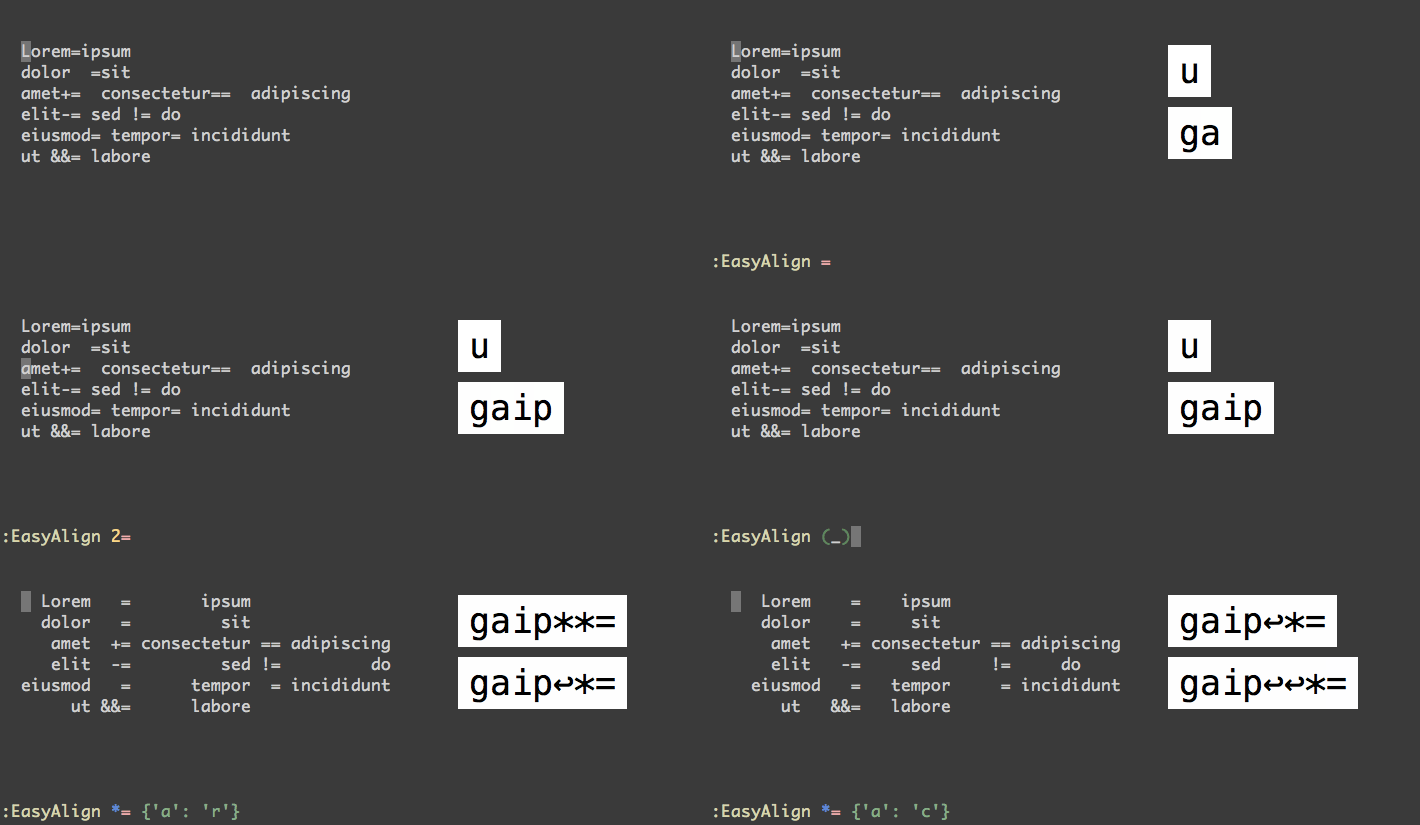
|
||||
|
||||
Installation
|
||||
------------
|
||||
|
||||
Use your favorite plugin manager.
|
||||
|
||||
Using [vim-plug](https://github.com/junegunn/vim-plug):
|
||||
|
||||
```vim
|
||||
Plug 'junegunn/vim-easy-align'
|
||||
```
|
||||
|
||||
Quick start guide
|
||||
-----------------
|
||||
|
||||
Add the following mappings to your .vimrc.
|
||||
|
||||
```vim
|
||||
" Start interactive EasyAlign in visual mode (e.g. vipga)
|
||||
xmap ga <Plug>(EasyAlign)
|
||||
|
||||
" Start interactive EasyAlign for a motion/text object (e.g. gaip)
|
||||
nmap ga <Plug>(EasyAlign)
|
||||
```
|
||||
|
||||
Then with the following lines of text,
|
||||
|
||||
```
|
||||
apple =red
|
||||
grass+=green
|
||||
sky-= blue
|
||||
```
|
||||
|
||||
try these commands:
|
||||
|
||||
- `vipga=`
|
||||
- `v`isual-select `i`nner `p`aragraph
|
||||
- Start EasyAlign command (`ga`)
|
||||
- Align around `=`
|
||||
- `gaip=`
|
||||
- Start EasyAlign command (`ga`) for `i`nner `p`aragraph
|
||||
- Align around `=`
|
||||
|
||||
Demo
|
||||
----
|
||||
|
||||
*Click on each image to see from the beginning.*
|
||||
|
||||
### Using predefined alignment rules
|
||||
|
||||
An *alignment rule* is a predefined set of options for common alignment tasks,
|
||||
which is identified by a single character, such as `<Space>`, `=`, `:`, `.`,
|
||||
`|`, `&`, `#`, and `,`.
|
||||
|
||||
#### `=`
|
||||
|
||||

|
||||
|
||||
- `=` Around the 1st occurrences
|
||||
- `2=` Around the 2nd occurrences
|
||||
- `*=` Around all occurrences
|
||||
- `**=` Left/Right alternating alignment around all occurrences
|
||||
- `<Enter>` Switching between left/right/center alignment modes
|
||||
|
||||
#### `<Space>`
|
||||
|
||||

|
||||
|
||||
- `<Space>` Around the 1st occurrences of whitespaces
|
||||
- `2<Space>` Around the 2nd occurrences
|
||||
- `-<Space>` Around the last occurrences
|
||||
- `<Enter><Enter>2<Space>` Center-alignment around the 2nd occurrences
|
||||
|
||||
#### `,`
|
||||
|
||||
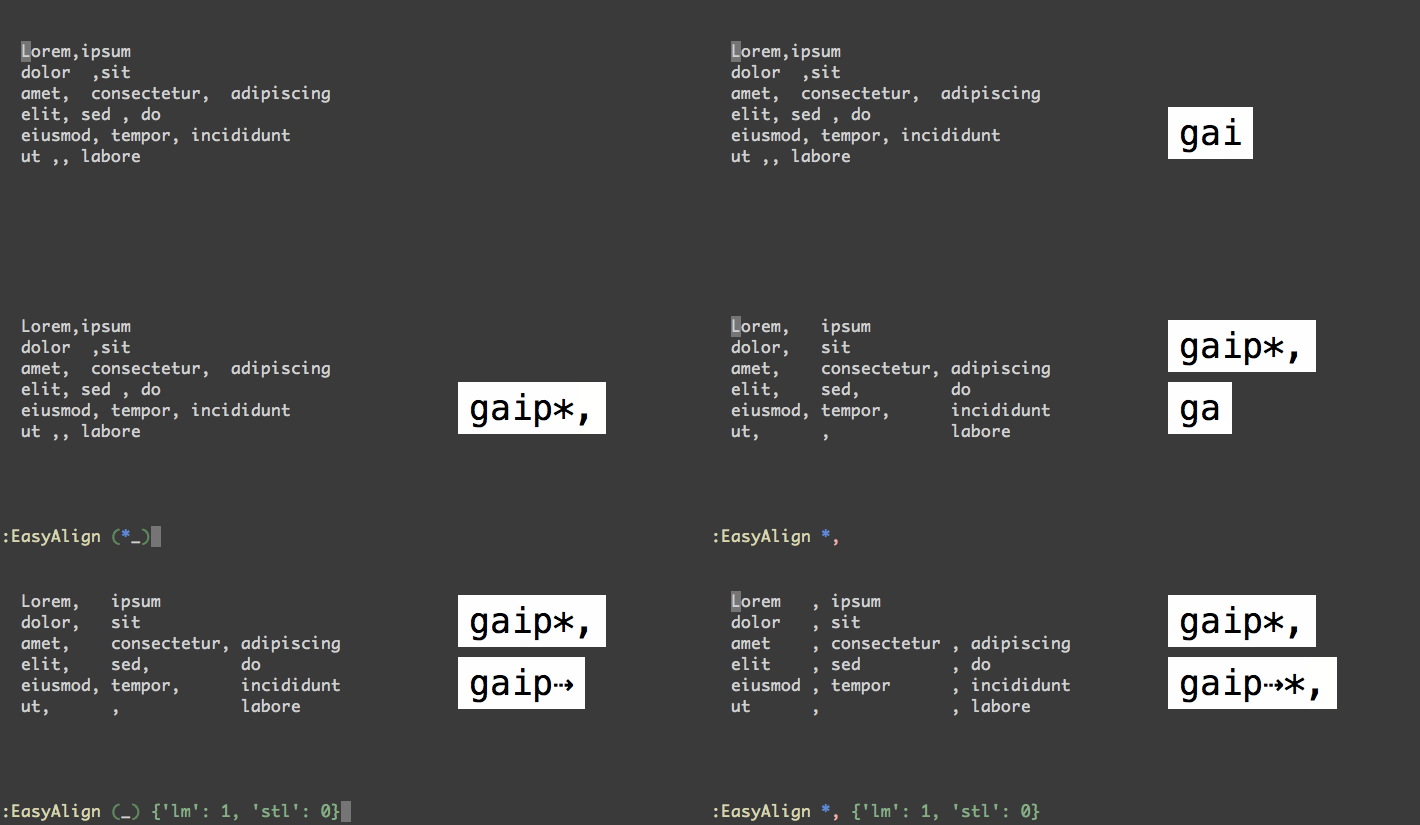
|
||||
|
||||
- The predefined comma-rule places a comma right next to the preceding token
|
||||
without margin (`{'stick_to_left': 1, 'left_margin': 0}`)
|
||||
- You can change it with `<Right>` arrow
|
||||
|
||||
### Using regular expression
|
||||
|
||||
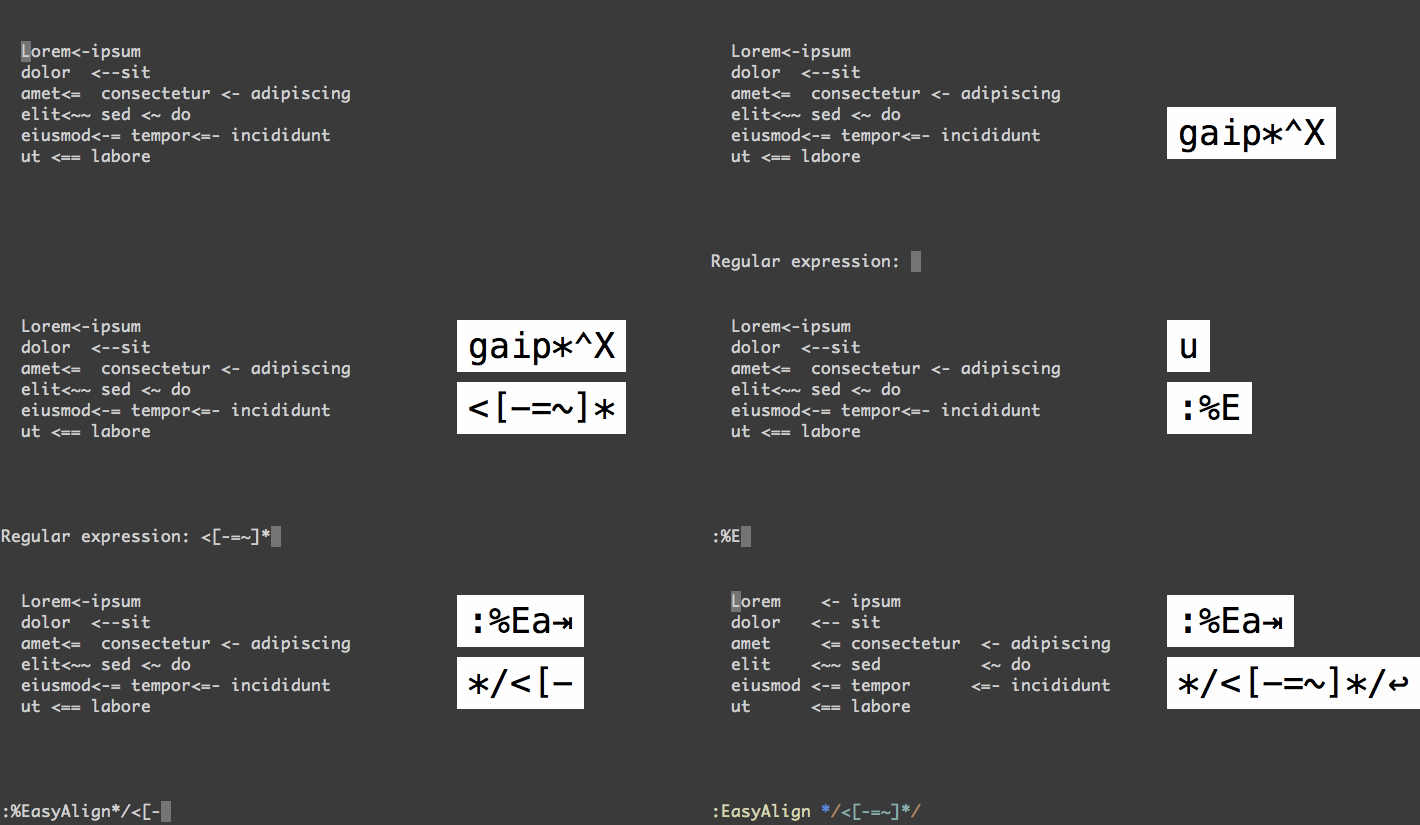
|
||||
|
||||
You can use an arbitrary regular expression by
|
||||
- pressing `<Ctrl-X>` in interactive mode
|
||||
- or using `:EasyAlign /REGEX/` command in visual mode or in normal mode with
|
||||
a range (e.g. `:%`)
|
||||
|
||||
### Different ways to start
|
||||
|
||||
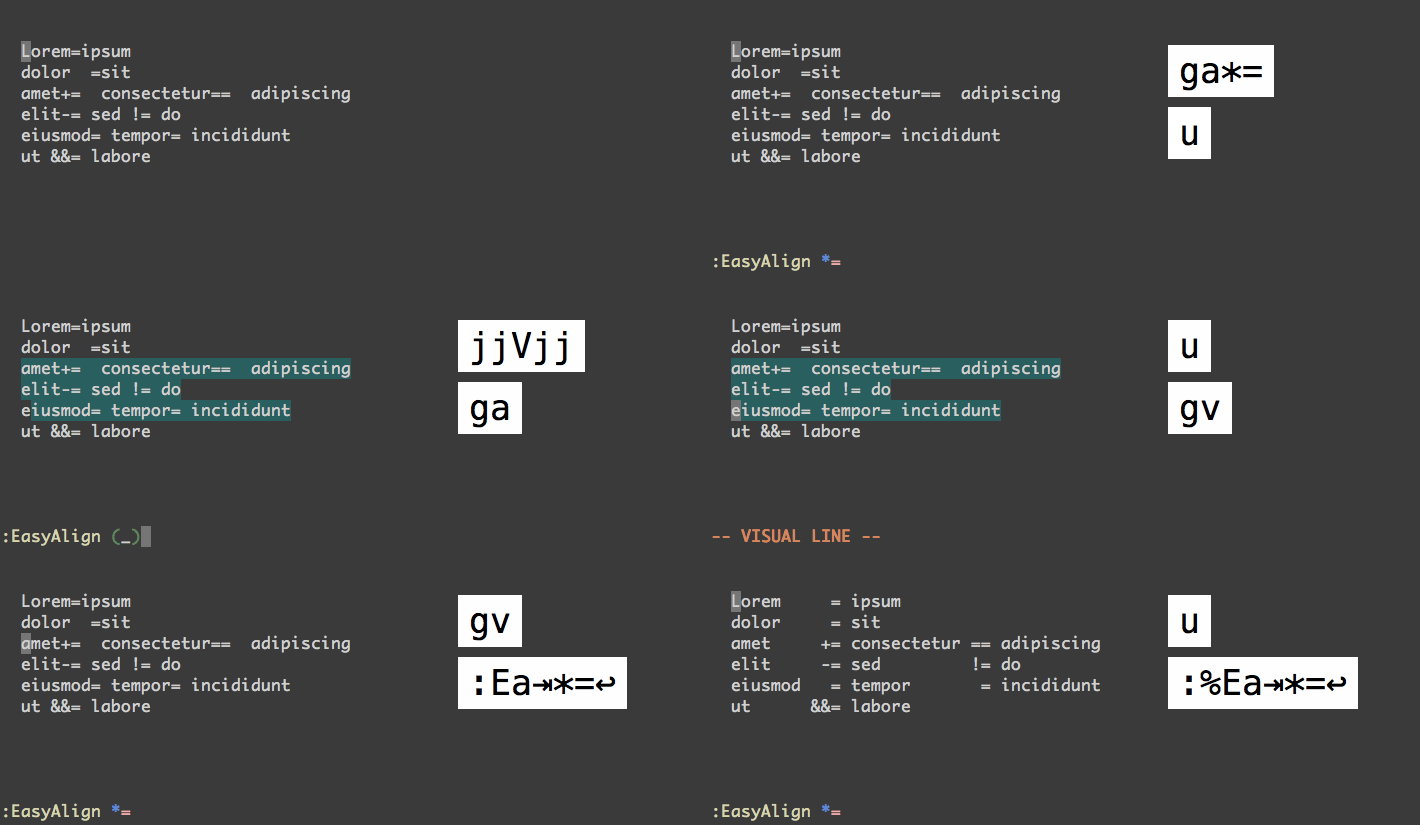
|
||||
|
||||
This demo shows how you can start interactive mode with visual selection or use
|
||||
non-interactive `:EasyAlign` command.
|
||||
|
||||
### Aligning table cells
|
||||
|
||||
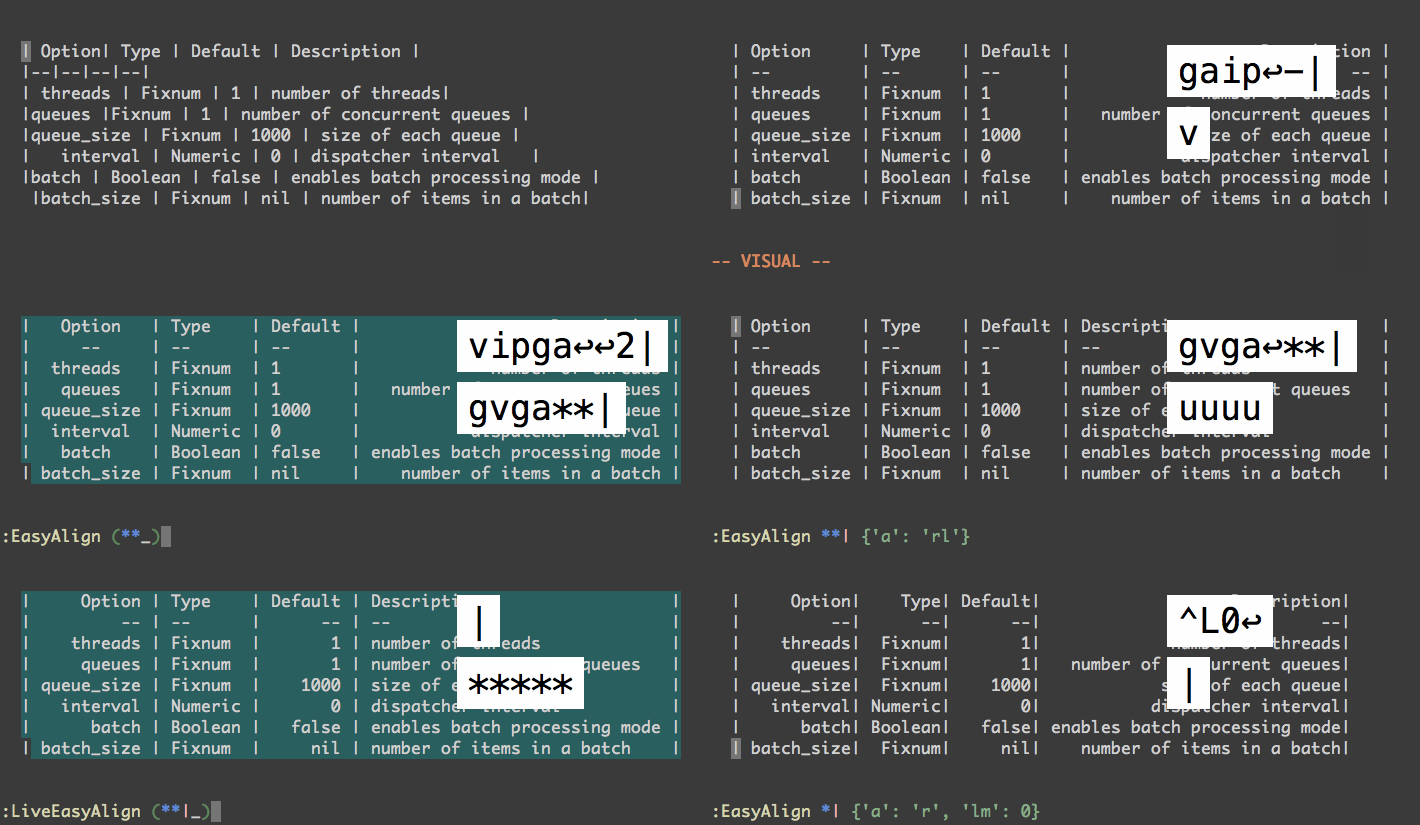
|
||||
|
||||
Check out various alignment options and "live interactive mode".
|
||||
|
||||
### Syntax-aware alignment
|
||||
|
||||
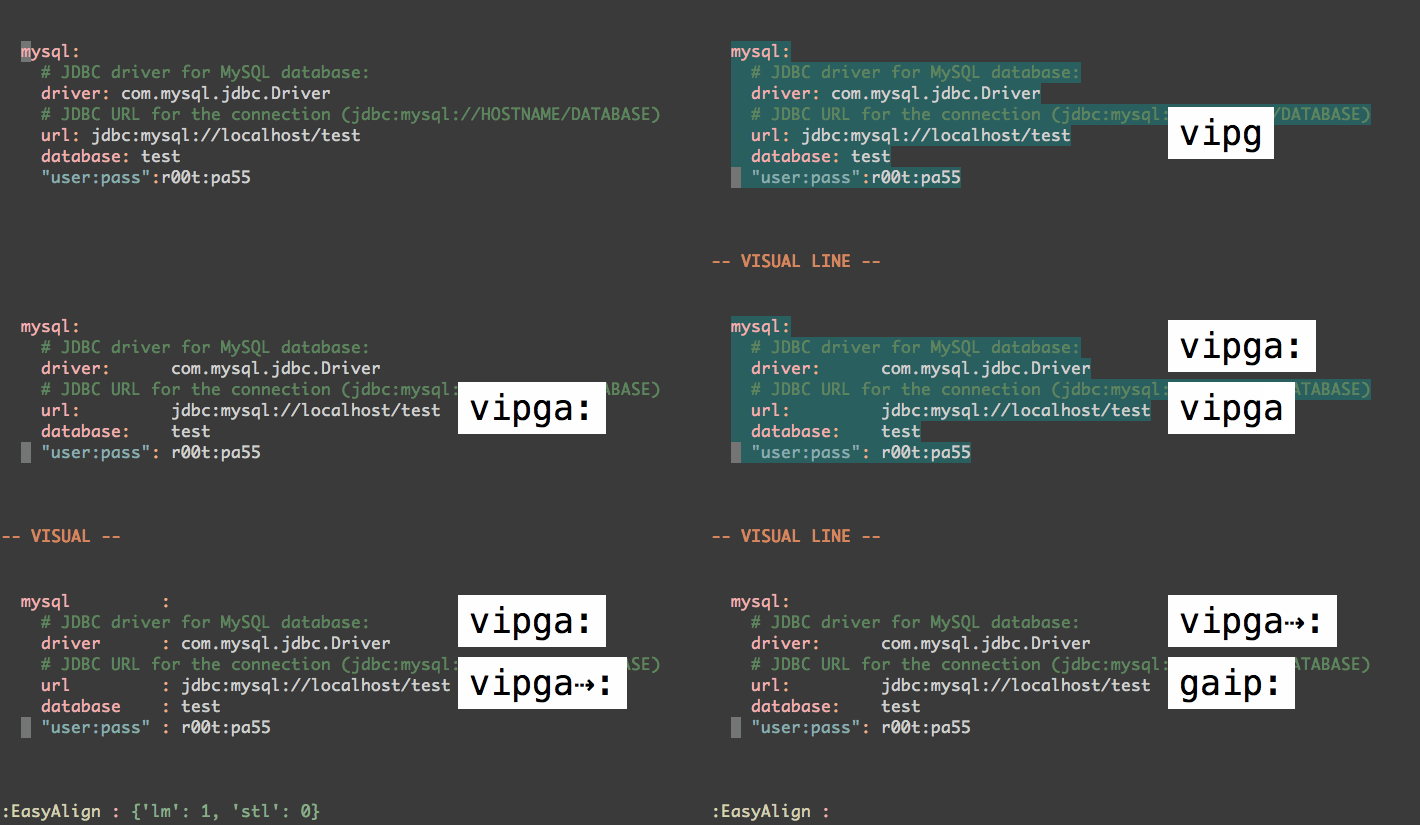
|
||||
|
||||
Delimiters in strings and comments are ignored by default.
|
||||
|
||||
### Using blockwise-visual mode
|
||||
|
||||
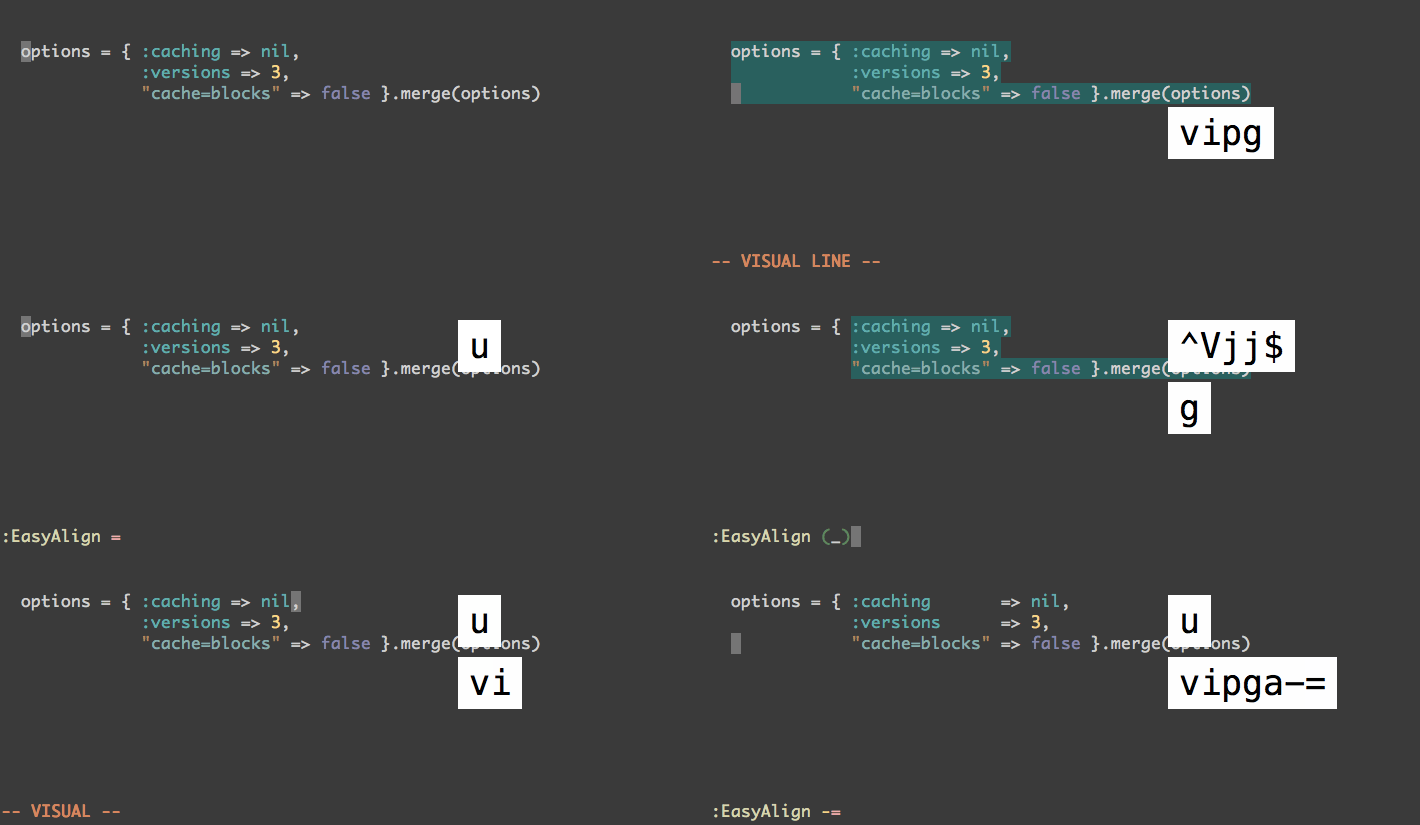
|
||||
|
||||
You can limit the scope with blockwise-visual mode.
|
||||
|
||||
Usage
|
||||
-----
|
||||
|
||||
### Flow of execution
|
||||
|
||||
<img src="https://raw.githubusercontent.com/junegunn/i/master/easy-align/usage.png" width="469">
|
||||
|
||||
There are two ways to use easy-align.
|
||||
|
||||
#### 1. `<Plug>` mappings (interactive mode)
|
||||
|
||||
The recommended method is to use `<Plug>(EasyAlign)` mapping in normal and
|
||||
visual mode. They are usually mapped to `ga`, but you can choose any key
|
||||
sequences.
|
||||
|
||||
```vim
|
||||
nmap ga <Plug>(EasyAlign)
|
||||
xmap ga <Plug>(EasyAlign)
|
||||
```
|
||||
|
||||
1. `ga` key in visual mode, or `ga` followed by a motion or a text
|
||||
object to start interactive mode
|
||||
1. (Optional) Enter keys to cycle between alignment mode (left, right, or center)
|
||||
1. (Optional) N-th delimiter (default: 1)
|
||||
- `1` Around the 1st occurrences of delimiters
|
||||
- `2` Around the 2nd occurrences of delimiters
|
||||
- ...
|
||||
- `*` Around all occurrences of delimiters
|
||||
- `**` Left-right alternating alignment around all delimiters
|
||||
- `-` Around the last occurrences of delimiters (`-1`)
|
||||
- `-2` Around the second to last occurrences of delimiters
|
||||
- ...
|
||||
1. Delimiter key (a single keystroke; `<Space>`, `=`, `:`, `.`, `|`, `&`, `#`, `,`) or an arbitrary regular expression followed by `<CTRL-X>`
|
||||
|
||||
#### 2. Using `:EasyAlign` command
|
||||
|
||||
If you prefer command-line, use `:EasyAlign` command instead.
|
||||
|
||||
```vim
|
||||
" Using predefined rules
|
||||
:EasyAlign[!] [N-th] DELIMITER_KEY [OPTIONS]
|
||||
|
||||
" Using regular expression
|
||||
:EasyAlign[!] [N-th] /REGEXP/ [OPTIONS]
|
||||
```
|
||||
|
||||
### Regular expression vs. predefined rules
|
||||
|
||||
You can use regular expressions but it's usually much easier to use predefined
|
||||
alignment rules that you can trigger with a single keystroke.
|
||||
|
||||
| Key | Description/Use cases |
|
||||
| --------- | -------------------------------------------------------------------- |
|
||||
| `<Space>` | General alignment around whitespaces |
|
||||
| `=` | Operators containing equals sign (`=`, `==,` `!=`, `+=`, `&&=`, ...) |
|
||||
| `:` | Suitable for formatting JSON or YAML |
|
||||
| `.` | Multi-line method chaining |
|
||||
| `,` | Multi-line method arguments |
|
||||
| `&` | LaTeX tables (matches `&` and `\\`) |
|
||||
| `#` | Ruby/Python comments |
|
||||
| `"` | Vim comments |
|
||||
| `<Bar>` | Table markdown |
|
||||
|
||||
You can also define your own rules with `g:easy_align_delimiters` which will
|
||||
be described in [the later section](#extending-alignment-rules).
|
||||
|
||||
----
|
||||
|
||||
### Interactive mode
|
||||
|
||||
Interactive mode is started either with `<Plug>(EasyAlign)` mapping or with
|
||||
`:EasyAlign` command with no argument.
|
||||
|
||||
#### Examples using predefined rules
|
||||
|
||||
| Keystrokes | Description | Equivalent command |
|
||||
| ------------ | ---------------------------------- | --------------------- |
|
||||
| `<Space>` | Around 1st whitespaces | `:'<,'>EasyAlign\ ` |
|
||||
| `2<Space>` | Around 2nd whitespaces | `:'<,'>EasyAlign2\ ` |
|
||||
| `-<Space>` | Around the last whitespaces | `:'<,'>EasyAlign-\ ` |
|
||||
| `-2<Space>` | Around the 2nd to last whitespaces | `:'<,'>EasyAlign-2\ ` |
|
||||
| `:` | Around 1st colon (`key: value`) | `:'<,'>EasyAlign:` |
|
||||
| `<Right>:` | Around 1st colon (`key : value`) | `:'<,'>EasyAlign:>l1` |
|
||||
| `=` | Around 1st operators with = | `:'<,'>EasyAlign=` |
|
||||
| `3=` | Around 3rd operators with = | `:'<,'>EasyAlign3=` |
|
||||
| `*=` | Around all operators with = | `:'<,'>EasyAlign*=` |
|
||||
| `**=` | Left-right alternating around = | `:'<,'>EasyAlign**=` |
|
||||
| `<Enter>=` | Right alignment around 1st = | `:'<,'>EasyAlign!=` |
|
||||
| `<Enter>**=` | Right-left alternating around = | `:'<,'>EasyAlign!**=` |
|
||||
|
||||
Instead of finishing the alignment with a delimiter key, you can type in
|
||||
a regular expression if you press `<CTRL-/>` or `<CTRL-X>`.
|
||||
|
||||
#### Alignment options in interactive mode
|
||||
|
||||
While in interactive mode, you can set alignment options using special shortcut
|
||||
keys listed below. The meaning of each option will be described in
|
||||
[the following sections](#alignment-options).
|
||||
|
||||
| Key | Option | Values |
|
||||
| --------- | ------------------ | -------------------------------------------------- |
|
||||
| `CTRL-F` | `filter` | Input string (`[gv]/.*/?`) |
|
||||
| `CTRL-I` | `indentation` | shallow, deep, none, keep |
|
||||
| `CTRL-L` | `left_margin` | Input number or string |
|
||||
| `CTRL-R` | `right_margin` | Input number or string |
|
||||
| `CTRL-D` | `delimiter_align` | left, center, right |
|
||||
| `CTRL-U` | `ignore_unmatched` | 0, 1 |
|
||||
| `CTRL-G` | `ignore_groups` | `[]`, `['String']`, `['Comment']`, `['String', 'Comment']` |
|
||||
| `CTRL-A` | `align` | Input string (`/[lrc]+\*{0,2}/`) |
|
||||
| `<Left>` | `stick_to_left` | `{ 'stick_to_left': 1, 'left_margin': 0 }` |
|
||||
| `<Right>` | `stick_to_left` | `{ 'stick_to_left': 0, 'left_margin': 1 }` |
|
||||
| `<Down>` | `*_margin` | `{ 'left_margin': 0, 'right_margin': 0 }` |
|
||||
|
||||
#### Live interactive mode
|
||||
|
||||
If you're performing a complex alignment where multiple options should be
|
||||
carefully adjusted, try "live interactive mode" where you can preview the result
|
||||
of the alignment on-the-fly as you type in.
|
||||
|
||||
Live interactive mode can be started with either `<Plug>(LiveEasyAlign)` map
|
||||
or `:LiveEasyAlign` command. Or you can switch to live interactive mode while
|
||||
in ordinary interactive mode by pressing `<CTRL-P>`. (P for Preview)
|
||||
|
||||
In live interactive mode, you have to type in the same delimiter (or
|
||||
`<CTRL-X>` on regular expression) again to finalize the alignment. This allows
|
||||
you to preview the result of the alignment and freely change the delimiter
|
||||
using backspace key without leaving the interactive mode.
|
||||
|
||||
### :EasyAlign command
|
||||
|
||||
Instead of starting interactive mode, you can use non-interactive `:EasyAlign`
|
||||
command.
|
||||
|
||||
```vim
|
||||
" Using predefined alignment rules
|
||||
" :EasyAlign[!] [N-th] DELIMITER_KEY [OPTIONS]
|
||||
:EasyAlign :
|
||||
:EasyAlign =
|
||||
:EasyAlign *=
|
||||
:EasyAlign 3\
|
||||
|
||||
" Using arbitrary regular expressions
|
||||
" :EasyAlign[!] [N-th] /REGEXP/ [OPTIONS]
|
||||
:EasyAlign /[:;]\+/
|
||||
:EasyAlign 2/[:;]\+/
|
||||
:EasyAlign */[:;]\+/
|
||||
:EasyAlign **/[:;]\+/
|
||||
```
|
||||
|
||||
A command can end with alignment options, [each of which will be discussed in
|
||||
detail later](#alignment-options), in Vim dictionary format.
|
||||
|
||||
- `:EasyAlign * /[:;]\+/ { 'stick_to_left': 1, 'left_margin': 0 }`
|
||||
|
||||
`stick_to_left` of 1 means that the matched delimiter should be positioned right
|
||||
next to the preceding token, and `left_margin` of 0 removes the margin on the
|
||||
left. So we get:
|
||||
|
||||
apple;: banana:: cake
|
||||
data;; exchange:; format
|
||||
|
||||
You don't have to write complete names as long as they're distinguishable.
|
||||
|
||||
- `:EasyAlign * /[:;]\+/ { 'stl': 1, 'l': 0 }`
|
||||
|
||||
You can even omit spaces between the arguments.
|
||||
|
||||
- `:EasyAlign*/[:;]\+/{'s':1,'l':0}`
|
||||
|
||||
Nice. But let's make it even shorter. Option values can be written in shorthand
|
||||
notation.
|
||||
|
||||
- `:EasyAlign*/[:;]\+/<l0`
|
||||
|
||||
The following table summarizes the shorthand notation.
|
||||
|
||||
| Option | Expression |
|
||||
| ------------------ | -------------- |
|
||||
| `filter` | `[gv]/.*/` |
|
||||
| `left_margin` | `l[0-9]+` |
|
||||
| `right_margin` | `r[0-9]+` |
|
||||
| `stick_to_left` | `<` or `>` |
|
||||
| `ignore_unmatched` | `iu[01]` |
|
||||
| `ignore_groups` | `ig\[.*\]` |
|
||||
| `align` | `a[lrc*]*` |
|
||||
| `delimiter_align` | `d[lrc]` |
|
||||
| `indentation` | `i[ksdn]` |
|
||||
|
||||
### Partial alignment in blockwise-visual mode
|
||||
|
||||
In blockwise-visual mode (`CTRL-V`), EasyAlign command aligns only the selected
|
||||
text in the block, instead of the whole lines in the range.
|
||||
|
||||
Consider the following case where you want to align text around `=>` operators.
|
||||
|
||||
```ruby
|
||||
my_hash = { :a => 1,
|
||||
:aa => 2,
|
||||
:aaa => 3 }
|
||||
```
|
||||
|
||||
In non-blockwise visual mode (`v` / `V`), `<Enter>=` won't work since the
|
||||
assignment operator in the first line gets in the way. So we instead enter
|
||||
blockwise-visual mode (`CTRL-V`), and select the text *around*
|
||||
`=>` operators, then press `<Enter>=`.
|
||||
|
||||
```ruby
|
||||
my_hash = { :a => 1,
|
||||
:aa => 2,
|
||||
:aaa => 3 }
|
||||
```
|
||||
|
||||
However, in this case, we don't really need blockwise visual mode
|
||||
since the same can be easily done using the negative N-th parameter: `<Enter>-=`
|
||||
|
||||
|
||||
Alignment options
|
||||
-----------------
|
||||
|
||||
### List of options
|
||||
|
||||
| Option | Type | Default | Description |
|
||||
| ------------------ | ------- | --------------------- | ------------------------------------------------------- |
|
||||
| `filter` | string | | Line filtering expression: `g/../` or `v/../` |
|
||||
| `left_margin` | number | 1 | Number of spaces to attach before delimiter |
|
||||
| `left_margin` | string | `' '` | String to attach before delimiter |
|
||||
| `right_margin` | number | 1 | Number of spaces to attach after delimiter |
|
||||
| `right_margin` | string | `' '` | String to attach after delimiter |
|
||||
| `stick_to_left` | boolean | 0 | Whether to position delimiter on the left-side |
|
||||
| `ignore_groups` | list | ['String', 'Comment'] | Delimiters in these syntax highlight groups are ignored |
|
||||
| `ignore_unmatched` | boolean | 1 | Whether to ignore lines without matching delimiter |
|
||||
| `indentation` | string | `k` | Indentation method (*k*eep, *d*eep, *s*hallow, *n*one) |
|
||||
| `delimiter_align` | string | `r` | Determines how to align delimiters of different lengths |
|
||||
| `align` | string | `l` | Alignment modes for multiple occurrences of delimiters |
|
||||
|
||||
There are 4 ways to set alignment options (from lowest precedence to highest):
|
||||
|
||||
1. Some option values can be set with corresponding global variables
|
||||
2. Option values can be specified in the definition of each alignment rule
|
||||
3. Option values can be given as arguments to `:EasyAlign` command
|
||||
4. Option values can be set in interactive mode using special shortcut keys
|
||||
|
||||
| Option name | Shortcut key | Abbreviated | Global variable |
|
||||
| ------------------ | ------------------- | -------------- | ------------------------------- |
|
||||
| `filter` | `CTRL-F` | `[gv]/.*/` | |
|
||||
| `left_margin` | `CTRL-L` | `l[0-9]+` | |
|
||||
| `right_margin` | `CTRL-R` | `r[0-9]+` | |
|
||||
| `stick_to_left` | `<Left>`, `<Right>` | `<` or `>` | |
|
||||
| `ignore_groups` | `CTRL-G` | `ig\[.*\]` | `g:easy_align_ignore_groups` |
|
||||
| `ignore_unmatched` | `CTRL-U` | `iu[01]` | `g:easy_align_ignore_unmatched` |
|
||||
| `indentation` | `CTRL-I` | `i[ksdn]` | `g:easy_align_indentation` |
|
||||
| `delimiter_align` | `CTRL-D` | `d[lrc]` | `g:easy_align_delimiter_align` |
|
||||
| `align` | `CTRL-A` | `a[lrc*]*` | |
|
||||
|
||||
### Filtering lines
|
||||
|
||||
With `filter` option, you can align lines that only match or do not match a
|
||||
given pattern. There are several ways to set the pattern.
|
||||
|
||||
1. Press `CTRL-F` in interactive mode and type in `g/pat/` or `v/pat/`
|
||||
2. In command-line, it can be written in dictionary format: `{'filter': 'g/pat/'}`
|
||||
3. Or in shorthand notation: `g/pat/` or `v/pat/`
|
||||
|
||||
(You don't need to escape '/'s in the regular expression)
|
||||
|
||||
#### Examples
|
||||
|
||||
```vim
|
||||
" Start interactive mode with filter option set to g/hello/
|
||||
EasyAlign g/hello/
|
||||
|
||||
" Start live interactive mode with filter option set to v/goodbye/
|
||||
LiveEasyAlign v/goodbye/
|
||||
|
||||
" Align the lines with 'hi' around the first colons
|
||||
EasyAlign:g/hi/
|
||||
```
|
||||
|
||||
### Ignoring delimiters in comments or strings
|
||||
|
||||
EasyAlign can be configured to ignore delimiters in certain syntax highlight
|
||||
groups, such as code comments or strings. By default, delimiters that are
|
||||
highlighted as code comments or strings are ignored.
|
||||
|
||||
```vim
|
||||
" Default:
|
||||
" If a delimiter is in a highlight group whose name matches
|
||||
" any of the followings, it will be ignored.
|
||||
let g:easy_align_ignore_groups = ['Comment', 'String']
|
||||
```
|
||||
|
||||
For example, the following paragraph
|
||||
|
||||
```ruby
|
||||
{
|
||||
# Quantity of apples: 1
|
||||
apple: 1,
|
||||
# Quantity of bananas: 2
|
||||
bananas: 2,
|
||||
# Quantity of grape:fruits: 3
|
||||
'grape:fruits': 3
|
||||
}
|
||||
```
|
||||
|
||||
becomes as follows on `<Enter>:` (or `:EasyAlign:`)
|
||||
|
||||
```ruby
|
||||
{
|
||||
# Quantity of apples: 1
|
||||
apple: 1,
|
||||
# Quantity of bananas: 2
|
||||
bananas: 2,
|
||||
# Quantity of grape:fruits: 3
|
||||
'grape:fruits': 3
|
||||
}
|
||||
```
|
||||
|
||||
Naturally, this feature only works when syntax highlighting is enabled.
|
||||
|
||||
You can change the default rule by using one of these 4 methods.
|
||||
|
||||
1. Press `CTRL-G` in interactive mode to switch groups
|
||||
2. Define global `g:easy_align_ignore_groups` list
|
||||
3. Define a custom rule in `g:easy_align_delimiters` with `ignore_groups` option
|
||||
4. Provide `ignore_groups` option to `:EasyAlign` command.
|
||||
e.g. `:EasyAlign:ig[]`
|
||||
|
||||
For example if you set `ignore_groups` option to be an empty list, you get
|
||||
|
||||
```ruby
|
||||
{
|
||||
# Quantity of apples: 1
|
||||
apple: 1,
|
||||
# Quantity of bananas: 2
|
||||
bananas: 2,
|
||||
# Quantity of grape: fruits: 3
|
||||
'grape: fruits': 3
|
||||
}
|
||||
```
|
||||
|
||||
If a pattern in `ignore_groups` is prepended by a `!`, it will have the opposite
|
||||
meaning. For instance, if `ignore_groups` is given as `['!Comment']`, delimiters
|
||||
that are *not* highlighted as Comment will be ignored during the alignment.
|
||||
|
||||
### Ignoring unmatched lines
|
||||
|
||||
`ignore_unmatched` option determines how EasyAlign command processes lines that
|
||||
do not have N-th delimiter.
|
||||
|
||||
1. In left-alignment mode, they are ignored
|
||||
2. In right or center-alignment mode, they are *not* ignored, and the last
|
||||
tokens from those lines are aligned as well as if there is an invisible
|
||||
trailing delimiter at the end of each line
|
||||
3. If `ignore_unmatched` is 1, they are ignored regardless of the alignment mode
|
||||
4. If `ignore_unmatched` is 0, they are *not* ignored regardless of the mode
|
||||
|
||||
Let's take an example.
|
||||
When we align the following code block around the (1st) colons,
|
||||
|
||||
```ruby
|
||||
{
|
||||
apple: proc {
|
||||
this_line_does_not_have_a_colon
|
||||
},
|
||||
bananas: 2,
|
||||
grapefruits: 3
|
||||
}
|
||||
```
|
||||
|
||||
this is usually what we want.
|
||||
|
||||
```ruby
|
||||
{
|
||||
apple: proc {
|
||||
this_line_does_not_have_a_colon
|
||||
},
|
||||
bananas: 2,
|
||||
grapefruits: 3
|
||||
}
|
||||
```
|
||||
|
||||
However, we can override this default behavior by setting `ignore_unmatched`
|
||||
option to zero using one of the following methods.
|
||||
|
||||
1. Press `CTRL-U` in interactive mode to toggle `ignore_unmatched` option
|
||||
2. Set the global `g:easy_align_ignore_unmatched` variable to 0
|
||||
3. Define a custom alignment rule with `ignore_unmatched` option set to 0
|
||||
4. Provide `ignore_unmatched` option to `:EasyAlign` command. e.g. `:EasyAlign:iu0`
|
||||
|
||||
Then we get,
|
||||
|
||||
```ruby
|
||||
{
|
||||
apple: proc {
|
||||
this_line_does_not_have_a_colon
|
||||
},
|
||||
bananas: 2,
|
||||
grapefruits: 3
|
||||
}
|
||||
```
|
||||
|
||||
### Aligning delimiters of different lengths
|
||||
|
||||
Global `g:easy_align_delimiter_align` option and rule-wise/command-wise
|
||||
`delimiter_align` option determines how matched delimiters of different lengths
|
||||
are aligned.
|
||||
|
||||
```ruby
|
||||
apple = 1
|
||||
banana += apple
|
||||
cake ||= banana
|
||||
```
|
||||
|
||||
By default, delimiters are right-aligned as follows.
|
||||
|
||||
```ruby
|
||||
apple = 1
|
||||
banana += apple
|
||||
cake ||= banana
|
||||
```
|
||||
|
||||
However, with `:EasyAlign=dl`, delimiters are left-aligned.
|
||||
|
||||
```ruby
|
||||
apple = 1
|
||||
banana += apple
|
||||
cake ||= banana
|
||||
```
|
||||
|
||||
And on `:EasyAlign=dc`, center-aligned.
|
||||
|
||||
```ruby
|
||||
apple = 1
|
||||
banana += apple
|
||||
cake ||= banana
|
||||
```
|
||||
|
||||
In interactive mode, you can change the option value with `CTRL-D` key.
|
||||
|
||||
### Adjusting indentation
|
||||
|
||||
By default :EasyAlign command keeps the original indentation of the lines. But
|
||||
then again we have `indentation` option. See the following example.
|
||||
|
||||
```ruby
|
||||
# Lines with different indentation
|
||||
apple = 1
|
||||
banana = 2
|
||||
cake = 3
|
||||
daisy = 4
|
||||
eggplant = 5
|
||||
|
||||
# Default: _k_eep the original indentation
|
||||
# :EasyAlign=
|
||||
apple = 1
|
||||
banana = 2
|
||||
cake = 3
|
||||
daisy = 4
|
||||
eggplant = 5
|
||||
|
||||
# Use the _s_hallowest indentation among the lines
|
||||
# :EasyAlign=is
|
||||
apple = 1
|
||||
banana = 2
|
||||
cake = 3
|
||||
daisy = 4
|
||||
eggplant = 5
|
||||
|
||||
# Use the _d_eepest indentation among the lines
|
||||
# :EasyAlign=id
|
||||
apple = 1
|
||||
banana = 2
|
||||
cake = 3
|
||||
daisy = 4
|
||||
eggplant = 5
|
||||
|
||||
# Indentation: _n_one
|
||||
# :EasyAlign=in
|
||||
apple = 1
|
||||
banana = 2
|
||||
cake = 3
|
||||
daisy = 4
|
||||
eggplant = 5
|
||||
```
|
||||
|
||||
In interactive mode, you can change the option value with `CTRL-I` key.
|
||||
|
||||
### Alignments over multiple occurrences of delimiters
|
||||
|
||||
As stated above, "N-th" parameter is used to target specific occurrences of
|
||||
the delimiter when it appears multiple times in each line.
|
||||
|
||||
To recap:
|
||||
|
||||
```vim
|
||||
" Left-alignment around the FIRST occurrences of delimiters
|
||||
:EasyAlign =
|
||||
|
||||
" Left-alignment around the SECOND occurrences of delimiters
|
||||
:EasyAlign 2=
|
||||
|
||||
" Left-alignment around the LAST occurrences of delimiters
|
||||
:EasyAlign -=
|
||||
|
||||
" Left-alignment around ALL occurrences of delimiters
|
||||
:EasyAlign *=
|
||||
|
||||
" Left-right ALTERNATING alignment around all occurrences of delimiters
|
||||
:EasyAlign **=
|
||||
|
||||
" Right-left ALTERNATING alignment around all occurrences of delimiters
|
||||
:EasyAlign! **=
|
||||
```
|
||||
|
||||
In addition to these, you can fine-tune alignments over multiple occurrences
|
||||
of the delimiters with 'align' option. (The option can also be set in
|
||||
interactive mode with the special key `CTRL-A`)
|
||||
|
||||
```vim
|
||||
" Left alignment over the first two occurrences of delimiters
|
||||
:EasyAlign = { 'align': 'll' }
|
||||
|
||||
" Right, left, center alignment over the 1st to 3rd occurrences of delimiters
|
||||
:EasyAlign = { 'a': 'rlc' }
|
||||
|
||||
" Using shorthand notation
|
||||
:EasyAlign = arlc
|
||||
|
||||
" Right, left, center alignment over the 2nd to 4th occurrences of delimiters
|
||||
:EasyAlign 2=arlc
|
||||
|
||||
" (*) Repeating alignments (default: l, r, or c)
|
||||
" Right, left, center, center, center, center, ...
|
||||
:EasyAlign *=arlc
|
||||
|
||||
" (**) Alternating alignments (default: lr or rl)
|
||||
" Right, left, center, right, left, center, ...
|
||||
:EasyAlign **=arlc
|
||||
|
||||
" Right, left, center, center, center, ... repeating alignment
|
||||
" over the 3rd to the last occurrences of delimiters
|
||||
:EasyAlign 3=arlc*
|
||||
|
||||
" Right, left, center, right, left, center, ... alternating alignment
|
||||
" over the 3rd to the last occurrences of delimiters
|
||||
:EasyAlign 3=arlc**
|
||||
```
|
||||
|
||||
### Extending alignment rules
|
||||
|
||||
Although the default rules should cover the most of the use cases,
|
||||
you can extend the rules by setting a dictionary named `g:easy_align_delimiters`.
|
||||
|
||||
You may refer to the definitions of the default alignment rules
|
||||
[here](https://github.com/junegunn/vim-easy-align/blob/2.9.6/autoload/easy_align.vim#L32-L46).
|
||||
|
||||
#### Examples
|
||||
|
||||
```vim
|
||||
let g:easy_align_delimiters = {
|
||||
\ '>': { 'pattern': '>>\|=>\|>' },
|
||||
\ '/': {
|
||||
\ 'pattern': '//\+\|/\*\|\*/',
|
||||
\ 'delimiter_align': 'l',
|
||||
\ 'ignore_groups': ['!Comment'] },
|
||||
\ ']': {
|
||||
\ 'pattern': '[[\]]',
|
||||
\ 'left_margin': 0,
|
||||
\ 'right_margin': 0,
|
||||
\ 'stick_to_left': 0
|
||||
\ },
|
||||
\ ')': {
|
||||
\ 'pattern': '[()]',
|
||||
\ 'left_margin': 0,
|
||||
\ 'right_margin': 0,
|
||||
\ 'stick_to_left': 0
|
||||
\ },
|
||||
\ 'd': {
|
||||
\ 'pattern': ' \(\S\+\s*[;=]\)\@=',
|
||||
\ 'left_margin': 0,
|
||||
\ 'right_margin': 0
|
||||
\ }
|
||||
\ }
|
||||
```
|
||||
|
||||
Other options
|
||||
-------------
|
||||
|
||||
### Disabling &foldmethod during alignment
|
||||
|
||||
[It is reported](https://github.com/junegunn/vim-easy-align/issues/14) that
|
||||
`&foldmethod` value of `expr` or `syntax` can significantly slow down the
|
||||
alignment when editing a large, complex file with many folds. To alleviate this
|
||||
issue, EasyAlign provides an option to temporarily set `&foldmethod` to `manual`
|
||||
during the alignment task. In order to enable this feature, set
|
||||
`g:easy_align_bypass_fold` switch to 1.
|
||||
|
||||
```vim
|
||||
let g:easy_align_bypass_fold = 1
|
||||
```
|
||||
|
||||
### Left/right/center mode switch in interactive mode
|
||||
|
||||
In interactive mode, you can choose the alignment mode you want by pressing
|
||||
enter keys. The non-bang command, `:EasyAlign` starts in left-alignment mode
|
||||
and changes to right and center mode as you press enter keys, while the bang
|
||||
version first starts in right-alignment mode.
|
||||
|
||||
- `:EasyAlign`
|
||||
- Left, Right, Center
|
||||
- `:EasyAlign!`
|
||||
- Right, Left, Center
|
||||
|
||||
If you do not prefer this default mode transition, you can define your own
|
||||
settings as follows.
|
||||
|
||||
```vim
|
||||
let g:easy_align_interactive_modes = ['l', 'r']
|
||||
let g:easy_align_bang_interactive_modes = ['c', 'r']
|
||||
```
|
||||
|
||||
Advanced examples and use cases
|
||||
-------------------------------
|
||||
|
||||
See [EXAMPLES.md](https://github.com/junegunn/vim-easy-align/blob/master/EXAMPLES.md)
|
||||
for more examples.
|
||||
|
||||
Related work
|
||||
------------
|
||||
|
||||
- [DrChip's Alignment Tool for Vim](http://www.drchip.org/astronaut/vim/align.html)
|
||||
- [Tabular](https://github.com/godlygeek/tabular)
|
||||
|
||||
Author
|
||||
------
|
||||
|
||||
[Junegunn Choi](https://github.com/junegunn)
|
||||
|
||||
License
|
||||
-------
|
||||
|
||||
MIT
|
||||
File diff suppressed because it is too large
Load diff
|
|
@ -1,891 +0,0 @@
|
|||
*easy-align.txt* easy-align Last change: December 14 2014
|
||||
EASY-ALIGN - TABLE OF CONTENTS *easyalign* *easy-align* *easy-align-toc*
|
||||
==============================================================================
|
||||
|
||||
vim-easy-align
|
||||
Demo |easy-align-1|
|
||||
Features |easy-align-2|
|
||||
Installation |easy-align-3|
|
||||
TLDR - One-minute guide |easy-align-4|
|
||||
Usage |easy-align-5|
|
||||
Concept of alignment rule |easy-align-5-1|
|
||||
Execution models |easy-align-5-2|
|
||||
1. Using <Plug> mappings |easy-align-5-2-1|
|
||||
2. Using :EasyAlign command |easy-align-5-2-2|
|
||||
Interactive mode |easy-align-5-3|
|
||||
Predefined alignment rules |easy-align-5-3-1|
|
||||
Examples |easy-align-5-3-2|
|
||||
Using regular expressions |easy-align-5-3-3|
|
||||
Alignment options in interactive mode |easy-align-5-3-4|
|
||||
Live interactive mode |easy-align-5-4|
|
||||
Non-interactive mode |easy-align-5-5|
|
||||
Partial alignment in blockwise-visual mode |easy-align-5-6|
|
||||
Alignment options |easy-align-6|
|
||||
List of options |easy-align-6-1|
|
||||
Filtering lines |easy-align-6-2|
|
||||
Examples |easy-align-6-2-1|
|
||||
Ignoring delimiters in comments or strings |easy-align-6-3|
|
||||
Ignoring unmatched lines |easy-align-6-4|
|
||||
Aligning delimiters of different lengths |easy-align-6-5|
|
||||
Adjusting indentation |easy-align-6-6|
|
||||
Alignments over multiple occurrences of delimiters |easy-align-6-7|
|
||||
Extending alignment rules |easy-align-6-8|
|
||||
Examples |easy-align-6-8-1|
|
||||
Other options |easy-align-7|
|
||||
Disabling &foldmethod during alignment |easy-align-7-1|
|
||||
Left/right/center mode switch in interactive mode |easy-align-7-2|
|
||||
Advanced examples and use cases |easy-align-8|
|
||||
Related work |easy-align-9|
|
||||
Author |easy-align-10|
|
||||
License |easy-align-11|
|
||||
|
||||
|
||||
VIM-EASY-ALIGN *vim-easy-align*
|
||||
==============================================================================
|
||||
|
||||
A simple, easy-to-use Vim alignment plugin.
|
||||
|
||||
|
||||
*easy-align-1*
|
||||
DEMO *easy-align-demo*
|
||||
==============================================================================
|
||||
|
||||
Screencast:
|
||||
https://raw.githubusercontent.com/junegunn/i/master/vim-easy-align.gif
|
||||
|
||||
(Too fast? Slower GIF is {here}{1})
|
||||
|
||||
{1} https://raw.githubusercontent.com/junegunn/i/master/vim-easy-align-slow.gif
|
||||
|
||||
|
||||
*easy-align-2*
|
||||
FEATURES *easy-align-features*
|
||||
==============================================================================
|
||||
|
||||
- Easy to use
|
||||
- Comes with a predefined set of alignment rules
|
||||
- Provides a fast and intuitive interface
|
||||
- Extensible
|
||||
- You can define your own rules
|
||||
- Supports arbitrary regular expressions
|
||||
- Optimized for code editing
|
||||
- Takes advantage of syntax highlighting feature to avoid unwanted
|
||||
alignments
|
||||
|
||||
|
||||
*easy-align-3*
|
||||
INSTALLATION *easy-align-installation*
|
||||
==============================================================================
|
||||
|
||||
Use your favorite plugin manager.
|
||||
|
||||
Using {vim-plug}{2}:
|
||||
>
|
||||
Plug 'junegunn/vim-easy-align'
|
||||
<
|
||||
{2} https://github.com/junegunn/vim-plug
|
||||
|
||||
|
||||
*easy-align-4*
|
||||
TLDR - ONE-MINUTE GUIDE *easy-align-tldr-one-minute-guide*
|
||||
==============================================================================
|
||||
|
||||
Add the following mappings to your .vimrc.
|
||||
|
||||
*<Plug>(EasyAlign)*
|
||||
>
|
||||
" Start interactive EasyAlign in visual mode (e.g. vip<Enter>)
|
||||
vmap <Enter> <Plug>(EasyAlign)
|
||||
|
||||
" Start interactive EasyAlign for a motion/text object (e.g. gaip)
|
||||
nmap ga <Plug>(EasyAlign)
|
||||
<
|
||||
And with the following lines of text,
|
||||
>
|
||||
apple =red
|
||||
grass+=green
|
||||
sky-= blue
|
||||
<
|
||||
try these commands:
|
||||
|
||||
- vip<Enter>=
|
||||
- `v`isual-select `i`nner `p`aragraph
|
||||
- Start EasyAlign command (<Enter>)
|
||||
- Align around `=`
|
||||
- `gaip=`
|
||||
- Start EasyAlign command (`ga`) for `i`nner `p`aragraph
|
||||
- Align around `=`
|
||||
|
||||
Notice that the commands are repeatable with `.` key if you have installed
|
||||
{repeat.vim}{3}. Install {visualrepeat}{4} as well if you want to repeat in
|
||||
visual mode.
|
||||
|
||||
{3} https://github.com/tpope/vim-repeat
|
||||
{4} https://github.com/vim-scripts/visualrepeat
|
||||
|
||||
|
||||
*easy-align-5*
|
||||
USAGE *easy-align-usage*
|
||||
==============================================================================
|
||||
|
||||
|
||||
< Concept of alignment rule >_________________________________________________~
|
||||
*easy-align-concept-of-alignment-rule*
|
||||
*easy-align-5-1*
|
||||
|
||||
Though easy-align can align lines of text around any delimiter, it provides
|
||||
shortcuts for the most common use cases with the concept of "alignment rule".
|
||||
|
||||
An alignment rule is a predefined set of options for common alignment tasks,
|
||||
which is identified by a single character, DELIMITER KEY, such as <Space>,
|
||||
`=`, `:`, `.`, `|`, `&`, `#`, and `,`.
|
||||
|
||||
Think of it as a shortcut. Instead of writing regular expression and setting
|
||||
several options, you can just type in a single character.
|
||||
|
||||
|
||||
< Execution models >__________________________________________________________~
|
||||
*easy-align-execution-models*
|
||||
*easy-align-5-2*
|
||||
|
||||
There are two ways to use easy-align.
|
||||
|
||||
|
||||
1. Using <Plug> mappings~
|
||||
*easy-align-1-using-plug-mappings*
|
||||
*easy-align-5-2-1*
|
||||
|
||||
The recommended method is to use <Plug> mappings as described earlier.
|
||||
|
||||
*<Plug>(LiveEasyAlign)*
|
||||
|
||||
----------------------+--------+-----------------------------------------------------
|
||||
Mapping | Mode | Description ~
|
||||
----------------------+--------+-----------------------------------------------------
|
||||
<Plug>(EasyAlign) | normal | Start interactive mode for a motion/text object
|
||||
<Plug>(EasyAlign) | visual | Start interactive mode for the selection
|
||||
<Plug>(LiveEasyAlign) | normal | Start live-interactive mode for a motion/text object
|
||||
<Plug>(LiveEasyAlign) | visual | Start live-interactive mode for the selection
|
||||
----------------------+--------+-----------------------------------------------------
|
||||
|
||||
|
||||
2. Using :EasyAlign command~
|
||||
*easy-align-2-using-easyalign-command*
|
||||
*easy-align-5-2-2*
|
||||
|
||||
*:EasyAlign*
|
||||
|
||||
If you prefer command-line or do not want to start interactive mode, you can
|
||||
use `:EasyAlign` command instead.
|
||||
|
||||
*:LiveEasyAlign*
|
||||
|
||||
-------------------------------------------+-----------------------------------------------
|
||||
Mode | Command ~
|
||||
-------------------------------------------+-----------------------------------------------
|
||||
Interactive mode | `:EasyAlign[!] [OPTIONS]`
|
||||
Live interactive mode | `:LiveEasyAlign[!] [...]`
|
||||
Non-interactive mode (predefined rules) | `:EasyAlign[!] [N-th] DELIMITER_KEY [OPTIONS]`
|
||||
Non-interactive mode (regular expressions) | `:EasyAlign[!] [N-th] /REGEXP/ [OPTIONS]`
|
||||
-------------------------------------------+-----------------------------------------------
|
||||
|
||||
|
||||
< Interactive mode >__________________________________________________________~
|
||||
*easy-align-interactive-mode*
|
||||
*easy-align-5-3*
|
||||
|
||||
The following sections will assume that you have <Plug>(EasyAlign) mappings in
|
||||
your .vimrc as below:
|
||||
>
|
||||
" Start interactive EasyAlign in visual mode (e.g. vip<Enter>)
|
||||
vmap <Enter> <Plug>(EasyAlign)
|
||||
|
||||
" Start interactive EasyAlign for a motion/text object (e.g. gaip)
|
||||
nmap ga <Plug>(EasyAlign)
|
||||
<
|
||||
With these mappings, you can align text with only a few keystrokes.
|
||||
|
||||
1. <Enter> key in visual mode, or `ga` followed by a motion or a text object to
|
||||
start interactive mode
|
||||
2. Optional: Enter keys to select alignment mode (left, right, or center)
|
||||
3. Optional: N-th delimiter (default: 1)
|
||||
- `1` Around the 1st occurrences of delimiters
|
||||
- `2` Around the 2nd occurrences of delimiters
|
||||
- ...
|
||||
- `*` Around all occurrences of delimiters
|
||||
- `**` Left-right alternating alignment around all delimiters
|
||||
- `-` Around the last occurrences of delimiters (`-1`)
|
||||
- `-2` Around the second to last occurrences of delimiters
|
||||
- ...
|
||||
4. Delimiter key (a single keystroke; <Space>, `=`, `:`, `.`, `|`, `&`, `#`, `,`)
|
||||
|
||||
|
||||
Predefined alignment rules~
|
||||
*easy-align-predefined-alignment-rules*
|
||||
*easy-align-5-3-1*
|
||||
|
||||
--------------+--------------------------------------------------------------------
|
||||
Delimiter key | Description/Use cases ~
|
||||
--------------+--------------------------------------------------------------------
|
||||
<Space> | General alignment around whitespaces
|
||||
`=` | Operators containing equals sign ( `=` , `==,` `!=` , `+=` , `&&=` , ...)
|
||||
`:` | Suitable for formatting JSON or YAML
|
||||
`.` | Multi-line method chaining
|
||||
`,` | Multi-line method arguments
|
||||
`&` | LaTeX tables (matches `&` and `\\` )
|
||||
`#` | Ruby/Python comments
|
||||
`"` | Vim comments
|
||||
<Bar> | Table markdown
|
||||
--------------+--------------------------------------------------------------------
|
||||
|
||||
*g:easy_align_delimiters*
|
||||
|
||||
You can override these default rules or define your own rules with
|
||||
`g:easy_align_delimiters`, which will be described in {the later section}{5}.
|
||||
|
||||
{5} https://github.com/junegunn/vim-easy-align#extending-alignment-rules
|
||||
|
||||
|
||||
Examples~
|
||||
*easy-align-examples*
|
||||
*easy-align-5-3-2*
|
||||
|
||||
------------------+------------------------------------+--------------------
|
||||
With visual map | Description | Equivalent command ~
|
||||
------------------+------------------------------------+--------------------
|
||||
<Enter><Space> | Around 1st whitespaces | :'<,'>EasyAlign\
|
||||
<Enter>2<Space> | Around 2nd whitespaces | :'<,'>EasyAlign2\
|
||||
<Enter>-<Space> | Around the last whitespaces | :'<,'>EasyAlign-\
|
||||
<Enter>-2<Space> | Around the 2nd to last whitespaces | :'<,'>EasyAlign-2\
|
||||
<Enter>: | Around 1st colon ( `key: value` ) | :'<,'>EasyAlign:
|
||||
<Enter><Right>: | Around 1st colon ( `key : value` ) | :'<,'>EasyAlign:<l1
|
||||
<Enter>= | Around 1st operators with = | :'<,'>EasyAlign=
|
||||
<Enter>3= | Around 3rd operators with = | :'<,'>EasyAlign3=
|
||||
<Enter>*= | Around all operators with = | :'<,'>EasyAlign*=
|
||||
<Enter>**= | Left-right alternating around = | :'<,'>EasyAlign**=
|
||||
<Enter><Enter>= | Right alignment around 1st = | :'<,'>EasyAlign!=
|
||||
<Enter><Enter>**= | Right-left alternating around = | :'<,'>EasyAlign!**=
|
||||
------------------+------------------------------------+--------------------
|
||||
|
||||
|
||||
Using regular expressions~
|
||||
*easy-align-using-regular-expressions*
|
||||
*easy-align-5-3-3*
|
||||
|
||||
Instead of finishing the command with a predefined delimiter key, you can type
|
||||
in a regular expression after CTRL-/ or CTRL-X key. For example, if you want
|
||||
to align text around all occurrences of numbers:
|
||||
|
||||
- <Enter>
|
||||
- `*`
|
||||
- CTRL-X
|
||||
- `[0-9]\+`
|
||||
|
||||
|
||||
Alignment options in interactive mode~
|
||||
*easy-align-alignment-options-in-interactive-mode*
|
||||
*easy-align-5-3-4*
|
||||
|
||||
While in interactive mode, you can set alignment options using special
|
||||
shortcut keys listed below. The meaning of each option will be described in
|
||||
{the following sections}{6}.
|
||||
|
||||
--------+--------------------+---------------------------------------------------
|
||||
Key | Option | Values ~
|
||||
--------+--------------------+---------------------------------------------------
|
||||
CTRL-F | `filter` | Input string ( `[gv]/.*/?` )
|
||||
CTRL-I | `indentation` | shallow, deep, none, keep
|
||||
CTRL-L | `left_margin` | Input number or string
|
||||
CTRL-R | `right_margin` | Input number or string
|
||||
CTRL-D | `delimiter_align` | left, center, right
|
||||
CTRL-U | `ignore_unmatched` | 0, 1
|
||||
CTRL-G | `ignore_groups` | [], ["String'], ["Comment'], ["String', "Comment']
|
||||
CTRL-A | `align` | Input string ( `/[lrc]+\*{0,2}/` )
|
||||
<Left> | `stick_to_left` | `{ 'stick_to_left': 1, 'left_margin': 0 }`
|
||||
<Right> | `stick_to_left` | `{ 'stick_to_left': 0, 'left_margin': 1 }`
|
||||
<Down> | `*_margin` | `{ 'left_margin': 0, 'right_margin': 0 }`
|
||||
--------+--------------------+---------------------------------------------------
|
||||
|
||||
{6} https://github.com/junegunn/vim-easy-align#alignment-options
|
||||
|
||||
|
||||
< Live interactive mode >_____________________________________________________~
|
||||
*easy-align-live-interactive-mode*
|
||||
*easy-align-5-4*
|
||||
|
||||
If you're performing a complex alignment where multiple options should be
|
||||
carefully adjusted, try "live interactive mode" where you can preview the
|
||||
result of the alignment on-the-fly as you type in.
|
||||
|
||||
Live interactive mode can be started with either <Plug>(LiveEasyAlign) map or
|
||||
`:LiveEasyAlign` command. Or you can switch to live interactive mode while in
|
||||
ordinary interactive mode by pressing CTRL-P. (P for Preview)
|
||||
|
||||
In live interactive mode, you have to type in the same delimiter (or CTRL-X on
|
||||
regular expression) again to finalize the alignment. This allows you to
|
||||
preview the result of the alignment and freely change the delimiter using
|
||||
backspace key without leaving the interactive mode.
|
||||
|
||||
|
||||
< Non-interactive mode >______________________________________________________~
|
||||
*easy-align-non-interactive-mode*
|
||||
*easy-align-5-5*
|
||||
|
||||
Instead of starting interactive mode, you can use declarative, non-interactive
|
||||
`:EasyAlign` command.
|
||||
>
|
||||
" Using predefined alignment rules
|
||||
" :EasyAlign[!] [N-th] DELIMITER_KEY [OPTIONS]
|
||||
:EasyAlign :
|
||||
:EasyAlign =
|
||||
:EasyAlign *=
|
||||
:EasyAlign 3\
|
||||
|
||||
" Using arbitrary regular expressions
|
||||
" :EasyAlign[!] [N-th] /REGEXP/ [OPTIONS]
|
||||
:EasyAlign /[:;]\+/
|
||||
:EasyAlign 2/[:;]\+/
|
||||
:EasyAlign */[:;]\+/
|
||||
:EasyAlign **/[:;]\+/
|
||||
<
|
||||
A command can end with alignment options, {each of which will be discussed in
|
||||
detail later}{6}, in Vim dictionary format.
|
||||
|
||||
- `:EasyAlign * /[:;]\+/ { 'stick_to_left': 1, 'left_margin': 0 }`
|
||||
|
||||
`stick_to_left` of 1 means that the matched delimiter should be positioned
|
||||
right next to the preceding token, and `left_margin` of 0 removes the margin
|
||||
on the left. So we get:
|
||||
>
|
||||
apple;: banana:: cake
|
||||
data;; exchange:; format
|
||||
<
|
||||
Option names are fuzzy-matched, so you can write as follows:
|
||||
|
||||
- `:EasyAlign * /[:;]\+/ { 'stl': 1, 'l': 0 }`
|
||||
|
||||
You can even omit spaces between the arguments, so concisely (or cryptically):
|
||||
|
||||
- `:EasyAlign*/[:;]\+/{'s':1,'l':0}`
|
||||
|
||||
Nice. But let's make it even shorter. Option values can be written in
|
||||
shorthand notation.
|
||||
|
||||
- `:EasyAlign*/[:;]\+/<l0`
|
||||
|
||||
The following table summarizes the shorthand notation.
|
||||
|
||||
-------------------+-----------
|
||||
Option | Expression~
|
||||
-------------------+-----------
|
||||
`filter` | `[gv]/.*/`
|
||||
`left_margin` | `l[0-9]+`
|
||||
`right_margin` | `r[0-9]+`
|
||||
`stick_to_left` | `<` or `>`
|
||||
`ignore_unmatched` | `iu[01]`
|
||||
`ignore_groups` | `ig\[.*\]`
|
||||
`align` | `a[lrc*]*`
|
||||
`delimiter_align` | `d[lrc]`
|
||||
`indentation` | `i[ksdn]`
|
||||
-------------------+-----------
|
||||
|
||||
For your information, the same operation can be done in interactive mode as
|
||||
follows:
|
||||
|
||||
- <Enter>
|
||||
- `*`
|
||||
- <Left>
|
||||
- CTRL-X
|
||||
- `[:;]\+`
|
||||
|
||||
{6} https://github.com/junegunn/vim-easy-align#alignment-options
|
||||
|
||||
|
||||
< Partial alignment in blockwise-visual mode >________________________________~
|
||||
*easy-align-partial-alignment-in-blockwise-visual-mode*
|
||||
*easy-align-5-6*
|
||||
|
||||
In blockwise-visual mode (CTRL-V), EasyAlign command aligns only the selected
|
||||
text in the block, instead of the whole lines in the range.
|
||||
|
||||
Consider the following case where you want to align text around `=>`
|
||||
operators.
|
||||
>
|
||||
my_hash = { :a => 1,
|
||||
:aa => 2,
|
||||
:aaa => 3 }
|
||||
<
|
||||
In non-blockwise visual mode (`v` / `V`), <Enter>= won't work since the
|
||||
assignment operator in the first line gets in the way. So we instead enter
|
||||
blockwise-visual mode (CTRL-V), and select the text around`=>` operators, then
|
||||
press <Enter>=.
|
||||
>
|
||||
my_hash = { :a => 1,
|
||||
:aa => 2,
|
||||
:aaa => 3 }
|
||||
<
|
||||
However, in this case, we don't really need blockwise visual mode since the
|
||||
same can be easily done using the negative N-th parameter: <Enter>-=
|
||||
|
||||
|
||||
*easy-align-6*
|
||||
ALIGNMENT OPTIONS *easy-align-alignment-options*
|
||||
==============================================================================
|
||||
|
||||
|
||||
< List of options >___________________________________________________________~
|
||||
*easy-align-list-of-options*
|
||||
*easy-align-6-1*
|
||||
|
||||
-------------------+---------+-----------------------+--------------------------------------------------------
|
||||
Option | Type | Default | Description ~
|
||||
-------------------+---------+-----------------------+--------------------------------------------------------
|
||||
`filter` | string | | Line filtering expression: `g/../` or `v/../`
|
||||
`left_margin` | number | 1 | Number of spaces to attach before delimiter
|
||||
`left_margin` | string | `' '` | String to attach before delimiter
|
||||
`right_margin` | number | 1 | Number of spaces to attach after delimiter
|
||||
`right_margin` | string | `' '` | String to attach after delimiter
|
||||
`stick_to_left` | boolean | 0 | Whether to position delimiter on the left-side
|
||||
`ignore_groups` | list | ["String', "Comment'] | Delimiters in these syntax highlight groups are ignored
|
||||
`ignore_unmatched` | boolean | 1 | Whether to ignore lines without matching delimiter
|
||||
`indentation` | string | `k` | Indentation method (keep, deep, shallow, none)
|
||||
`delimiter_align` | string | `r` | Determines how to align delimiters of different lengths
|
||||
`align` | string | `l` | Alignment modes for multiple occurrences of delimiters
|
||||
-------------------+---------+-----------------------+--------------------------------------------------------
|
||||
|
||||
There are 4 ways to set alignment options (from lowest precedence to highest):
|
||||
|
||||
1. Some option values can be set with corresponding global variables
|
||||
2. Option values can be specified in the definition of each alignment rule
|
||||
3. Option values can be given as arguments to `:EasyAlign` command
|
||||
4. Option values can be set in interactive mode using special shortcut keys
|
||||
|
||||
*g:easy_align_ignore_groups* *g:easy_align_ignore_unmatched*
|
||||
*g:easy_align_indentation* *g:easy_align_delimiter_align*
|
||||
|
||||
-------------------+-----------------+-------------+--------------------------------
|
||||
Option name | Shortcut key | Abbreviated | Global variable ~
|
||||
-------------------+-----------------+-------------+--------------------------------
|
||||
`filter` | CTRL-F | `[gv]/.*/` |
|
||||
`left_margin` | CTRL-L | `l[0-9]+` |
|
||||
`right_margin` | CTRL-R | `r[0-9]+` |
|
||||
`stick_to_left` | <Left>, <Right> | `<` or `>` |
|
||||
`ignore_groups` | CTRL-G | `ig\[.*\]` | `g:easy_align_ignore_groups`
|
||||
`ignore_unmatched` | CTRL-U | `iu[01]` | `g:easy_align_ignore_unmatched`
|
||||
`indentation` | CTRL-I | `i[ksdn]` | `g:easy_align_indentation`
|
||||
`delimiter_align` | CTRL-D | `d[lrc]` | `g:easy_align_delimiter_align`
|
||||
`align` | CTRL-A | `a[lrc*]*` |
|
||||
-------------------+-----------------+-------------+--------------------------------
|
||||
|
||||
|
||||
< Filtering lines >___________________________________________________________~
|
||||
*easy-align-filtering-lines*
|
||||
*easy-align-6-2*
|
||||
|
||||
With `filter` option, you can align lines that only match or do not match a
|
||||
given pattern. There are several ways to set the pattern.
|
||||
|
||||
1. Press CTRL-F in interactive mode and type in `g/pat/` or `v/pat/`
|
||||
2. In command-line, it can be written in dictionary format: `{'filter':
|
||||
'g/pat/'}`
|
||||
3. Or in shorthand notation: `g/pat/` or `v/pat/`
|
||||
|
||||
(You don't need to escape "/'s in the regular expression)
|
||||
|
||||
|
||||
Examples~
|
||||
|
||||
*easy-align-6-2-1*
|
||||
>
|
||||
" Start interactive mode with filter option set to g/hello/
|
||||
EasyAlign g/hello/
|
||||
|
||||
" Start live interactive mode with filter option set to v/goodbye/
|
||||
LiveEasyAlign v/goodbye/
|
||||
|
||||
" Align the lines with 'hi' around the first colons
|
||||
EasyAlign:g/hi/
|
||||
<
|
||||
|
||||
< Ignoring delimiters in comments or strings >________________________________~
|
||||
*easy-align-ignoring-delimiters-in-comments-or-strings*
|
||||
*easy-align-6-3*
|
||||
|
||||
EasyAlign can be configured to ignore delimiters in certain syntax highlight
|
||||
groups, such as code comments or strings. By default, delimiters that are
|
||||
highlighted as code comments or strings are ignored.
|
||||
>
|
||||
" Default:
|
||||
" If a delimiter is in a highlight group whose name matches
|
||||
" any of the followings, it will be ignored.
|
||||
let g:easy_align_ignore_groups = ['Comment', 'String']
|
||||
<
|
||||
For example, the following paragraph
|
||||
>
|
||||
{
|
||||
# Quantity of apples: 1
|
||||
apple: 1,
|
||||
# Quantity of bananas: 2
|
||||
bananas: 2,
|
||||
# Quantity of grape:fruits: 3
|
||||
'grape:fruits': 3
|
||||
}
|
||||
<
|
||||
becomes as follows on <Enter>: (or `:EasyAlign:`)
|
||||
>
|
||||
{
|
||||
# Quantity of apples: 1
|
||||
apple: 1,
|
||||
# Quantity of bananas: 2
|
||||
bananas: 2,
|
||||
# Quantity of grape:fruits: 3
|
||||
'grape:fruits': 3
|
||||
}
|
||||
<
|
||||
Naturally, this feature only works when syntax highlighting is enabled.
|
||||
|
||||
You can change the default rule by using one of these 4 methods.
|
||||
|
||||
1. Press CTRL-G in interactive mode to switch groups
|
||||
2. Define global `g:easy_align_ignore_groups` list
|
||||
3. Define a custom rule in `g:easy_align_delimiters` with `ignore_groups` option
|
||||
4. Provide `ignore_groups` option to `:EasyAlign` command. e.g. `:EasyAlign:ig[]`
|
||||
|
||||
For example if you set `ignore_groups` option to be an empty list, you get
|
||||
>
|
||||
{
|
||||
# Quantity of apples: 1
|
||||
apple: 1,
|
||||
# Quantity of bananas: 2
|
||||
bananas: 2,
|
||||
# Quantity of grape: fruits: 3
|
||||
'grape: fruits': 3
|
||||
}
|
||||
<
|
||||
If a pattern in `ignore_groups` is prepended by a `!`, it will have the
|
||||
opposite meaning. For instance, if `ignore_groups` is given as `['!Comment']`,
|
||||
delimiters that are not highlighted as Comment will be ignored during the
|
||||
alignment.
|
||||
|
||||
|
||||
< Ignoring unmatched lines >__________________________________________________~
|
||||
*easy-align-ignoring-unmatched-lines*
|
||||
*easy-align-6-4*
|
||||
|
||||
`ignore_unmatched` option determines how EasyAlign command processes lines
|
||||
that do not have N-th delimiter.
|
||||
|
||||
1. In left-alignment mode, they are ignored
|
||||
2. In right or center-alignment mode, they are not ignored, and the last tokens
|
||||
from those lines are aligned as well as if there is an invisible trailing
|
||||
delimiter at the end of each line
|
||||
3. If `ignore_unmatched` is 1, they are ignored regardless of the alignment mode
|
||||
4. If `ignore_unmatched` is 0, they are not ignored regardless of the mode
|
||||
|
||||
Let's take an example. When we align the following code block around the (1st)
|
||||
colons,
|
||||
>
|
||||
{
|
||||
apple: proc {
|
||||
this_line_does_not_have_a_colon
|
||||
},
|
||||
bananas: 2,
|
||||
grapefruits: 3
|
||||
}
|
||||
<
|
||||
this is usually what we want.
|
||||
>
|
||||
{
|
||||
apple: proc {
|
||||
this_line_does_not_have_a_colon
|
||||
},
|
||||
bananas: 2,
|
||||
grapefruits: 3
|
||||
}
|
||||
<
|
||||
However, we can override this default behavior by setting `ignore_unmatched`
|
||||
option to zero using one of the following methods.
|
||||
|
||||
1. Press CTRL-U in interactive mode to toggle `ignore_unmatched` option
|
||||
2. Set the global `g:easy_align_ignore_unmatched` variable to 0
|
||||
3. Define a custom alignment rule with `ignore_unmatched` option set to 0
|
||||
4. Provide `ignore_unmatched` option to `:EasyAlign` command. e.g.
|
||||
`:EasyAlign:iu0`
|
||||
|
||||
Then we get,
|
||||
>
|
||||
{
|
||||
apple: proc {
|
||||
this_line_does_not_have_a_colon
|
||||
},
|
||||
bananas: 2,
|
||||
grapefruits: 3
|
||||
}
|
||||
<
|
||||
|
||||
< Aligning delimiters of different lengths >__________________________________~
|
||||
*easy-align-aligning-delimiters-of-different-lengths*
|
||||
*easy-align-6-5*
|
||||
|
||||
Global `g:easy_align_delimiter_align` option and rule-wise/command-wise
|
||||
`delimiter_align` option determines how matched delimiters of different
|
||||
lengths are aligned.
|
||||
>
|
||||
apple = 1
|
||||
banana += apple
|
||||
cake ||= banana
|
||||
<
|
||||
By default, delimiters are right-aligned as follows.
|
||||
>
|
||||
apple = 1
|
||||
banana += apple
|
||||
cake ||= banana
|
||||
<
|
||||
However, with `:EasyAlign=dl`, delimiters are left-aligned.
|
||||
>
|
||||
apple = 1
|
||||
banana += apple
|
||||
cake ||= banana
|
||||
<
|
||||
And on `:EasyAlign=dc`, center-aligned.
|
||||
>
|
||||
apple = 1
|
||||
banana += apple
|
||||
cake ||= banana
|
||||
<
|
||||
In interactive mode, you can change the option value with CTRL-D key.
|
||||
|
||||
|
||||
< Adjusting indentation >_____________________________________________________~
|
||||
*easy-align-adjusting-indentation*
|
||||
*easy-align-6-6*
|
||||
|
||||
By default :EasyAlign command keeps the original indentation of the lines. But
|
||||
then again we have `indentation` option. See the following example.
|
||||
>
|
||||
# Lines with different indentation
|
||||
apple = 1
|
||||
banana = 2
|
||||
cake = 3
|
||||
daisy = 4
|
||||
eggplant = 5
|
||||
|
||||
# Default: _k_eep the original indentation
|
||||
# :EasyAlign=
|
||||
apple = 1
|
||||
banana = 2
|
||||
cake = 3
|
||||
daisy = 4
|
||||
eggplant = 5
|
||||
|
||||
# Use the _s_hallowest indentation among the lines
|
||||
# :EasyAlign=is
|
||||
apple = 1
|
||||
banana = 2
|
||||
cake = 3
|
||||
daisy = 4
|
||||
eggplant = 5
|
||||
|
||||
# Use the _d_eepest indentation among the lines
|
||||
# :EasyAlign=id
|
||||
apple = 1
|
||||
banana = 2
|
||||
cake = 3
|
||||
daisy = 4
|
||||
eggplant = 5
|
||||
|
||||
# Indentation: _n_one
|
||||
# :EasyAlign=in
|
||||
apple = 1
|
||||
banana = 2
|
||||
cake = 3
|
||||
daisy = 4
|
||||
eggplant = 5
|
||||
<
|
||||
In interactive mode, you can change the option value with CTRL-I key.
|
||||
|
||||
|
||||
< Alignments over multiple occurrences of delimiters >________________________~
|
||||
*easy-align-alignments-over-multiple-occurrences-of-delimiters*
|
||||
*easy-align-6-7*
|
||||
|
||||
As stated above, "N-th" parameter is used to target specific occurrences of
|
||||
the delimiter when it appears multiple times in each line.
|
||||
|
||||
To recap:
|
||||
>
|
||||
" Left-alignment around the FIRST occurrences of delimiters
|
||||
:EasyAlign =
|
||||
|
||||
" Left-alignment around the SECOND occurrences of delimiters
|
||||
:EasyAlign 2=
|
||||
|
||||
" Left-alignment around the LAST occurrences of delimiters
|
||||
:EasyAlign -=
|
||||
|
||||
" Left-alignment around ALL occurrences of delimiters
|
||||
:EasyAlign *=
|
||||
|
||||
" Left-right ALTERNATING alignment around all occurrences of delimiters
|
||||
:EasyAlign **=
|
||||
|
||||
" Right-left ALTERNATING alignment around all occurrences of delimiters
|
||||
:EasyAlign! **=
|
||||
<
|
||||
In addition to these, you can fine-tune alignments over multiple occurrences
|
||||
of the delimiters with "align' option. (The option can also be set in
|
||||
interactive mode with the special key CTRL-A)
|
||||
>
|
||||
" Left alignment over the first two occurrences of delimiters
|
||||
:EasyAlign = { 'align': 'll' }
|
||||
|
||||
" Right, left, center alignment over the 1st to 3rd occurrences of delimiters
|
||||
:EasyAlign = { 'a': 'rlc' }
|
||||
|
||||
" Using shorthand notation
|
||||
:EasyAlign = arlc
|
||||
|
||||
" Right, left, center alignment over the 2nd to 4th occurrences of delimiters
|
||||
:EasyAlign 2=arlc
|
||||
|
||||
" (*) Repeating alignments (default: l, r, or c)
|
||||
" Right, left, center, center, center, center, ...
|
||||
:EasyAlign *=arlc
|
||||
|
||||
" (**) Alternating alignments (default: lr or rl)
|
||||
" Right, left, center, right, left, center, ...
|
||||
:EasyAlign **=arlc
|
||||
|
||||
" Right, left, center, center, center, ... repeating alignment
|
||||
" over the 3rd to the last occurrences of delimiters
|
||||
:EasyAlign 3=arlc*
|
||||
|
||||
" Right, left, center, right, left, center, ... alternating alignment
|
||||
" over the 3rd to the last occurrences of delimiters
|
||||
:EasyAlign 3=arlc**
|
||||
<
|
||||
|
||||
< Extending alignment rules >_________________________________________________~
|
||||
*easy-align-extending-alignment-rules*
|
||||
*easy-align-6-8*
|
||||
|
||||
Although the default rules should cover the most of the use cases, you can
|
||||
extend the rules by setting a dictionary named `g:easy_align_delimiters`.
|
||||
|
||||
You may refer to the definitions of the default alignment rules {here}{7}.
|
||||
|
||||
{7} https://github.com/junegunn/vim-easy-align/blob/2.9.6/autoload/easy_align.vim#L32-L46
|
||||
|
||||
|
||||
Examples~
|
||||
|
||||
*easy-align-6-8-1*
|
||||
>
|
||||
let g:easy_align_delimiters = {
|
||||
\ '>': { 'pattern': '>>\|=>\|>' },
|
||||
\ '/': {
|
||||
\ 'pattern': '//\+\|/\*\|\*/',
|
||||
\ 'delimiter_align': 'l',
|
||||
\ 'ignore_groups': ['!Comment'] },
|
||||
\ ']': {
|
||||
\ 'pattern': '[[\]]',
|
||||
\ 'left_margin': 0,
|
||||
\ 'right_margin': 0,
|
||||
\ 'stick_to_left': 0
|
||||
\ },
|
||||
\ ')': {
|
||||
\ 'pattern': '[()]',
|
||||
\ 'left_margin': 0,
|
||||
\ 'right_margin': 0,
|
||||
\ 'stick_to_left': 0
|
||||
\ },
|
||||
\ 'd': {
|
||||
\ 'pattern': ' \(\S\+\s*[;=]\)\@=',
|
||||
\ 'left_margin': 0,
|
||||
\ 'right_margin': 0
|
||||
\ }
|
||||
\ }
|
||||
<
|
||||
|
||||
*easy-align-7*
|
||||
OTHER OPTIONS *easy-align-other-options*
|
||||
==============================================================================
|
||||
|
||||
|
||||
< Disabling &foldmethod during alignment >____________________________________~
|
||||
*easy-align-disabling-foldmethod-during-alignment*
|
||||
*easy-align-7-1*
|
||||
|
||||
*g:easy_align_bypass_fold*
|
||||
|
||||
{It is reported}{8} that 'foldmethod' value of `expr` or `syntax` can
|
||||
significantly slow down the alignment when editing a large, complex file with
|
||||
many folds. To alleviate this issue, EasyAlign provides an option to
|
||||
temporarily set 'foldmethod' to `manual` during the alignment task. In order
|
||||
to enable this feature, set `g:easy_align_bypass_fold` switch to 1.
|
||||
>
|
||||
let g:easy_align_bypass_fold = 1
|
||||
<
|
||||
{8} https://github.com/junegunn/vim-easy-align/issues/14
|
||||
|
||||
|
||||
< Left/right/center mode switch in interactive mode >_________________________~
|
||||
*easy-align-left-right-center-mode-switch-in-interactive-mode*
|
||||
*easy-align-7-2*
|
||||
|
||||
In interactive mode, you can choose the alignment mode you want by pressing
|
||||
enter keys. The non-bang command, `:EasyAlign` starts in left-alignment mode
|
||||
and changes to right and center mode as you press enter keys, while the bang
|
||||
version first starts in right-alignment mode.
|
||||
|
||||
- `:EasyAlign`
|
||||
- Left, Right, Center
|
||||
- `:EasyAlign!`
|
||||
- Right, Left, Center
|
||||
|
||||
If you do not prefer this default mode transition, you can define your own
|
||||
settings as follows.
|
||||
|
||||
*g:easy_align_interactive_modes* *g:easy_align_bang_interactive_modes*
|
||||
>
|
||||
let g:easy_align_interactive_modes = ['l', 'r']
|
||||
let g:easy_align_bang_interactive_modes = ['c', 'r']
|
||||
<
|
||||
|
||||
*easy-align-8*
|
||||
ADVANCED EXAMPLES AND USE CASES *easy-align-advanced-examples-and-use-cases*
|
||||
==============================================================================
|
||||
|
||||
See {EXAMPLES.md}{9} for more examples.
|
||||
|
||||
{9} https://github.com/junegunn/vim-easy-align/blob/master/EXAMPLES.md
|
||||
|
||||
|
||||
*easy-align-9*
|
||||
RELATED WORK *easy-align-related-work*
|
||||
==============================================================================
|
||||
|
||||
- {DrChip's Alignment Tool for Vim}{10}
|
||||
- {Tabular}{11}
|
||||
|
||||
{10} http://www.drchip.org/astronaut/vim/align.html
|
||||
{11} https://github.com/godlygeek/tabular
|
||||
|
||||
|
||||
*easy-align-10*
|
||||
AUTHOR *easy-align-author*
|
||||
==============================================================================
|
||||
|
||||
{Junegunn Choi}{12}
|
||||
|
||||
{12} https://github.com/junegunn
|
||||
|
||||
|
||||
*easy-align-11*
|
||||
LICENSE *easy-align-license*
|
||||
==============================================================================
|
||||
|
||||
MIT
|
||||
|
||||
==============================================================================
|
||||
vim:tw=78:sw=2:ts=2:ft=help:norl:nowrap:
|
||||
|
|
@ -1,142 +0,0 @@
|
|||
" Copyright (c) 2014 Junegunn Choi
|
||||
"
|
||||
" MIT License
|
||||
"
|
||||
" Permission is hereby granted, free of charge, to any person obtaining
|
||||
" a copy of this software and associated documentation files (the
|
||||
" "Software"), to deal in the Software without restriction, including
|
||||
" without limitation the rights to use, copy, modify, merge, publish,
|
||||
" distribute, sublicense, and/or sell copies of the Software, and to
|
||||
" permit persons to whom the Software is furnished to do so, subject to
|
||||
" the following conditions:
|
||||
"
|
||||
" The above copyright notice and this permission notice shall be
|
||||
" included in all copies or substantial portions of the Software.
|
||||
"
|
||||
" THE SOFTWARE IS PROVIDED "AS IS", WITHOUT WARRANTY OF ANY KIND,
|
||||
" EXPRESS OR IMPLIED, INCLUDING BUT NOT LIMITED TO THE WARRANTIES OF
|
||||
" MERCHANTABILITY, FITNESS FOR A PARTICULAR PURPOSE AND
|
||||
" NONINFRINGEMENT. IN NO EVENT SHALL THE AUTHORS OR COPYRIGHT HOLDERS BE
|
||||
" LIABLE FOR ANY CLAIM, DAMAGES OR OTHER LIABILITY, WHETHER IN AN ACTION
|
||||
" OF CONTRACT, TORT OR OTHERWISE, ARISING FROM, OUT OF OR IN CONNECTION
|
||||
" WITH THE SOFTWARE OR THE USE OR OTHER DEALINGS IN THE SOFTWARE.
|
||||
|
||||
if exists("g:loaded_easy_align_plugin")
|
||||
finish
|
||||
endif
|
||||
let g:loaded_easy_align_plugin = 1
|
||||
|
||||
command! -nargs=* -range -bang EasyAlign <line1>,<line2>call easy_align#align(<bang>0, 0, 'command', <q-args>)
|
||||
command! -nargs=* -range -bang LiveEasyAlign <line1>,<line2>call easy_align#align(<bang>0, 1, 'command', <q-args>)
|
||||
|
||||
let s:last_command = 'EasyAlign'
|
||||
|
||||
function! s:abs(v)
|
||||
return a:v >= 0 ? a:v : - a:v
|
||||
endfunction
|
||||
|
||||
function! s:remember_visual(mode)
|
||||
let s:last_visual = [a:mode, s:abs(line("'>") - line("'<")), s:abs(col("'>") - col("'<"))]
|
||||
endfunction
|
||||
|
||||
function! s:repeat_visual()
|
||||
let [mode, ldiff, cdiff] = s:last_visual
|
||||
let cmd = 'normal! '.mode
|
||||
if ldiff > 0
|
||||
let cmd .= ldiff . 'j'
|
||||
endif
|
||||
|
||||
let ve_save = &virtualedit
|
||||
try
|
||||
if mode == "\<C-V>"
|
||||
if cdiff > 0
|
||||
let cmd .= cdiff . 'l'
|
||||
endif
|
||||
set virtualedit+=block
|
||||
endif
|
||||
execute cmd.":\<C-r>=g:easy_align_last_command\<Enter>\<Enter>"
|
||||
call s:set_repeat()
|
||||
finally
|
||||
if ve_save != &virtualedit
|
||||
let &virtualedit = ve_save
|
||||
endif
|
||||
endtry
|
||||
endfunction
|
||||
|
||||
function! s:repeat_in_visual()
|
||||
if exists('g:easy_align_last_command')
|
||||
call s:remember_visual(visualmode())
|
||||
call s:repeat_visual()
|
||||
endif
|
||||
endfunction
|
||||
|
||||
function! s:set_repeat()
|
||||
silent! call repeat#set("\<Plug>(EasyAlignRepeat)")
|
||||
endfunction
|
||||
|
||||
function! s:generic_easy_align_op(type, vmode, live)
|
||||
if !&modifiable
|
||||
if a:vmode
|
||||
normal! gv
|
||||
endif
|
||||
return
|
||||
endif
|
||||
let sel_save = &selection
|
||||
let &selection = "inclusive"
|
||||
|
||||
if a:vmode
|
||||
let vmode = a:type
|
||||
let [l1, l2] = ["'<", "'>"]
|
||||
call s:remember_visual(vmode)
|
||||
else
|
||||
let vmode = ''
|
||||
let [l1, l2] = [line("'["), line("']")]
|
||||
unlet! s:last_visual
|
||||
endif
|
||||
|
||||
try
|
||||
let range = l1.','.l2
|
||||
if get(g:, 'easy_align_need_repeat', 0)
|
||||
execute range . g:easy_align_last_command
|
||||
else
|
||||
execute range . "call easy_align#align(0, a:live, vmode, '')"
|
||||
end
|
||||
call s:set_repeat()
|
||||
finally
|
||||
let &selection = sel_save
|
||||
endtry
|
||||
endfunction
|
||||
|
||||
function! s:easy_align_op(type, ...)
|
||||
call s:generic_easy_align_op(a:type, a:0, 0)
|
||||
endfunction
|
||||
|
||||
function! s:live_easy_align_op(type, ...)
|
||||
call s:generic_easy_align_op(a:type, a:0, 1)
|
||||
endfunction
|
||||
|
||||
function! s:easy_align_repeat()
|
||||
if exists('s:last_visual')
|
||||
call s:repeat_visual()
|
||||
else
|
||||
try
|
||||
let g:easy_align_need_repeat = 1
|
||||
normal! .
|
||||
finally
|
||||
unlet! g:easy_align_need_repeat
|
||||
endtry
|
||||
endif
|
||||
endfunction
|
||||
|
||||
nnoremap <silent> <Plug>(EasyAlign) :set opfunc=<SID>easy_align_op<Enter>g@
|
||||
vnoremap <silent> <Plug>(EasyAlign) :<C-U>call <SID>easy_align_op(visualmode(), 1)<Enter>
|
||||
nnoremap <silent> <Plug>(LiveEasyAlign) :set opfunc=<SID>live_easy_align_op<Enter>g@
|
||||
vnoremap <silent> <Plug>(LiveEasyAlign) :<C-U>call <SID>live_easy_align_op(visualmode(), 1)<Enter>
|
||||
|
||||
" vim-repeat support
|
||||
nnoremap <silent> <Plug>(EasyAlignRepeat) :call <SID>easy_align_repeat()<Enter>
|
||||
vnoremap <silent> <Plug>(EasyAlignRepeat) :<C-U>call <SID>repeat_in_visual()<Enter>
|
||||
|
||||
" Backward-compatibility (deprecated)
|
||||
nnoremap <silent> <Plug>(EasyAlignOperator) :set opfunc=<SID>easy_align_op<Enter>g@
|
||||
|
||||
|
|
@ -1,13 +0,0 @@
|
|||
Test cases for vim-easy-align
|
||||
=============================
|
||||
|
||||
### Prerequisite
|
||||
|
||||
- [Vader.vim](https://github.com/junegunn/vader.vim)
|
||||
|
||||
### Run
|
||||
|
||||
```
|
||||
./run
|
||||
```
|
||||
|
||||
|
|
@ -1,22 +0,0 @@
|
|||
Include: include/setup.vader
|
||||
|
||||
Given clojure:
|
||||
(def world [[1 1 1 1 1]
|
||||
[999 999 999 999 1]
|
||||
[1 1 1 1 1]
|
||||
[1 999 999 999 999]
|
||||
[1 1 1 1 1]])
|
||||
|
||||
Do (Recursive alignment in blockwise-visual mode):
|
||||
f[;
|
||||
\<C-V>G
|
||||
\<Enter>*\<Space>
|
||||
|
||||
Expect clojure:
|
||||
(def world [[1 1 1 1 1]
|
||||
[999 999 999 999 1]
|
||||
[1 1 1 1 1]
|
||||
[1 999 999 999 999]
|
||||
[1 1 1 1 1]])
|
||||
|
||||
Include: include/teardown.vader
|
||||
|
|
@ -1,191 +0,0 @@
|
|||
Include: include/setup.vader
|
||||
|
||||
Given (fruits):
|
||||
apple;:;;banana::cake
|
||||
data;;exchange:;::format
|
||||
|
||||
Execute (regular expression):
|
||||
%EasyAlign/[:;]\+/
|
||||
AssertEqual ':EasyAlign /[:;]\+/', g:easy_align_last_command
|
||||
|
||||
Expect:
|
||||
apple ;:;; banana::cake
|
||||
data ;; exchange:;::format
|
||||
|
||||
Execute (options dictionary):
|
||||
%EasyAlign/[:;]\+/{ 'left_margin': '<', 'right_margin': 3 }
|
||||
|
||||
Expect:
|
||||
apple<;:;; banana::cake
|
||||
data < ;; exchange:;::format
|
||||
|
||||
Execute (fuzzy matching):
|
||||
%EasyAlign/[:;]\+/{ 'l':'<', 'r': '>'}
|
||||
|
||||
Expect:
|
||||
apple<;:;;>banana::cake
|
||||
data < ;;>exchange:;::format
|
||||
|
||||
Execute (shorthand notation of margin):
|
||||
%EasyAlign/[:;]\+/l0r0
|
||||
|
||||
Expect:
|
||||
apple;:;;banana::cake
|
||||
data ;;exchange:;::format
|
||||
|
||||
Execute (delimiter align):
|
||||
%EasyAlign*/[:;]\+/l0r0dc
|
||||
|
||||
Expect:
|
||||
apple;:;;banana :: cake
|
||||
data ;; exchange:;::format
|
||||
|
||||
Execute (DEPRECATED: shorthand notation of mode_sequence and margin):
|
||||
%EasyAlign/[:;]\+/mrc*l2r2
|
||||
|
||||
Expect:
|
||||
apple ;:;; banana :: cake
|
||||
data ;; exchange :;:: format
|
||||
|
||||
Execute (shorthand notation of align and margin):
|
||||
%EasyAlign/[:;]\+/arc*l2r2
|
||||
|
||||
Expect:
|
||||
apple ;:;; banana :: cake
|
||||
data ;; exchange :;:: format
|
||||
|
||||
Execute (DEPRECATED: deep indentation):
|
||||
%EasyAlign/[:;]\+/mrc*l2r2
|
||||
%EasyAlign*/[:;]\+/idmrl*
|
||||
|
||||
Expect:
|
||||
apple ;:;; banana :: cake
|
||||
data ;; exchange :;:: format
|
||||
|
||||
Execute (deep indentation):
|
||||
%EasyAlign/[:;]\+/arc*l2r2
|
||||
%EasyAlign*/[:;]\+/idarl*
|
||||
|
||||
Expect:
|
||||
apple ;:;; banana :: cake
|
||||
data ;; exchange :;:: format
|
||||
|
||||
Execute (stick_to_left):
|
||||
%EasyAlign*/[:;]\+/stl1l0dlrm3
|
||||
|
||||
Expect:
|
||||
apple;:;; banana:: cake
|
||||
data;; exchange:;:: format
|
||||
|
||||
Execute (<):
|
||||
%EasyAlign*/[:;]\+/<l0dlrm3
|
||||
|
||||
Expect:
|
||||
apple;:;; banana:: cake
|
||||
data;; exchange:;:: format
|
||||
|
||||
Execute (>):
|
||||
%EasyAlign*/[:;]\+/l0dl<>rm3
|
||||
|
||||
Expect:
|
||||
apple;:;; banana :: cake
|
||||
data ;; exchange:;:: format
|
||||
|
||||
Execute (different regular expression):
|
||||
%EasyAlign*/../{'lm':'<','rm':'>'}
|
||||
|
||||
Expect:
|
||||
ap><pl><e;><:;><;b><an><an><a:><:c><ak>e
|
||||
da><ta><;;><ex><ch><an><ge><:;><::><fo><rm><at
|
||||
|
||||
Execute (merge different option notations):
|
||||
%EasyAlign*/../iu0 { 'l': '<', 'r': '>' }
|
||||
|
||||
Expect:
|
||||
ap><pl><e;><:;><;b><an><an><a:><:c><ak>e
|
||||
da><ta><;;><ex><ch><an><ge><:;><::><fo> <rm><at
|
||||
|
||||
Execute (Use current search pattern as delimiter if empty regular expression is given):
|
||||
/an
|
||||
%EasyAlign*//
|
||||
|
||||
Expect:
|
||||
apple;:;;b an an a::cake
|
||||
data;;exch an ge:;::format
|
||||
|
||||
Given javascript (json):
|
||||
var jdbc = {
|
||||
// JDBC driver for MySQL database:
|
||||
driver: "com.mysql.jdbc.Driver",
|
||||
/* JDBC URL for the connection (jdbc:mysql://HOSTNAME/DATABASE) */
|
||||
url: 'jdbc:mysql://localhost/test',
|
||||
database: "test",
|
||||
"user:pass":"r00t:pa55"
|
||||
};
|
||||
|
||||
Execute (default syntax-aware alignment):
|
||||
%EasyAlign*:
|
||||
|
||||
Expect javascript:
|
||||
var jdbc = {
|
||||
// JDBC driver for MySQL database:
|
||||
driver: "com.mysql.jdbc.Driver",
|
||||
/* JDBC URL for the connection (jdbc:mysql://HOSTNAME/DATABASE) */
|
||||
url: 'jdbc:mysql://localhost/test',
|
||||
database: "test",
|
||||
"user:pass": "r00t:pa55"
|
||||
};
|
||||
|
||||
Execute (do not ignore unmatched):
|
||||
%EasyAlign*:iu0
|
||||
|
||||
Expect javascript:
|
||||
var jdbc = {
|
||||
// JDBC driver for MySQL database:
|
||||
driver: "com.mysql.jdbc.Driver",
|
||||
/* JDBC URL for the connection (jdbc:mysql://HOSTNAME/DATABASE) */
|
||||
url: 'jdbc:mysql://localhost/test',
|
||||
database: "test",
|
||||
"user:pass": "r00t:pa55"
|
||||
};
|
||||
|
||||
Execute (do not ignore any group):
|
||||
%EasyAlign*:ig[]iu0
|
||||
|
||||
Expect javascript:
|
||||
var jdbc = {
|
||||
// JDBC driver for MySQL database:
|
||||
driver: "com.mysql.jdbc.Driver",
|
||||
/* JDBC URL for the connection (jdbc: mysql: //HOSTNAME/DATABASE) */
|
||||
url: 'jdbc: mysql: //localhost/test',
|
||||
database: "test",
|
||||
"user: pass": "r00t: pa55"
|
||||
};
|
||||
|
||||
Execute (ignore only strings):
|
||||
%EasyAlign*:ig['String']
|
||||
|
||||
Expect javascript:
|
||||
var jdbc = {
|
||||
// JDBC driver for MySQL database:
|
||||
driver: "com.mysql.jdbc.Driver",
|
||||
/* JDBC URL for the connection (jdbc: mysql: //HOSTNAME/DATABASE) */
|
||||
url: 'jdbc:mysql://localhost/test',
|
||||
database: "test",
|
||||
"user:pass": "r00t:pa55"
|
||||
};
|
||||
|
||||
Execute (ignore only comments):
|
||||
%EasyAlign*:ig['Comment']
|
||||
|
||||
Expect javascript:
|
||||
var jdbc = {
|
||||
// JDBC driver for MySQL database:
|
||||
driver: "com.mysql.jdbc.Driver",
|
||||
/* JDBC URL for the connection (jdbc:mysql://HOSTNAME/DATABASE) */
|
||||
url: 'jdbc: mysql: //localhost/test',
|
||||
database: "test",
|
||||
"user: pass": "r00t: pa55"
|
||||
};
|
||||
|
||||
Include: include/teardown.vader
|
||||
|
|
@ -1,13 +0,0 @@
|
|||
Include: include/setup.vader
|
||||
|
||||
Before:
|
||||
set nomodifiable
|
||||
After:
|
||||
set modifiable
|
||||
AssertEqual "hello\nworld\n", @"
|
||||
Given:
|
||||
hello
|
||||
world
|
||||
Do (#43 Do nothing when nomodifiable):
|
||||
vip\<enter>\<enter>\<enter>y
|
||||
|
||||
|
|
@ -1,263 +0,0 @@
|
|||
Include: include/setup.vader
|
||||
|
||||
Given (Table):
|
||||
|a|b|c|d|
|
||||
| -|-|>-|-|
|
||||
|aaa|bbb|ccc|ddd|
|
||||
|
||||
Do (Partial alignment around 1st |):
|
||||
\<C-V>ljj\<Enter>|
|
||||
|
||||
Expect (Right margin should be correctly attached):
|
||||
| a|b|c|d|
|
||||
| -|-|>-|-|
|
||||
| aaa|bbb|ccc|ddd|
|
||||
|
||||
Given (empty buffer):
|
||||
|
||||
Execute (Aligning lines with many delimiters should not fail):
|
||||
call visualmode(1)
|
||||
call setline(1, repeat('|', &maxfuncdepth + 1))
|
||||
%EasyAlign*|
|
||||
AssertEqual (&maxfuncdepth + 1) * 3 - 2, len(getline(1))
|
||||
|
||||
Given:
|
||||
a | b | c
|
||||
aa | bb | cc
|
||||
|
||||
Execute:
|
||||
%EasyAlign*|iu0{'l':'<', 'r': '>'}
|
||||
|
||||
Expect:
|
||||
a <|>b <|>c
|
||||
aa<|>bb<|>cc
|
||||
|
||||
Given (Trailing delimiter):
|
||||
a | b | c |
|
||||
aa | bb | cc |
|
||||
|
||||
Execute:
|
||||
%EasyAlign*|iu0{'l':'<', 'r': '>'}
|
||||
|
||||
Expect:
|
||||
a <|>b <|>c <|
|
||||
aa<|>bb<|>cc<|
|
||||
|
||||
Given (Tab-indented code (#20)):
|
||||
class MyUnitTest(unittest.TestCase):
|
||||
def test_base(self):
|
||||
n2f = {}
|
||||
n2v = {}
|
||||
f2v = {}
|
||||
n2gv = {}
|
||||
n2vt = {}
|
||||
|
||||
Execute:
|
||||
set tabstop=1
|
||||
%EasyAlign=
|
||||
|
||||
Expect:
|
||||
class MyUnitTest(unittest.TestCase):
|
||||
def test_base(self):
|
||||
n2f = {}
|
||||
n2v = {}
|
||||
f2v = {}
|
||||
n2gv = {}
|
||||
n2vt = {}
|
||||
|
||||
Execute:
|
||||
set tabstop=2
|
||||
%EasyAlign=
|
||||
|
||||
Expect:
|
||||
class MyUnitTest(unittest.TestCase):
|
||||
def test_base(self):
|
||||
n2f = {}
|
||||
n2v = {}
|
||||
f2v = {}
|
||||
n2gv = {}
|
||||
n2vt = {}
|
||||
|
||||
Execute:
|
||||
set tabstop=4
|
||||
%EasyAlign=
|
||||
|
||||
Expect:
|
||||
class MyUnitTest(unittest.TestCase):
|
||||
def test_base(self):
|
||||
n2f = {}
|
||||
n2v = {}
|
||||
f2v = {}
|
||||
n2gv = {}
|
||||
n2vt = {}
|
||||
|
||||
Execute:
|
||||
set tabstop=8
|
||||
%EasyAlign=
|
||||
|
||||
Expect:
|
||||
class MyUnitTest(unittest.TestCase):
|
||||
def test_base(self):
|
||||
n2f = {}
|
||||
n2v = {}
|
||||
f2v = {}
|
||||
n2gv = {}
|
||||
n2vt = {}
|
||||
|
||||
Execute:
|
||||
set tabstop=12
|
||||
%EasyAlign=
|
||||
|
||||
Expect:
|
||||
class MyUnitTest(unittest.TestCase):
|
||||
def test_base(self):
|
||||
n2f = {}
|
||||
n2v = {}
|
||||
f2v = {}
|
||||
n2gv = {}
|
||||
n2vt = {}
|
||||
|
||||
Given (Tab-indented code (#20)):
|
||||
class MyUnitTest(unittest.TestCase):
|
||||
def test_base(self):
|
||||
# n2f= {}
|
||||
## n2v= {}
|
||||
# f2v = {}
|
||||
## n2gv = {}
|
||||
# n2vt = {}
|
||||
|
||||
Execute:
|
||||
set tabstop=12
|
||||
%EasyAlign=
|
||||
|
||||
Expect:
|
||||
class MyUnitTest(unittest.TestCase):
|
||||
def test_base(self):
|
||||
# n2f = {}
|
||||
## n2v = {}
|
||||
# f2v = {}
|
||||
## n2gv = {}
|
||||
# n2vt = {}
|
||||
|
||||
Given (Some text):
|
||||
a,b,c
|
||||
|
||||
d,e,f
|
||||
|
||||
Do (Select 1st line, align 3rd line):
|
||||
- First line
|
||||
V\<esc>
|
||||
- Last line
|
||||
G
|
||||
- Align
|
||||
\<space>Aip*,
|
||||
- Previous selection
|
||||
gv
|
||||
- Upcase
|
||||
U
|
||||
|
||||
Expect:
|
||||
A,B,C
|
||||
|
||||
d, e, f
|
||||
|
||||
Given c (#40 Ignored delimiters in LiveEasyAlign causes spurious undo):
|
||||
printf("foo = %f\n", foo);
|
||||
printf("foobar = %f\n", foobar);
|
||||
|
||||
Do:
|
||||
gUiw
|
||||
:%LiveEasyAlign\<enter>
|
||||
=\<bs>==
|
||||
|
||||
Expect c:
|
||||
PRINTF("foo = %f\n", foo);
|
||||
printf("foobar = %f\n", foobar);
|
||||
|
||||
* #50 Error when using delimiter alignment option
|
||||
Given:
|
||||
a|bbb|c
|
||||
aa|bb|cc
|
||||
|
||||
Do (#50 EasyAlign command with 'a' option):
|
||||
:%EasyAlign {'a': 'l'}\<cr>
|
||||
\<cr>
|
||||
*|
|
||||
|
||||
Expect (Some text):
|
||||
a | bbb | c
|
||||
aa | bb | cc
|
||||
|
||||
* #51 Repeat of visual <Plug>(LiveEasyAlign) broken
|
||||
Do (#51/#52 <Plug>(EasyAlignRepeat) in visual mode):
|
||||
V\<space>\<enter>\<enter>*||
|
||||
G
|
||||
V\<space>.
|
||||
|
||||
Expect:
|
||||
a | bbb | c
|
||||
aa | bb | cc
|
||||
|
||||
* #65 ?=
|
||||
Given:
|
||||
a?=b
|
||||
aa-=bb
|
||||
aaa?=bbb
|
||||
|
||||
Do (#65 Alignment around ?=):
|
||||
\<space>Aip=
|
||||
|
||||
Expect:
|
||||
a ?= b
|
||||
aa -= bb
|
||||
aaa ?= bbb
|
||||
|
||||
* #67 \v
|
||||
Given c:
|
||||
bzero(&servaddr, sizeof(servaddr));
|
||||
servaddr.sin_family = AF_INET;
|
||||
servaddr.sin_addr.s_addr = htonl(INADDR_ANY);
|
||||
servaddr.sin_port = htons(SERV_PORT);
|
||||
|
||||
Execute (#67 \v breaks surrounding regex):
|
||||
%EasyAlign/\v(\=\s)@<=</
|
||||
|
||||
Expect:
|
||||
bzero(&servaddr, sizeof(servaddr));
|
||||
servaddr.sin_family = AF_INET;
|
||||
servaddr.sin_addr.s_addr = htonl(INADDR_ANY);
|
||||
servaddr.sin_port = htons(SERV_PORT);
|
||||
|
||||
Execute (#67 \V followed by \v shouldn't matter):
|
||||
%EasyAlign/\v(\=\s)@<=<\V/
|
||||
|
||||
Expect:
|
||||
bzero(&servaddr, sizeof(servaddr));
|
||||
servaddr.sin_family = AF_INET;
|
||||
servaddr.sin_addr.s_addr = htonl(INADDR_ANY);
|
||||
servaddr.sin_port = htons(SERV_PORT);
|
||||
|
||||
Execute (#67 \zs is now allowed):
|
||||
%EasyAlign/=\zs/
|
||||
|
||||
Expect:
|
||||
bzero(&servaddr, sizeof(servaddr));
|
||||
servaddr.sin_family = AF_INET;
|
||||
servaddr.sin_addr.s_addr = htonl(INADDR_ANY);
|
||||
servaddr.sin_port = htons(SERV_PORT);
|
||||
|
||||
Include: include/teardown.vader
|
||||
|
||||
Given:
|
||||
hello = world bye all
|
||||
hello world = bye all
|
||||
hello world = foo all
|
||||
|
||||
Do (#105: Incorrectly detection of blockwise visual mode):
|
||||
\<c-v>jj\<esc>
|
||||
\<Space>Aip=
|
||||
|
||||
Expect:
|
||||
hello = world bye all
|
||||
hello world = bye all
|
||||
hello world = foo all
|
||||
|
|
@ -1,24 +0,0 @@
|
|||
Include: include/setup.vader
|
||||
|
||||
# It is currently possible that EasyAlign command incorrectly judges
|
||||
# that it was executed in block-wise visual mode
|
||||
Given:
|
||||
a|b|c
|
||||
|
||||
Do (FIXME invalid judgement - block-wise visual mode):
|
||||
\<C-V>\<Esc>
|
||||
:%EasyAlign|\<CR>
|
||||
|
||||
Expect:
|
||||
a | b | c
|
||||
|
||||
Do (TODO Workaround: reset visualmode() on error):
|
||||
\<C-V>\<Esc>
|
||||
:%EasyAlign|\<CR>
|
||||
:%EasyAlign|\<CR>
|
||||
|
||||
Expect:
|
||||
a | b | c
|
||||
|
||||
Include: include/teardown.vader
|
||||
|
||||
|
|
@ -1,38 +0,0 @@
|
|||
Execute (Clean up test environment):
|
||||
Save g:easy_align_ignore_groups, g:easy_align_ignore_unmatched
|
||||
Save g:easy_align_indentation, g:easy_align_delimiter_align
|
||||
Save g:easy_align_interactive_modes, g:easy_align_bang_interactive_modes
|
||||
Save g:easy_align_delimiters, g:easy_align_bypass_fold
|
||||
Save &tabstop, mapleader
|
||||
|
||||
unlet! g:easy_align_ignore_groups
|
||||
unlet! g:easy_align_ignore_unmatched
|
||||
unlet! g:easy_align_indentation
|
||||
unlet! g:easy_align_delimiter_align
|
||||
unlet! g:easy_align_interactive_modes
|
||||
unlet! g:easy_align_bang_interactive_modes
|
||||
unlet! g:easy_align_bypass_fold
|
||||
|
||||
let g:easy_align_delimiters = {}
|
||||
let mapleader = ' '
|
||||
vnoremap <silent> r<Enter> :EasyAlign!<Enter>
|
||||
vnoremap <silent> <Leader>r<Enter> :LiveEasyAlign!<Enter>
|
||||
|
||||
" " Legacy
|
||||
" vnoremap <silent> <Enter> :EasyAlign<Enter>
|
||||
" vnoremap <silent> <Leader><Enter> :LiveEasyAlign<Enter>
|
||||
" nmap <leader>A <Plug>(EasyAlignOperator)
|
||||
|
||||
set ts=2
|
||||
|
||||
vmap <Enter> <Plug>(EasyAlign)
|
||||
vmap <leader><Enter> <Plug>(LiveEasyAlign)
|
||||
nmap <leader>A <Plug>(EasyAlign)
|
||||
vmap <leader>. <Plug>(EasyAlignRepeat)
|
||||
|
||||
silent! call plug#load('vim-easy-align')
|
||||
|
||||
Before:
|
||||
After:
|
||||
Given:
|
||||
|
||||
|
|
@ -1,4 +0,0 @@
|
|||
Given:
|
||||
Execute (Restoring test environment):
|
||||
Restore
|
||||
|
||||
File diff suppressed because it is too large
Load diff
|
|
@ -1,11 +0,0 @@
|
|||
#!/bin/bash
|
||||
|
||||
cd $(dirname $BASH_SOURCE)
|
||||
|
||||
vim -Nu <(cat << EOF
|
||||
syntax on
|
||||
for dep in ['vader.vim', 'vim-repeat']
|
||||
execute 'set rtp+=' . finddir(dep, expand('~/.vim').'/**')
|
||||
endfor
|
||||
set rtp+=..
|
||||
EOF) +Vader*
|
||||
|
|
@ -1,158 +0,0 @@
|
|||
# http://en.wikibooks.org/wiki/LaTeX/Tables
|
||||
|
||||
Include: include/setup.vader
|
||||
|
||||
Given tex (table with escaped &):
|
||||
\begin{tabular}{ l c r }
|
||||
1&2&3\\
|
||||
44&55&66\\
|
||||
777&8\&8&999\\
|
||||
\end{tabular}
|
||||
|
||||
# FIXME vip doesn't work if folded
|
||||
Do (Align around all &s and \\s):
|
||||
VG\<Enter>*&
|
||||
|
||||
Expect tex:
|
||||
\begin{tabular}{ l c r }
|
||||
1 & 2 & 3 \\
|
||||
44 & 55 & 66 \\
|
||||
777 & 8\&8 & 999 \\
|
||||
\end{tabular}
|
||||
|
||||
Do (right-align with explicit ignore_unmatched):
|
||||
VG\<Enter>\<Enter>\<C-U>\<C-U>*&
|
||||
|
||||
Expect tex:
|
||||
\begin{tabular}{ l c r }
|
||||
1 & 2 & 3 \\
|
||||
44 & 55 & 66 \\
|
||||
777 & 8\&8 & 999 \\
|
||||
\end{tabular}
|
||||
|
||||
Do (center-align with explicit ignore_unmatched):
|
||||
VG\<Enter>\<Enter>\<Enter>\<C-U>\<C-U>*&
|
||||
|
||||
Expect tex:
|
||||
\begin{tabular}{ l c r }
|
||||
1 & 2 & 3 \\
|
||||
44 & 55 & 66 \\
|
||||
777 & 8\&8 & 999 \\
|
||||
\end{tabular}
|
||||
|
||||
Given tex (simple table with \hline):
|
||||
\begin{tabular}{ l c r }
|
||||
1&2&3\\ \hline
|
||||
44&55&66\\ \hline
|
||||
777&8\&&999\\ \hline
|
||||
\end{tabular}
|
||||
|
||||
Do:
|
||||
VG\<Enter>*&
|
||||
|
||||
Expect tex:
|
||||
\begin{tabular}{ l c r }
|
||||
1 & 2 & 3 \\ \hline
|
||||
44 & 55 & 66 \\ \hline
|
||||
777 & 8\& & 999 \\ \hline
|
||||
\end{tabular}
|
||||
|
||||
Given tex (table with lines w/o &s):
|
||||
\begin{tabular}{|r|l|}
|
||||
\hline
|
||||
7C0 & hexadecimal \\
|
||||
3700&octal \\ \cline{2-2}
|
||||
1111100000 & binary \\
|
||||
\hline \hline
|
||||
1984 & decimal \\
|
||||
\hline
|
||||
\end{tabular}
|
||||
|
||||
Do (left-align*):
|
||||
VG\<Enter>*&
|
||||
|
||||
Expect tex:
|
||||
\begin{tabular}{|r|l|}
|
||||
\hline
|
||||
7C0 & hexadecimal \\
|
||||
3700 & octal \\ \cline{2-2}
|
||||
1111100000 & binary \\
|
||||
\hline \hline
|
||||
1984 & decimal \\
|
||||
\hline
|
||||
\end{tabular}
|
||||
|
||||
Do(left-align* and right-align around 2nd):
|
||||
VG\<Enter>*&
|
||||
gv\<Enter>\<Enter>2&
|
||||
|
||||
Expect tex:
|
||||
\begin{tabular}{|r|l|}
|
||||
\hline
|
||||
7C0 & hexadecimal \\
|
||||
3700 & octal \\ \cline{2-2}
|
||||
1111100000 & binary \\
|
||||
\hline \hline
|
||||
1984 & decimal \\
|
||||
\hline
|
||||
\end{tabular}
|
||||
|
||||
Given tex:
|
||||
\begin{tabular}{}
|
||||
32&1.14\e1&&5.65\e2&&&&1.16\e1&&1.28\e1&\\
|
||||
64&1.03\e1&0.1&4.98\e2&0.2&&&9.21\e2&0.3&1.02\e1&0.3\\
|
||||
128&9.86\e2&0.1&4.69\e2&0.1&&&8.46\e2&0.1&9.45\e2&0.1\\
|
||||
256&9.65\e2&0.0&4.59\e2&0.0&&&8.15\e2&0.1&9.11\e2&0.1\\
|
||||
% 512&9.55\e2&0.0&4.56\e2&0.0&&&8.01\e2&0.0&8.96\e2&0.0\\
|
||||
1024&9.49\e2&0.0&4.53\e2&0.0&&&7.94\e2&0.0&8.89\e2&0.0\\
|
||||
2048&9.47\e2&0.0&4.52\e2&0.0&&&7.91\e2&0.0&8.85\e2&0.0\\
|
||||
4096&9.46\e2&0.0&4.51\e2&0.0%&&&7.90\e2&0.0&8.83\e2&0.0\\
|
||||
8192&9.45\e2&0.0&4.51\e2&0.0&&&&&&\\
|
||||
\end{tabular}
|
||||
|
||||
Execute (Alignment around &s, foldmethod should not change):
|
||||
setlocal foldmethod=syntax
|
||||
%EasyAlign*&
|
||||
AssertEqual 'syntax', &l:foldmethod
|
||||
|
||||
setlocal foldmethod=manual
|
||||
%EasyAlign*&
|
||||
AssertEqual 'manual', &l:foldmethod
|
||||
|
||||
Expect tex:
|
||||
\begin{tabular}{}
|
||||
32 & 1.14\e1 & & 5.65\e2 & & & & 1.16\e1 & & 1.28\e1 & \\
|
||||
64 & 1.03\e1 & 0.1 & 4.98\e2 & 0.2 & & & 9.21\e2 & 0.3 & 1.02\e1 & 0.3 \\
|
||||
128 & 9.86\e2 & 0.1 & 4.69\e2 & 0.1 & & & 8.46\e2 & 0.1 & 9.45\e2 & 0.1 \\
|
||||
256 & 9.65\e2 & 0.0 & 4.59\e2 & 0.0 & & & 8.15\e2 & 0.1 & 9.11\e2 & 0.1 \\
|
||||
% 512&9.55\e2&0.0&4.56\e2&0.0&&&8.01\e2&0.0&8.96\e2&0.0\\
|
||||
1024 & 9.49\e2 & 0.0 & 4.53\e2 & 0.0 & & & 7.94\e2 & 0.0 & 8.89\e2 & 0.0 \\
|
||||
2048 & 9.47\e2 & 0.0 & 4.52\e2 & 0.0 & & & 7.91\e2 & 0.0 & 8.85\e2 & 0.0 \\
|
||||
4096 & 9.46\e2 & 0.0 & 4.51\e2 & 0.0%&&&7.90\e2&0.0&8.83\e2&0.0\\
|
||||
8192 & 9.45\e2 & 0.0 & 4.51\e2 & 0.0 & & & & & & \\
|
||||
\end{tabular}
|
||||
|
||||
Execute (g:easy_align_bypass_fold set, foldmethod should not change):
|
||||
let g:easy_align_bypass_fold = 1
|
||||
setlocal foldmethod=syntax
|
||||
%EasyAlign*&
|
||||
AssertEqual 'syntax', &l:foldmethod
|
||||
|
||||
setlocal foldmethod=manual
|
||||
%EasyAlign*&
|
||||
AssertEqual 'manual', &l:foldmethod
|
||||
|
||||
Expect tex:
|
||||
\begin{tabular}{}
|
||||
32 & 1.14\e1 & & 5.65\e2 & & & & 1.16\e1 & & 1.28\e1 & \\
|
||||
64 & 1.03\e1 & 0.1 & 4.98\e2 & 0.2 & & & 9.21\e2 & 0.3 & 1.02\e1 & 0.3 \\
|
||||
128 & 9.86\e2 & 0.1 & 4.69\e2 & 0.1 & & & 8.46\e2 & 0.1 & 9.45\e2 & 0.1 \\
|
||||
256 & 9.65\e2 & 0.0 & 4.59\e2 & 0.0 & & & 8.15\e2 & 0.1 & 9.11\e2 & 0.1 \\
|
||||
% 512&9.55\e2&0.0&4.56\e2&0.0&&&8.01\e2&0.0&8.96\e2&0.0\\
|
||||
1024 & 9.49\e2 & 0.0 & 4.53\e2 & 0.0 & & & 7.94\e2 & 0.0 & 8.89\e2 & 0.0 \\
|
||||
2048 & 9.47\e2 & 0.0 & 4.52\e2 & 0.0 & & & 7.91\e2 & 0.0 & 8.85\e2 & 0.0 \\
|
||||
4096 & 9.46\e2 & 0.0 & 4.51\e2 & 0.0%&&&7.90\e2&0.0&8.83\e2&0.0\\
|
||||
8192 & 9.45\e2 & 0.0 & 4.51\e2 & 0.0 & & & & & & \\
|
||||
\end{tabular}
|
||||
|
||||
Include: include/teardown.vader
|
||||
|
|
@ -1,2 +0,0 @@
|
|||
#!/bin/sh
|
||||
git archive -o vim-easy-align.zip HEAD
|
||||
|
|
@ -1,2 +0,0 @@
|
|||
github: tpope
|
||||
custom: ["https://www.paypal.me/vimpope"]
|
||||
|
|
@ -1,2 +0,0 @@
|
|||
/doc/tags
|
||||
*.pyc
|
||||
|
|
@ -1,10 +0,0 @@
|
|||
## Contributing
|
||||
|
||||
Open [GitHub issues][] for bug reports and feature requests.
|
||||
|
||||
I'm a stickler for [commit messages][], so if you send me a pull
|
||||
request with so much as superfluous period in the subject line, I will
|
||||
reject it, then TP your house.
|
||||
|
||||
[GitHub issues]: http://github.com/tpope/vim-fireplace/issues
|
||||
[commit messages]: http://tbaggery.com/2008/04/19/a-note-about-git-commit-messages.html
|
||||
|
|
@ -1,128 +0,0 @@
|
|||
# fireplace.vim
|
||||
|
||||
There's a REPL in Fireplace, but you probably wouldn't have noticed if I hadn't
|
||||
told you. Such is the way with fireplace.vim. By the way, this plugin is for
|
||||
Clojure.
|
||||
|
||||
## Installation
|
||||
|
||||
First, set up [cider-nrepl][]. (If you skip this step, only a subset of
|
||||
functionality will be available.)
|
||||
|
||||
Install Fireplace using your favorite package manager, or use Vim's built-in
|
||||
package support:
|
||||
|
||||
mkdir -p ~/.vim/pack/tpope/start
|
||||
cd ~/.vim/pack/tpope/start
|
||||
git clone https://tpope.io/vim/fireplace.git
|
||||
vim -u NONE -c "helptags fireplace/doc" -c q
|
||||
|
||||
You might also want [salve.vim][] for assorted static project support.
|
||||
|
||||
## Features
|
||||
|
||||
This list isn't exhaustive; see the `:help` for details.
|
||||
|
||||
### Transparent setup
|
||||
|
||||
Fireplace talks to nREPL. With Leiningen and Boot, it connects automatically
|
||||
using the `.nrepl-port` file created when you run `lein repl` or `boot repl`.
|
||||
If you are starting nREPL some other way, run `:FireplaceConnect host:port`.
|
||||
You can connect to multiple instances of nREPL for different projects, and it
|
||||
will use the right one automatically. ClojureScript support is just as
|
||||
seamless with [Piggieback][].
|
||||
|
||||
If you're using the new [Clojure CLI][], you can follow the instructions for
|
||||
[running cider-nrepl with `clj`][cider-nrepl-via-clj].
|
||||
Briefly, `clj -Sdeps '{:deps {cider/cider-nrepl {:mvn/version "0.21.1"} }}'
|
||||
-m nrepl.cmdline --middleware "[cider.nrepl/cider-middleware]"` should do the trick.
|
||||
The [cider-nrepl][cider-nrepl-via-clj] docs also show you how you can add an alias to
|
||||
your user's `~/.clojure/deps.edn` file, letting you more simply run `clj -A:cider-clj`.
|
||||
|
||||
Oh, and if you don't have an nREPL connection, installing [salve.vim][]
|
||||
lets it fall back to using `java clojure.main` for some of the basics, using a
|
||||
class path based on your Leiningen or Boot config. It's a bit slow, but a
|
||||
two-second delay is vastly preferable to being forced out of my flow for a
|
||||
single command, in my book.
|
||||
|
||||
[cider-nrepl]: https://docs.cider.mx/cider-nrepl/usage.html
|
||||
[cider-nrepl-via-clj]: https://docs.cider.mx/cider-nrepl/usage.html#via-clj
|
||||
[Piggieback]: https://github.com/nrepl/piggieback
|
||||
[Clojure CLI]: https://clojure.org/guides/deps_and_cli
|
||||
[classpath.vim]: https://github.com/tpope/vim-classpath
|
||||
[salve.vim]: https://github.com/tpope/vim-salve
|
||||
|
||||
### Not quite a REPL
|
||||
|
||||
You know that one plugin that provides a REPL in a split window and works
|
||||
absolutely flawlessly, never breaking just because you did something innocuous
|
||||
like backspace through part of the prompt? No? Such a shame, you really
|
||||
would have liked it.
|
||||
|
||||
I've taken a different approach in Fireplace. `cq` (Think "Clojure
|
||||
Quasi-REPL") is the prefix for a set of commands that bring up a *command-line
|
||||
window* — the same thing you get when you hit `q:` — but set up for Clojure
|
||||
code.
|
||||
|
||||
`cqq` prepopulates the command-line window with the expression under the
|
||||
cursor. `cqc` gives you a blank line in insert mode.
|
||||
|
||||
### Evaluating from the buffer
|
||||
|
||||
Standard stuff here. `:Eval` evaluates a range (`:%Eval` gets the whole
|
||||
file), `:Require` requires a namespace with `:reload` (`:Require!` does
|
||||
`:reload-all`), either the current buffer or a given argument. `:RunTests`
|
||||
kicks off `(clojure.test/run-tests)` and loads the results into the quickfix
|
||||
list.
|
||||
|
||||
There's a `cp` operator that evaluates a given motion (`cpp` for the
|
||||
innermost form under the cursor). `cm` and `c1m` are similar, but they only
|
||||
run `clojure.walk/macroexpand-all` and `macroexpand-1` instead of evaluating
|
||||
the form entirely.
|
||||
|
||||
Any failed evaluation loads the stack trace into the location list, which
|
||||
can be easily accessed with `:lopen`.
|
||||
|
||||
### Navigating and Comprehending
|
||||
|
||||
I was brand new to Clojure when I started this plugin, so stuff that helped me
|
||||
understand code was a top priority.
|
||||
|
||||
* `:Source`, `:Doc`, and `:FindDoc`, which map to the underlying
|
||||
`clojure.repl` macro (with tab complete, of course).
|
||||
|
||||
* `K` is mapped to look up the symbol under the cursor with `doc`.
|
||||
|
||||
* `[d` is mapped to look up the symbol under the cursor with `source`.
|
||||
|
||||
* `[<C-D>` jumps to the definition of a symbol (even if it's inside a jar
|
||||
file). `<C-]>` does the same and uses the tag stack.
|
||||
|
||||
* `gf`, everybody's favorite "go to file" command, works on namespaces.
|
||||
|
||||
Where possible, I favor enhancing built-ins over inventing a bunch of
|
||||
`<Leader>` maps.
|
||||
|
||||
### Omnicomplete
|
||||
|
||||
Because why not? It works in the quasi-REPL too.
|
||||
|
||||
## FAQ
|
||||
|
||||
> Why does it take so long for Vim to start up?
|
||||
|
||||
That's either [classpath.vim][] or [salve.vim][].
|
||||
|
||||
## Self-Promotion
|
||||
|
||||
Like fireplace.vim? Follow the repository on
|
||||
[GitHub](https://github.com/tpope/vim-fireplace) and vote for it on
|
||||
[vim.org](http://www.vim.org/scripts/script.php?script_id=4978). And if
|
||||
you're feeling especially charitable, follow [tpope](http://tpo.pe/) on
|
||||
[Twitter](http://twitter.com/tpope) and
|
||||
[GitHub](https://github.com/tpope).
|
||||
|
||||
## License
|
||||
|
||||
Copyright © Tim Pope. Distributed under the same terms as Vim itself.
|
||||
See `:help license`.
|
||||
File diff suppressed because it is too large
Load diff
|
|
@ -1,98 +0,0 @@
|
|||
" Location: autoload/session/fireplace.vim
|
||||
|
||||
if exists("g:autoloaded_fireplace_session")
|
||||
finish
|
||||
endif
|
||||
let g:autoloaded_fireplace_session = 1
|
||||
|
||||
function! s:function(name) abort
|
||||
return function(substitute(a:name,'^s:',matchstr(expand('<sfile>'), '.*\zs<SNR>\d\+_'),''))
|
||||
endfunction
|
||||
|
||||
function! fireplace#session#for(transport, ...) abort
|
||||
let session = copy(s:session)
|
||||
let session.callbacks = []
|
||||
if a:0 > 1 && type(a:2) == v:t_func
|
||||
call add(session.callbacks, function(a:2, a:000[2:-1]))
|
||||
endif
|
||||
let session.transport = a:transport
|
||||
let session.id = a:transport.Message({'op': 'clone', 'session': a:0 ? a:1 : ''}, v:t_dict)['new-session']
|
||||
let session.session = session.id
|
||||
let session.url = a:transport.url . '#' . session.id
|
||||
let a:transport.sessions[session.id] = function('s:session_callback', [], session)
|
||||
return session
|
||||
endfunction
|
||||
|
||||
function! s:session_callback(msg) dict abort
|
||||
if index(get(a:msg, 'status', []), 'session-closed') >= 0
|
||||
call filter(self, 'v:key !=# "id" && v:key !=# "session"')
|
||||
endif
|
||||
for l:Callback in self.callbacks
|
||||
try
|
||||
call call(Callback, [a:msg])
|
||||
catch
|
||||
endtry
|
||||
endfor
|
||||
endfunction
|
||||
|
||||
function! s:session_close() dict abort
|
||||
if has_key(self, 'id')
|
||||
try
|
||||
call self.Message({'op': 'close'}, '')
|
||||
catch
|
||||
finally
|
||||
call filter(self, 'v:key !=# "id" && v:key !=# "session"')
|
||||
endtry
|
||||
endif
|
||||
return self
|
||||
endfunction
|
||||
|
||||
function! s:session_clone(...) dict abort
|
||||
let session = call('fireplace#session#for', [self.transport, self.id] + a:000)
|
||||
if has_key(self, 'ns')
|
||||
let session.ns = self.ns
|
||||
endif
|
||||
return session
|
||||
endfunction
|
||||
|
||||
function! s:session_path() dict abort
|
||||
return self.transport._path
|
||||
endfunction
|
||||
|
||||
function! s:close_on_first_done(transport, msg) abort
|
||||
if index(get(a:msg, 'status', []), 'done') >= 0
|
||||
call a:transport.Message({'op': 'close', 'session': a:msg.session}, '')
|
||||
endif
|
||||
endfunction
|
||||
|
||||
function! s:session_message(msg, ...) dict abort
|
||||
if !has_key(self, 'id')
|
||||
throw 'Fireplace: session closed'
|
||||
endif
|
||||
let msg = a:msg
|
||||
if !has_key(msg, 'session')
|
||||
let msg = copy(msg)
|
||||
let msg.session = self.id
|
||||
elseif empty(msg.session) && msg.session isnot# v:null || msg.session is# v:true
|
||||
let session = self.Clone(function('s:close_on_first_done', [self.transport]))
|
||||
let msg = copy(msg)
|
||||
let msg.session = session.id
|
||||
endif
|
||||
return call(self.transport.message, [msg] + a:000, self.transport)
|
||||
endfunction
|
||||
|
||||
function! s:session_has_op(op) dict abort
|
||||
return self.transport.HasOp(a:op)
|
||||
endfunction
|
||||
|
||||
let s:session = {
|
||||
\ 'Close': s:function('s:session_close'),
|
||||
\ 'Clone': s:function('s:session_clone'),
|
||||
\ 'HasOp': s:function('s:session_has_op'),
|
||||
\ 'Message': s:function('s:session_message'),
|
||||
\ 'Path': s:function('s:session_path'),
|
||||
\ 'close': s:function('s:session_close'),
|
||||
\ 'clone': s:function('s:session_clone'),
|
||||
\ 'has_op': s:function('s:session_has_op'),
|
||||
\ 'message': s:function('s:session_message'),
|
||||
\ 'path': s:function('s:session_path')}
|
||||
|
|
@ -1,387 +0,0 @@
|
|||
" Location: autoload/fireplace/transport.vim
|
||||
" Author: Tim Pope <http://tpo.pe/>
|
||||
|
||||
if exists('g:autoloaded_fireplace_transport')
|
||||
finish
|
||||
endif
|
||||
let g:autoloaded_fireplace_transport = 1
|
||||
|
||||
let s:python_dir = fnamemodify(expand("<sfile>"), ':p:h:h:h') . '/pythonx'
|
||||
if !exists('g:fireplace_python_executable')
|
||||
let g:fireplace_python_executable = exepath('python3') =~? '^$\|\<appinstallerpythonredirector\.exe$' && executable('python') ? 'python' : 'python3'
|
||||
endif
|
||||
|
||||
if !exists('s:id')
|
||||
let s:vim_id = 'fireplace-' . hostname() . '-' . localtime()
|
||||
let s:id = 0
|
||||
endif
|
||||
function! fireplace#transport#id() abort
|
||||
let s:id += 1
|
||||
let sha = sha256(s:vim_id . '-' . s:id . '-' . reltimestr(reltime()))
|
||||
return printf('%s-%s-4%s-%s-%s', sha[0:7], sha[8:11], sha[13:15], sha[16:19], sha[20:31])
|
||||
endfunction
|
||||
|
||||
function! fireplace#transport#combine(responses) abort
|
||||
if type(a:responses) == type({})
|
||||
return a:responses
|
||||
endif
|
||||
let combined = {'status': [], 'session': [], 'value': ['']}
|
||||
for response in a:responses
|
||||
for key in keys(response)
|
||||
if key ==# 'id'
|
||||
let combined[key] = response[key]
|
||||
elseif key ==# 'ns'
|
||||
let combined[key] = response[key]
|
||||
if !has_key(response, 'value')
|
||||
call add(combined.value, '')
|
||||
endif
|
||||
elseif key ==# 'value'
|
||||
let combined.value[-1] .= response.value
|
||||
if has_key(response, 'ns')
|
||||
call add(combined.value, '')
|
||||
endif
|
||||
elseif key ==# 'status'
|
||||
for entry in response[key]
|
||||
if index(combined[key], entry) < 0
|
||||
call extend(combined[key], [entry])
|
||||
endif
|
||||
endfor
|
||||
elseif key ==# 'session'
|
||||
if index(combined[key], response[key]) < 0
|
||||
call extend(combined[key], [response[key]])
|
||||
endif
|
||||
elseif type(response[key]) == type('')
|
||||
let combined[key] = get(combined, key, '') . response[key]
|
||||
else
|
||||
let combined[key] = response[key]
|
||||
endif
|
||||
endfor
|
||||
endfor
|
||||
call filter(combined.value, 'len(v:val)')
|
||||
if empty(combined.value)
|
||||
call remove(combined, 'value')
|
||||
endif
|
||||
return combined
|
||||
endfunction
|
||||
|
||||
function! s:json_send(job, msg) abort
|
||||
if type(a:job) == v:t_number
|
||||
call chansend(a:job, json_encode(a:msg) . "\n")
|
||||
else
|
||||
call ch_sendexpr(a:job, a:msg)
|
||||
endif
|
||||
endfunction
|
||||
|
||||
function! s:close(job) abort
|
||||
if type(a:job) == v:t_number
|
||||
return chanclose(a:job, 'stdin')
|
||||
else
|
||||
return ch_close_in(a:job)
|
||||
endif
|
||||
endfunction
|
||||
|
||||
function! s:stop(job) abort
|
||||
if type(a:job) == v:t_number
|
||||
return jobstop(a:job)
|
||||
else
|
||||
call ch_close_in(a:job)
|
||||
return job_stop(a:job, 'kill')
|
||||
endif
|
||||
endfunction
|
||||
|
||||
function! s:wrap_nvim_callback(cb, buffer, job, msgs, _) abort
|
||||
let a:msgs[0] = a:buffer[0] . a:msgs[0]
|
||||
let a:buffer[0] = remove(a:msgs, -1)
|
||||
for msg in a:msgs
|
||||
call call(a:cb, [a:job, json_decode(msg)[1]])
|
||||
endfor
|
||||
endfunction
|
||||
|
||||
function! s:json_start(command, out_cb, exit_cb) abort
|
||||
if exists('*job_start') || !exists('*jobstart')
|
||||
return job_start(a:command, {
|
||||
\ "in_mode": "json",
|
||||
\ "out_mode": "json",
|
||||
\ "out_cb": a:out_cb,
|
||||
\ "exit_cb": a:exit_cb,
|
||||
\ })
|
||||
else
|
||||
let buf = ['']
|
||||
return jobstart(a:command, {
|
||||
\ "on_stdout": { job, data, type -> timer_start(0, { t -> s:wrap_nvim_callback(a:out_cb, buf, job, data, type) }) },
|
||||
\ "on_exit": { job, status, type -> call(a:exit_cb, [job, status])},
|
||||
\ })
|
||||
endif
|
||||
endfunction
|
||||
|
||||
function! s:json_callback(url, state, requests, sessions, job, msg) abort
|
||||
if type(a:msg) ==# v:t_list && len(a:msg) == 2
|
||||
if a:msg[0] ==# 'exception'
|
||||
let g:fireplace_last_python_exception = a:msg[1]
|
||||
elseif a:msg[0] ==# 'status'
|
||||
let a:state.status = a:msg[1]
|
||||
endif
|
||||
endif
|
||||
if type(a:msg) !=# v:t_dict
|
||||
return
|
||||
endif
|
||||
if has_key(a:msg, 'new-session') && !has_key(a:sessions, a:msg['new-session'])
|
||||
let a:sessions[a:msg['new-session']] = 'len'
|
||||
endif
|
||||
if has_key(a:requests, get(a:msg, 'id'))
|
||||
for l:Callback in a:requests[a:msg.id].callbacks
|
||||
try
|
||||
call call(l:Callback, [a:msg])
|
||||
catch
|
||||
endtry
|
||||
endfor
|
||||
if index(get(a:msg, 'status', []), 'done') >= 0
|
||||
call remove(a:requests, a:msg.id)
|
||||
endif
|
||||
endif
|
||||
if has_key(a:sessions, get(a:msg, 'session'))
|
||||
try
|
||||
call call(a:sessions[a:msg.session], [a:msg])
|
||||
catch
|
||||
endtry
|
||||
if index(get(a:msg, 'status', []), 'session-closed') >= 0
|
||||
call remove(a:sessions, a:msg.session)
|
||||
endif
|
||||
endif
|
||||
endfunction
|
||||
|
||||
function! s:exit_callback(url, state, requests, sessions, job, status) abort
|
||||
if has_key(s:urls, a:url)
|
||||
call remove(s:urls, a:url)
|
||||
endif
|
||||
let a:state.exit = a:status
|
||||
endfunction
|
||||
|
||||
if !exists('s:urls')
|
||||
let s:urls = {}
|
||||
endif
|
||||
|
||||
augroup fireplace_transport
|
||||
autocmd!
|
||||
autocmd VimLeave for s:dict in values(s:urls)
|
||||
\ | call s:dict.transport.Close()
|
||||
\ | endfor
|
||||
augroup END
|
||||
|
||||
function! fireplace#transport#connect(arg) abort
|
||||
let url = substitute(a:arg, '#.*', '', '')
|
||||
if url =~# '^\d\+$'
|
||||
let url = 'nrepl://localhost:' . url
|
||||
elseif url =~# '^[^:/@]\+\(:\d\+\)\=$'
|
||||
let url = 'nrepl://' . url
|
||||
elseif url !~# '^\a\+://'
|
||||
throw "Fireplace: invalid connection string " . string(a:arg)
|
||||
endif
|
||||
let url = substitute(url, '^\a\+://[^/]*\zs$', '/', '')
|
||||
let url = substitute(url, '^nrepl://[^/:]*\zs/', ':7888/', '')
|
||||
if has_key(s:urls, url)
|
||||
return s:urls[url].transport
|
||||
endif
|
||||
let scheme = matchstr(url, '^\a\+')
|
||||
if scheme ==# 'nrepl'
|
||||
let command = [g:fireplace_python_executable, s:python_dir.'/fireplace.py']
|
||||
elseif exists('g:fireplace_argv_' . scheme)
|
||||
let command = g:fireplace_argv_{scheme}
|
||||
else
|
||||
throw 'Fireplace: unsupported protocol ' . scheme
|
||||
endif
|
||||
let transport = deepcopy(s:transport)
|
||||
let transport.url = url
|
||||
let transport.state = {}
|
||||
let transport.sessions = {}
|
||||
let transport.requests = {}
|
||||
let cb_args = [url, transport.state, transport.requests, transport.sessions]
|
||||
let transport.job = s:json_start(command + [url], function('s:json_callback', cb_args), function('s:exit_callback', cb_args))
|
||||
while !has_key(transport.state, 'status') && transport.Alive()
|
||||
sleep 1m
|
||||
endwhile
|
||||
if get(transport.state, 'status') is# ''
|
||||
let s:urls[transport.url] = {'transport': transport}
|
||||
let transport.describe = transport.Message({'op': 'describe', 'verbose?': 1}, v:t_dict)
|
||||
if transport.HasOp('classpath')
|
||||
let response = transport.Message({'op': 'classpath', 'session': ''}, v:t_dict)
|
||||
if type(get(response, 'classpath')) == type([])
|
||||
let transport._path = response.classpath
|
||||
endif
|
||||
endif
|
||||
if !has_key(transport, '_path')
|
||||
let response = transport.Message({'op': 'eval', 'code':
|
||||
\ '(System/getProperty "path.separator") (or' .
|
||||
\ ' (System/getProperty "fake.class.path")' .
|
||||
\ ' (System/getProperty "java.class.path") "") ' .
|
||||
\ '(System/getProperty "user.dir") ' .
|
||||
\ "(require 'clojure.repl 'clojure.java.javadoc)"}, v:t_dict)
|
||||
let transport._path = split(eval(response.value[1]), response.value[0][1])
|
||||
let cwd = eval(response.value[2])
|
||||
for i in range(len(transport._path))
|
||||
if transport._path[i] !~# '^/\|^\a\+:'
|
||||
let transport._path[i] = cwd . matchstr(cwd, '[\/]') . transport._path[i]
|
||||
endif
|
||||
endfor
|
||||
endif
|
||||
return transport
|
||||
endif
|
||||
throw 'Fireplace: Connection Error: ' . get(transport.state, 'status', 'Failed to run command ' . join(command, ' '))
|
||||
endfunction
|
||||
|
||||
function! s:transport_alive() dict abort
|
||||
return !has_key(self.state, 'exit')
|
||||
endfunction
|
||||
|
||||
function! s:transport_clone(...) dict abort
|
||||
return call('fireplace#session#for', [self, ''] + a:000)
|
||||
endfunction
|
||||
|
||||
function! s:transport_close() dict abort
|
||||
if has_key(self, 'job')
|
||||
for session in keys(self.sessions)
|
||||
call self.Message({'op': 'close', 'session': session}, '')
|
||||
call remove(self.sessions, session)
|
||||
endfor
|
||||
call s:close(self.job)
|
||||
for i in range(50)
|
||||
if !has_key(s:urls, self.url)
|
||||
return self
|
||||
endif
|
||||
sleep 1m
|
||||
endfor
|
||||
call s:stop(self.job)
|
||||
endif
|
||||
return self
|
||||
endfunction
|
||||
|
||||
function! s:transport_has_op(op) dict abort
|
||||
return has_key(self.describe.ops, a:op)
|
||||
endfunction
|
||||
|
||||
function! s:transport_message(request, ...) dict abort
|
||||
let request = copy(a:request)
|
||||
if empty(get(request, 'id'))
|
||||
let request.id = fireplace#transport#id()
|
||||
endif
|
||||
if empty(get(request, 'session', 1))
|
||||
unlet request.session
|
||||
endif
|
||||
if empty(get(request, 'ns', 1))
|
||||
unlet request.ns
|
||||
endif
|
||||
|
||||
if empty(get(request, 'id', 1))
|
||||
call s:json_send(self.job, request)
|
||||
return {}
|
||||
endif
|
||||
|
||||
let args = copy(a:000)
|
||||
|
||||
if len(args) && type(args[0]) == v:t_number
|
||||
let ret_type = remove(args, 0)
|
||||
endif
|
||||
|
||||
let received = []
|
||||
let message = {'id': request.id}
|
||||
if has_key(request, 'session')
|
||||
let message.session = request.session
|
||||
endif
|
||||
let callbacks = [function('add', [received])]
|
||||
if len(args) && type(args[0]) ==# v:t_list
|
||||
call extend(callbacks, map(copy(args), 'function(v:val, args[1:-1])'))
|
||||
elseif len(args) && (type(args[0]) == v:t_func || type(args[0]) == v:t_string && len(args[0]))
|
||||
call add(callbacks, function(args[0], args[1:-1]))
|
||||
endif
|
||||
|
||||
let self.requests[request.id] = {'callbacks': callbacks}
|
||||
if has_key(request, 'session')
|
||||
let self.requests[request.id].session = request.session
|
||||
endif
|
||||
call s:json_send(self.job, request)
|
||||
if !exists('ret_type')
|
||||
return message
|
||||
endif
|
||||
try
|
||||
while has_key(self.requests, request.id)
|
||||
sleep 1m
|
||||
endwhile
|
||||
finally
|
||||
if has_key(self.requests, request.id) && has_key(request, 'session')
|
||||
call s:json_send(self.job, {'op': 'interrupt', 'id': fireplace#transport#id(), 'session': request.session, 'interrupt-id': request.id})
|
||||
endif
|
||||
endtry
|
||||
if ret_type is# v:t_list
|
||||
return received
|
||||
elseif ret_type is# v:t_dict
|
||||
return fireplace#transport#combine(received)
|
||||
elseif ret_type is# v:t_number
|
||||
return len(received)
|
||||
else
|
||||
return message
|
||||
endif
|
||||
endfunction
|
||||
|
||||
function! fireplace#transport#interrupt(id) abort
|
||||
for [url, dict] in items(s:urls)
|
||||
if has_key(dict.transport.requests, a:id)
|
||||
let request = dict.transport.requests[a:id]
|
||||
if has_key(dict.transport, 'job') && has_key(request, 'session')
|
||||
call s:json_send(dict.transport.job, {'op': 'interrupt', 'id': fireplace#transport#id(), 'session': request.session, 'interrupt-id': a:id})
|
||||
endif
|
||||
endif
|
||||
endfor
|
||||
endfunction
|
||||
|
||||
function! fireplace#transport#stdin(session_or_id, data) abort
|
||||
let str = type(a:data) == v:t_string ? a:data : nr2char(a:data)
|
||||
let id = a:session_or_id
|
||||
for [url, dict] in items(s:urls)
|
||||
if has_key(dict.transport, 'job') && has_key(dict.transport.sessions, id)
|
||||
call s:json_send(dict.transport.job, {'op': 'stdin', 'id': fireplace#transport#id(), 'session': id, 'stdin': str})
|
||||
return v:true
|
||||
elseif has_key(dict.transport, 'job') && has_key(dict.transport.requests, id)
|
||||
call s:json_send(dict.transport.job, {'op': 'stdin', 'id': fireplace#transport#id(), 'session': dict.transport.requests[id].session, 'stdin': str})
|
||||
return v:true
|
||||
endif
|
||||
endfor
|
||||
return v:false
|
||||
endfunction
|
||||
|
||||
function! s:done(id) abort
|
||||
for [url, dict] in items(s:urls)
|
||||
if has_key(dict.transport, 'job') && has_key(dict.transport.requests, a:id)
|
||||
return v:false
|
||||
endif
|
||||
endfor
|
||||
return v:true
|
||||
endfunction
|
||||
|
||||
function! fireplace#transport#wait(id, ...) abort
|
||||
let max = a:0 ? a:1 : -1
|
||||
let ms = 0
|
||||
while !s:done(a:id)
|
||||
if ms == max
|
||||
return v:false
|
||||
endif
|
||||
let ms += 1
|
||||
if exists('*wait')
|
||||
call wait(1, { -> v:false })
|
||||
else
|
||||
sleep 1m
|
||||
endif
|
||||
endwhile
|
||||
return v:true
|
||||
endfunction
|
||||
|
||||
let s:transport = {
|
||||
\ 'Alive': function('s:transport_alive'),
|
||||
\ 'Clone': function('s:transport_clone'),
|
||||
\ 'Close': function('s:transport_close'),
|
||||
\ 'HasOp': function('s:transport_has_op'),
|
||||
\ 'Message': function('s:transport_message'),
|
||||
\ 'alive': function('s:transport_alive'),
|
||||
\ 'clone': function('s:transport_clone'),
|
||||
\ 'close': function('s:transport_close'),
|
||||
\ 'has_op': function('s:transport_has_op'),
|
||||
\ 'message': function('s:transport_message')}
|
||||
|
|
@ -1,335 +0,0 @@
|
|||
*fireplace.txt* Clojure REPL support
|
||||
|
||||
Author: Tim Pope <http://tpo.pe/>
|
||||
License: Same terms as Vim itself (see |license|)
|
||||
|
||||
This plugin is only available if 'compatible' is not set.
|
||||
|
||||
*fireplace*
|
||||
While not a hard dependency of Fireplace itself, many features require
|
||||
<https://github.com/clojure-emacs/cider-nrepl> for full functionality.
|
||||
|
||||
CONNECTING TO A REPL *fireplace-connect*
|
||||
|
||||
Connecting to lein repl happens automatically. If you have a different setup,
|
||||
you can connect by hand.
|
||||
|
||||
*fireplace-:Connect*
|
||||
:Connect nrepl://{host}:{port} [path]
|
||||
:Connect {port} [path]
|
||||
Connect to a REPL server. The path is the root of the
|
||||
project that the REPL applies to (try ".").
|
||||
|
||||
The REPL is used for the commands below. If no REPL is found for the current
|
||||
buffer and 'path' contains at least one jar file, java (or $JAVA_CMD) is
|
||||
invoked directly, which can be quite slow depending on your setup.
|
||||
|
||||
The only adapter shipped with fireplace.vim is for nREPL. You need either
|
||||
`python` or `python3` in your path.
|
||||
|
||||
*fireplace-piggieback* *fireplace-clojurescript*
|
||||
To use a ClojureScript, invoke |:CljEval| with the command you would normally
|
||||
use to start a ClojureScript REPL. For example:
|
||||
>
|
||||
:CljEval (cider.piggieback/cljs-repl (cljs.repl.nashorn/repl-env))
|
||||
<
|
||||
Be aware that your ClojureScript files must be available on the classpath for
|
||||
this to work properly, and that not all operations are supported.
|
||||
|
||||
The :Piggieback command is softly deprecated wrapper for invoking Piggieback.
|
||||
|
||||
*fireplace-:Piggieback*
|
||||
:Piggieback ({ns}/repl-env [...])
|
||||
Create a new nREPL session and invoke
|
||||
cider.piggieback/cljs-repl with the given environment.
|
||||
|
||||
:Piggieback ({ns}/cljs-repl [...])
|
||||
If the argument is a call to a function not named
|
||||
repl-env, it is invoked directly, without
|
||||
cider.piggieback/cljs-repl. This is useful for
|
||||
(figwheel.main.api/cljs-repl) and similar functions.
|
||||
|
||||
:Piggieback {port} If the argument looks like a port number,
|
||||
weasel.repl.websocket (if available) or
|
||||
cljs.repl.browser will be used to provide the REPL
|
||||
environment.
|
||||
|
||||
:Piggieback If no argument is given, :Piggieback defaults to
|
||||
the ClojureScript environment specified in
|
||||
*b:fireplace_cljs_repl* or *g:fireplace_cljs_repl* .
|
||||
If projectionist.vim is installed, the "cljsRepl"
|
||||
projectionist key is also checked. This default will
|
||||
be invoked automatically on first eval in a
|
||||
ClojureScript buffer if :Piggieback is not invoked
|
||||
explicitly. To restore the old behavior of defaulting
|
||||
to Nashorn, add this line to your vimrc:
|
||||
>
|
||||
let g:fireplace_cljs_repl =
|
||||
\ '(cider.piggieback/cljs-repl (cljs.repl.nashorn/repl-env))'
|
||||
<
|
||||
:Piggieback! Terminate the most recently created piggieback
|
||||
session.
|
||||
|
||||
DOCUMENTATION *fireplace-documentation*
|
||||
|
||||
*fireplace-:Doc*
|
||||
:Doc {symbol} Show the docs for the given symbol.
|
||||
|
||||
*fireplace-:Javadoc*
|
||||
:Javadoc {class} Open the java docs for the given class in a browser.
|
||||
|
||||
*fireplace-K*
|
||||
K Look up the doc, javadoc, or spec-form for the
|
||||
identifier under the cursor.
|
||||
|
||||
*fireplace-:FindDoc*
|
||||
:FindDoc {arg} Wrapper around (clojure.repl/find-doc ...).
|
||||
|
||||
*fireplace-:SpecForm*
|
||||
:SpecForm {keyword} Show the form of the spec given.
|
||||
Like (spec/form keyword).
|
||||
|
||||
*fireplace-:SpecExample*
|
||||
:SpecExample {keyword} Generate one example for the spec given.
|
||||
Like (gen/generate keyword).
|
||||
|
||||
*fireplace-:Source*
|
||||
:Source {symbol} Show the source for the given symbol.
|
||||
|
||||
*fireplace-[d*
|
||||
[d Show source for symbol under cursor.
|
||||
]d
|
||||
|
||||
NAVIGATING *fireplace-navigating*
|
||||
|
||||
These commands will never use a remote REPL, only a local one, as file paths
|
||||
on a remote server wouldn't be very useful locally.
|
||||
|
||||
*fireplace-[_CTRL-D*
|
||||
[<C-D> Jump to the source of the symbol under the cursor.
|
||||
]<C-D>
|
||||
|
||||
*fireplace-CTRL-W_CTRL-D*
|
||||
<C-W><C-D> Jump to the source of the symbol under the cursor in
|
||||
<C-W>d a split.
|
||||
|
||||
*fireplace-gf*
|
||||
gf Go to the file for the namespace under the cursor.
|
||||
|
||||
*fireplace-CTRL-]*
|
||||
<C-]> Jump to the source of the symbol under the cursor
|
||||
g] and put the symbol on the tag stack. See the help for
|
||||
g<C-]> the built-in |CTRL-]|. All other tag maps are provided
|
||||
<C-W>] as well.
|
||||
<C-W>g]
|
||||
<C-W>g<C-]>
|
||||
|
||||
*fireplace-:Djump*
|
||||
:Djump {symbol} Jump to the definition for the given symbol.
|
||||
|
||||
*fireplace-:Dsplit*
|
||||
:Dsplit {symbol} Jump to the definition for the given symbol in a
|
||||
split.
|
||||
|
||||
EVALUATING CODE *fireplace-eval*
|
||||
|
||||
All code is evaluated in the namespace of the current file, requiring it if
|
||||
necessary. If the current file sits outside the class path (project.clj, for
|
||||
example), the user namespace is used instead. ClojureScript is used for .cljs
|
||||
files always and for .cljc files if a ClojureScript repl has already been
|
||||
initialized.
|
||||
|
||||
Evaluation happens in the foreground and blocks Vim by default. Press <C-D>
|
||||
during a prolonged execution to detach from it and return Vim. When
|
||||
evaluation is complete, results will load into the preview window.
|
||||
|
||||
*fireplace-:Require*
|
||||
:Require [ns] Require :reload the given/current namespace.
|
||||
|
||||
*fireplace-:Require!*
|
||||
:Require! [ns] Require :reload-all the given/current namespace.
|
||||
|
||||
*fireplace-:Eval*
|
||||
:Eval Eval/print the outermost form for the current line.
|
||||
|
||||
:{range}Eval Eval/print the given range.
|
||||
|
||||
:Eval {expr} Eval/print the given expression.
|
||||
|
||||
*fireplace-:Eval!*
|
||||
:[range]Eval! Eval the given range or outermost expression and
|
||||
replace it with its result.
|
||||
|
||||
:[range]Eval! {expr} Eval the given expression and insert it after
|
||||
the given range or current line.
|
||||
|
||||
*fireplace-:CljEval*
|
||||
:CljEval [...] Like :Eval, but always use the user namespace and
|
||||
Clojure platform. This command is available globally.
|
||||
|
||||
*fireplace-:CljsEval*
|
||||
:CljsEval [...] Like :Eval, but always use the cljs.user namespace and
|
||||
ClojureScript platform. This command is available
|
||||
globally.
|
||||
|
||||
*fireplace-:RunTests*
|
||||
:RunTests [ns] [...] Call clojure.test/run-tests on the given namespaces
|
||||
and load the results into the quickfix list.
|
||||
|
||||
:[range]RunTests Call clojure.test/test-var on the var defined at or
|
||||
above the specified line and load the results into the
|
||||
quickfix list. Typically invoked as :.RunTests to run
|
||||
the test under the cursor.
|
||||
|
||||
:0RunTests [pattern] Call clojure.test/run-all-tests with the given pattern
|
||||
and load the results into the quickfix list.
|
||||
|
||||
*fireplace-cp*
|
||||
cp{motion} Eval/print the code indicated by {motion}.
|
||||
|
||||
cpp Eval/print the innermost form at the cursor.
|
||||
|
||||
*fireplace-cpr*
|
||||
cpr :Require|RunTests
|
||||
|
||||
*fireplace-c!*
|
||||
c!{motion} Eval/replace the code indicated by {motion}.
|
||||
|
||||
c!! Eval/replace the innermost form at the cursor.
|
||||
|
||||
*fireplace-cm*
|
||||
cm{motion} Fully macroexpand the code indicated by {motion}.
|
||||
|
||||
*fireplace-cmm*
|
||||
cmm Fully macroexpand the innermost form at the cursor.
|
||||
|
||||
*fireplace-c1m*
|
||||
c1m{motion} Macroexpand the code indicated by {motion} once.
|
||||
|
||||
*fireplace-c1mm*
|
||||
c1mm Macroexpand the innermost form at the cursor once.
|
||||
|
||||
*fireplace-cqp*
|
||||
cqp Bring up a prompt for code to eval/print.
|
||||
|
||||
*fireplace-cqq*
|
||||
cqq Bring up a |command-line-window| with innermost form
|
||||
at the cursor prepopulated.
|
||||
|
||||
*fireplace-cqc*
|
||||
cqc Bring up a |command-line-window| for code to
|
||||
eval/print. Equivalent to cqp<C-F>i.
|
||||
|
||||
*fireplace-cq*
|
||||
cq{motion} Bring up a |command-line-window| with text indicated
|
||||
by {motion} prepopulated.
|
||||
|
||||
*fireplace-:Last*
|
||||
:Last Open the result of the last evaluation in the preview
|
||||
window. Use :2Last to get the next-to-last result,
|
||||
and so on. Once the window is open, cycle to older
|
||||
and newer entries with |:lprevious| and |:lnext|.
|
||||
|
||||
*fireplace-:Stacktrace*
|
||||
:Stacktrace Retrieve the most recent Clojure error and load the
|
||||
stacktrace into the quickfix list. By default this is
|
||||
filtered to exclude duplicates and tooling (e.g.,
|
||||
nREPL internals). Use :Stacktrace! to get an
|
||||
unfiltered version.
|
||||
|
||||
And insert mode:
|
||||
|
||||
*fireplace-i_CTRL-R_(*
|
||||
<C-R>( Evaluate the given expression and insert the result.
|
||||
|
||||
There's omnicomplete on |CTRL-X_CTRL-O|, which works in Clojure buffers and
|
||||
in the |command-line-window|, and tab complete at the cqp prompt.
|
||||
|
||||
API *fireplace-api*
|
||||
|
||||
Use fireplace#clj() or fireplace#cljs() to get a "platform" object for Clojure
|
||||
or ClojureScript, or fireplace#platform() to pick automatically for the
|
||||
current buffer. The following instance methods are available:
|
||||
>
|
||||
let ext = platform.Ext()
|
||||
<
|
||||
Retrieve the appropriate file extension, either "clj" or "cljs".
|
||||
>
|
||||
let user_ns = platform.UserNs()
|
||||
<
|
||||
Retrieve the user namespace, either "user" or "cljs.user".
|
||||
>
|
||||
let ns = platform.BufferNs()
|
||||
let ns = platform.BufferNs(bufnr(''))
|
||||
<
|
||||
Retrieve the namespace for the current or given buffer number, determined by
|
||||
looking for a (ns) declaration and falling back to a using the class path
|
||||
relative filename. This is the same namespace used by operations like :Eval.
|
||||
>
|
||||
call platform.Message({"op": "some-op"})
|
||||
call platform.Message({"op": "some-op"}, function("Callback"))
|
||||
<
|
||||
Send an nREPL message asynchronously. If given, invoke the callback on each
|
||||
message.
|
||||
>
|
||||
let list = platform.Message({"op": "..."}, v:t_list)
|
||||
let list = platform.Message({"op": "..."}, v:t_list,
|
||||
\ function("Callback"))
|
||||
<
|
||||
Send an nREPL message and return all response messages as a list. If given,
|
||||
invoke the callback on each message.
|
||||
>
|
||||
let dict = platform.Message({"op": "some-op"}, v:t_dict)
|
||||
let dict = platform.Message({"op": "some-op"}, v:t_dict,
|
||||
\ function("Callback"))
|
||||
<
|
||||
Send an nREPL message and return all response messages as a single combined
|
||||
dictionary. If given, invoke the callback on each message.
|
||||
>
|
||||
let list = platform.Message({"op": "some-op", "ns": bufnr('')})
|
||||
<
|
||||
If a buffer number is given as an "ns" parameter, it is replaced with the
|
||||
namespace for that buffer, as retrieved by platform.BufferNs().
|
||||
>
|
||||
let list = platform.Message({"op": "some-op", "session": v:true})
|
||||
<
|
||||
If v:true is given as "session", the current session is cloned for the given
|
||||
operation, and closed when the operation completes. Use this to do an
|
||||
arbitrary eval without tainting *1, etc. (Although platform.Query() is
|
||||
generally a better choice for such operations.)
|
||||
>
|
||||
if platform.HasOp("some-op")
|
||||
<
|
||||
Check for the presence of an nREPL op. Always returns false if no live
|
||||
connection is available.
|
||||
>
|
||||
let msg1 = platform.Message({"op": "some-op"})
|
||||
let msg2 = platform.Message({"op": "other-op"}, function("Callback"))
|
||||
call fireplace#wait([msg1, msg2])
|
||||
<
|
||||
Wait on one or more asynchronous messages to finish. If CTRL-C is pressed by
|
||||
the user, all messages will be interrupted with {"op": "interrupt"}.
|
||||
>
|
||||
let classpath = platform.Path()
|
||||
<
|
||||
Retrieve the class path, either from a REPL connection or from 'path' as set
|
||||
by classpath.vim or salve.vim.
|
||||
>
|
||||
let data = platform.Query("code")
|
||||
let data = platform.Query("code", {"ns": bufnr('')})
|
||||
<
|
||||
Evaluate the given code on the REPL and return it as a Vim data structure.
|
||||
Works offline if a class path is available.
|
||||
>
|
||||
let msg = platform.Query("code", function("Callback"))
|
||||
<
|
||||
Evaluate the given code on the REPL and pass it to the callback as a Vim data
|
||||
structure. Works offline if a class path is available.
|
||||
|
||||
ABOUT *fireplace-about*
|
||||
|
||||
Grab the latest version or report a bug on GitHub:
|
||||
|
||||
http://github.com/tpope/vim-fireplace
|
||||
|
||||
vim:tw=78:et:ft=help:norl:
|
||||
|
|
@ -1,42 +0,0 @@
|
|||
" fireplace.vim - Clojure REPL support
|
||||
" Maintainer: Tim Pope <http://tpo.pe/>
|
||||
" Version: 2.1
|
||||
" GetLatestVimScripts: 4978 1 :AutoInstall: fireplace.vim
|
||||
|
||||
if exists("g:loaded_fireplace")
|
||||
finish
|
||||
endif
|
||||
let g:loaded_fireplace = 1
|
||||
|
||||
augroup fireplace
|
||||
autocmd!
|
||||
|
||||
if v:version >= 800
|
||||
autocmd FileType clojure call fireplace#activate()
|
||||
|
||||
autocmd QuickFixCmdPost make,cfile,cgetfile
|
||||
\ if &efm =~# 'classpath' | call fireplace#massage_list() | endif
|
||||
autocmd QuickFixCmdPost lmake,lfile,lgetfile
|
||||
\ if &efm =~# 'classpath' | call fireplace#massage_list(0) | endif
|
||||
else
|
||||
autocmd FileType clojure
|
||||
\ if !exists('s:did_warning') |
|
||||
\ let s:did_warning = 1 |
|
||||
\ echohl WarningMsg |
|
||||
\ echo 'Fireplace not loaded: Vim 8.0 or higher required' |
|
||||
\ echohl None
|
||||
\ endif
|
||||
endif
|
||||
|
||||
autocmd User ProjectionistActivate
|
||||
\ for b:fireplace_cljs_repl in projectionist#query_scalar('fireplaceCljsRepl') + projectionist#query_scalar('cljsRepl') |
|
||||
\ break |
|
||||
\ endfor
|
||||
augroup END
|
||||
|
||||
command! -bar -bang -complete=customlist,fireplace#ConnectComplete -nargs=* FireplaceConnect
|
||||
\ exe fireplace#ConnectCommand(<line1>, <count>, +'<range>', <bang>0, <q-mods>, <q-args>, [<f-args>])
|
||||
command! -bang -range -complete=customlist,fireplace#CljEvalComplete -nargs=* CljEval
|
||||
\ exe fireplace#CljEvalCommand( <line1>, <count>, +'<range>', <bang>0, <q-mods>, <q-args>)
|
||||
command! -bang -range -complete=customlist,fireplace#CljsEvalComplete -nargs=* CljsEval
|
||||
\ exe fireplace#CljsEvalCommand(<line1>, <count>, +'<range>', <bang>0, <q-mods>, <q-args>)
|
||||
|
|
@ -1,195 +0,0 @@
|
|||
import json
|
||||
import os
|
||||
import re
|
||||
import socket
|
||||
import sys
|
||||
import traceback
|
||||
import threading
|
||||
|
||||
def bencode(data, f):
|
||||
if isinstance(data, list):
|
||||
f.write(b'l')
|
||||
for x in data:
|
||||
bencode(x, f)
|
||||
f.write(b'e')
|
||||
elif isinstance(data, dict):
|
||||
f.write(b'd')
|
||||
for x in sorted(data.keys()):
|
||||
bencode(x, f)
|
||||
bencode(data[x], f)
|
||||
f.write(b'e')
|
||||
elif isinstance(data, int) or isinstance(data, bool):
|
||||
f.write(b'i')
|
||||
f.write(str(int(data)).encode('UTF-8'))
|
||||
f.write(b'e')
|
||||
elif isinstance(data, str) or type(data).__name__ == 'unicode':
|
||||
data = data.encode('UTF-8')
|
||||
f.write(str(len(data)).encode('UTF-8'))
|
||||
f.write(b':')
|
||||
f.write(data)
|
||||
else:
|
||||
raise TypeError("can't bencode a " + type(data).__name__)
|
||||
|
||||
def binread(f, count=1):
|
||||
buf = f.read(count)
|
||||
length = len(buf)
|
||||
while len(buf) != count and length > 0:
|
||||
more = f.read(count - len(buf))
|
||||
length = len(more)
|
||||
buf += more
|
||||
return buf
|
||||
|
||||
def bdecode(f, char=None):
|
||||
if char == None:
|
||||
char = binread(f)
|
||||
if char == b'l':
|
||||
l = []
|
||||
while True:
|
||||
char = binread(f)
|
||||
if char == b'e':
|
||||
return l
|
||||
l.append(bdecode(f, char))
|
||||
elif char == b'd':
|
||||
d = {}
|
||||
while True:
|
||||
char = binread(f)
|
||||
if char == b'e':
|
||||
return d
|
||||
key = bdecode(f, char)
|
||||
d[key] = bdecode(f)
|
||||
elif char == b'i':
|
||||
i = b''
|
||||
while True:
|
||||
char = binread(f)
|
||||
if char == b'e':
|
||||
return int(i)
|
||||
i += char
|
||||
elif char.isdigit():
|
||||
i = int(char)
|
||||
while True:
|
||||
char = binread(f)
|
||||
if char == b':':
|
||||
return binread(f, i).decode('UTF-8')
|
||||
i = 10 * i + int(char)
|
||||
elif char == b'':
|
||||
raise EOFError("unexpected end of bencode data")
|
||||
else:
|
||||
raise TypeError("unexpected type "+char.decode('UTF-8')+" in bencode data")
|
||||
|
||||
def quickfix(t, e, tb):
|
||||
items = []
|
||||
stack = traceback.extract_tb(tb)
|
||||
for frame in stack:
|
||||
(filename, lineno, name, line) = frame
|
||||
module = ''
|
||||
if filename and filename[0] == '<':
|
||||
module = filename
|
||||
filename = ''
|
||||
items.append({
|
||||
'filename': filename,
|
||||
'lnum': lineno,
|
||||
'module': module,
|
||||
'text': line})
|
||||
return {'title': str(e), 'items': items}
|
||||
|
||||
class Connection:
|
||||
def __init__(self, host, port, keepalive_file=None):
|
||||
self.keepalive_file = keepalive_file
|
||||
self.connected = False
|
||||
self.host = host
|
||||
self.port = int(port)
|
||||
|
||||
def socket(self):
|
||||
if not self.connected:
|
||||
s = socket.socket(socket.AF_INET, socket.SOCK_STREAM)
|
||||
s.settimeout(8)
|
||||
s.connect((self.host, self.port))
|
||||
s.setblocking(1)
|
||||
self._socket = s
|
||||
self.connected = True
|
||||
return self._socket
|
||||
|
||||
def close(self):
|
||||
if self.connected:
|
||||
return self.socket().close()
|
||||
|
||||
def send(self, payload):
|
||||
f = self.socket().makefile('wb')
|
||||
try:
|
||||
if isinstance(payload, dict):
|
||||
bencode(payload, f)
|
||||
else:
|
||||
f.write(payload.encode('UTF-8'))
|
||||
finally:
|
||||
f.close()
|
||||
return ''
|
||||
|
||||
def receive(self, char=None):
|
||||
f = self.socket().makefile('rb', False)
|
||||
try:
|
||||
return bdecode(f)
|
||||
finally:
|
||||
f.close()
|
||||
|
||||
def notify(self, data, i = 0):
|
||||
json.dump([i, data], sys.stdout)
|
||||
sys.stdout.write("\n")
|
||||
sys.stdout.flush()
|
||||
|
||||
def tunnel_socket_to_stdout(self):
|
||||
socket_in = self.socket().makefile('rb', False)
|
||||
try:
|
||||
while True:
|
||||
msg = self.receive()
|
||||
self.notify(msg)
|
||||
except EOFError:
|
||||
os._exit(0)
|
||||
except Exception:
|
||||
self.notify(["exception", quickfix(*sys.exc_info())])
|
||||
os._exit(4)
|
||||
finally:
|
||||
socket_in.close()
|
||||
|
||||
def tunnel(self):
|
||||
try:
|
||||
self.socket()
|
||||
t = threading.Thread(target = self.tunnel_socket_to_stdout)
|
||||
t.daemon = True
|
||||
t.start()
|
||||
self.notify(["status", ""])
|
||||
line = sys.stdin.readline()
|
||||
while len(line) > 0:
|
||||
try:
|
||||
obj = json.loads(line)
|
||||
if isinstance(obj, list):
|
||||
obj = obj[1]
|
||||
self.send(obj)
|
||||
except Exception:
|
||||
self.notify(["exception", quickfix(*sys.exc_info())])
|
||||
line = sys.stdin.readline()
|
||||
t.join(0.1)
|
||||
except socket.error as e:
|
||||
self.notify(["status", e.strerror])
|
||||
os._exit(2)
|
||||
except Exception as e:
|
||||
self.notify(["status", str(e)])
|
||||
self.notify(["exception", quickfix(*sys.exc_info())])
|
||||
os._exit(3)
|
||||
|
||||
def main(host = None, port = None, *args):
|
||||
try:
|
||||
match = re.search('//([^:/@]+)(?::(\d+))?', host)
|
||||
if match:
|
||||
host = match.groups()[0]
|
||||
port = match.groups()[1]
|
||||
conn = Connection(host, int(port or 7888))
|
||||
try:
|
||||
conn.tunnel()
|
||||
finally:
|
||||
conn.close()
|
||||
except Exception:
|
||||
json.dump([0, ["exception", quickfix(*sys.exc_info())]], sys.stdout)
|
||||
exit(1)
|
||||
|
||||
if __name__ == "__main__":
|
||||
main(*sys.argv[1:])
|
||||
|
|
@ -1 +1 @@
|
|||
Subproject commit 24afe922e6a05891756ecf331f39a1f6743d3d5a000000000000000000000000
|
||||
Subproject commit 65846025c15494983dafe5e3b46c8f88ab2e9635000000000000000000000000
|
||||
|
|
@ -1 +1 @@
|
|||
Subproject commit 5a36fd29df63ea3f65562bd2bb837be48a5ec90b000000000000000000000000
|
||||
Subproject commit c17eb01ebf5aaf766c53bab1f6592710e5ffb796000000000000000000000000
|
||||
1
vim/.config/vim/plugged/vimwiki
Submodule
1
vim/.config/vim/plugged/vimwiki
Submodule
|
|
@ -0,0 +1 @@
|
|||
Subproject commit 72792615e739d0eb54a9c8f7e0a46a6e2407c9e8000000000000000000000000
|
||||
|
|
@ -15,42 +15,17 @@ set viewdir=$XDG_STATE_HOME/vim/view | call mkdir(&viewdir, 'p')
|
|||
if !has('nvim') | set viminfofile=$XDG_STATE_HOME/vim/viminfo | endif
|
||||
|
||||
call plug#begin(expand('~/.config/vim/plugged'))
|
||||
"Plug 'vimwiki/vimwiki'
|
||||
Plug 'jceb/vim-orgmode'
|
||||
Plug 'https://github.com/tpope/vim-speeddating'
|
||||
Plug 'https://github.com/tpope/vim-repeat.git'
|
||||
"Plug 'https://github.com/yegappan/taglist.git'
|
||||
Plug 'https://github.com/chrisbra/NrrwRgn.git'
|
||||
Plug 'https://github.com/inkarkat/vim-SyntaxRange.git'
|
||||
"Plug 'https://github.com/arcticicestudio/nord-vim.git'
|
||||
Plug 'dylanaraps/wal.vim'
|
||||
Plug 'vim-airline/vim-airline'
|
||||
Plug 'junegunn/goyo.vim'
|
||||
"Plug 'junegunn/goyo.vim', { 'for': 'markdown' }
|
||||
"Plug 'vim-airline/vim-airline-themes'
|
||||
Plug 'ap/vim-css-color'
|
||||
"Plug 'vifm/vifm.vim'
|
||||
"Plug 'junegunn/vim-easy-align'
|
||||
"Plug 'preservim/nerdtree'
|
||||
" Any valid git URL is allowed
|
||||
"Plug 'https://github.com/junegunn/vim-github-dashboard.git'
|
||||
" Multiple Plug commands can be written in a single line using | separators
|
||||
" Plug 'SirVer/ultisnips' | Plug 'honza/vim-snippets'
|
||||
" On-demand loading
|
||||
"Plug 'scrooloose/nerdtree', { 'on': 'NERDTreeToggle' }
|
||||
"Plug 'tpope/vim-fireplace', { 'for': 'clojure' }
|
||||
" Using a non-default branch
|
||||
"Plug 'rdnetto/YCM-Generator', { 'branch': 'stable' }
|
||||
" Using a tagged release; wildcard allowed (requires git 1.9.2 or above)
|
||||
"Plug 'fatih/vim-go', { 'tag': '*' }
|
||||
" Plugin options
|
||||
"Plug 'nsf/gocode', { 'tag': 'v.20150303', 'rtp': 'vim' }
|
||||
" Plugin outside ~/.vim/plugged with post-update hook
|
||||
"Plug 'junegunn/fzf', { 'dir': '~/.fzf', 'do': './install --all' }
|
||||
" Unmanaged plugin (manually installed and updated)
|
||||
"Plug '~/my-prototype-plugin'
|
||||
" fzf stuff
|
||||
"Plug 'junegunn/fzf.vim'
|
||||
Plug 'vimwiki/vimwiki'
|
||||
|
||||
" Initialize plugin system
|
||||
call plug#end()
|
||||
|
|
@ -68,6 +43,7 @@ set nocompatible
|
|||
set notermguicolors
|
||||
set background=dark
|
||||
set number
|
||||
filetype plugin on
|
||||
syntax enable
|
||||
colorscheme wal
|
||||
let g:airline_powerline_fonts = 1
|
||||
|
|
@ -76,15 +52,14 @@ let g:airline_left_alt_sep = ''
|
|||
let g:airline_right_sep = ''
|
||||
let g:airline_right_alt_sep = ''
|
||||
let mapleader = ","
|
||||
"let &t_SI = "\e[6 q"
|
||||
"let &t_EI = "\e[2 q"
|
||||
"nnoremap <leader>n :NERDTreeFocus<CR>
|
||||
"nnoremap <C-n> :NERDTree<CR>
|
||||
"nnoremap <C-t> :NERDTreeToggle<CR>
|
||||
"nnoremap <silent> <C-f> :Files<CR>
|
||||
"nnoremap <silent> <Leader>f :Rg<CR>
|
||||
"nnoremap <leader>vv :Vifm<CR>
|
||||
|
||||
let g:vimwiki_list = [{'path': '~/.config/vimwiki'}]
|
||||
|
||||
let g:vimwiki_global_ext = 0
|
||||
nnoremap <leader>bn :bnext<CR>
|
||||
nnoremap <leader>bp :bprev<CR>
|
||||
nnoremap <leader>vs :VsplitVifm<CR>
|
||||
nnoremap <leader>tt :VimwikiTabnewLink<CR>
|
||||
nnoremap <leader>sp :SplitVifm<CR>
|
||||
nnoremap <leader>dv :DiffVifm<CR>
|
||||
nnoremap <leader>tv :TabVifm<CR>
|
||||
|
|
@ -110,19 +85,6 @@ autocmd! User GoyoEnter nested call <SID>goyo_enter()
|
|||
autocmd! User GoyoLeave nested call <SID>goyo_leave()
|
||||
|
||||
let g:goyo_height='50%'
|
||||
" nnoremap <Left> :echo "No left for you!"<CR>
|
||||
" vnoremap <Left> :<C-u>echo "No left for you!"<CR>
|
||||
" inoremap <Left> <C-o>:echo "No left for you!"<CR>
|
||||
" nnoremap <Right> :echo "No right for you!"<CR>
|
||||
" vnoremap <Right> :<C-u>echo "No right for you!"<CR>
|
||||
" inoremap <Right> <C-o>:echo "No right for you!"<CR>
|
||||
" nnoremap <Up> :echo "No Up for you!"<CR>
|
||||
" vnoremap <Up> :<C-u>echo "No Up for you!"<CR>
|
||||
" inoremap <Up> <C-o>:echo "No Up for you!"<CR>
|
||||
" nnoremap <Down> :echo "No Down for you!"<CR>
|
||||
" vnoremap <Down> :<C-u>echo "No Down for you!"<CR>
|
||||
" inoremap <Down> <C-o>:echo "No Down for you!"<CR>
|
||||
" Remove newbie crutches in Command Mode
|
||||
cnoremap <Down> <Nop>
|
||||
cnoremap <Left> <Nop>
|
||||
cnoremap <Right> <Nop>
|
||||
|
|
@ -145,4 +107,3 @@ vnoremap <Down> <Nop>
|
|||
vnoremap <Left> <Nop>
|
||||
vnoremap <Right> <Nop>
|
||||
vnoremap <Up> <Nop>
|
||||
|
||||
|
|
|
|||
File diff suppressed because it is too large
Load diff
Loading…
Add table
Add a link
Reference in a new issue